Voters Understood the Question
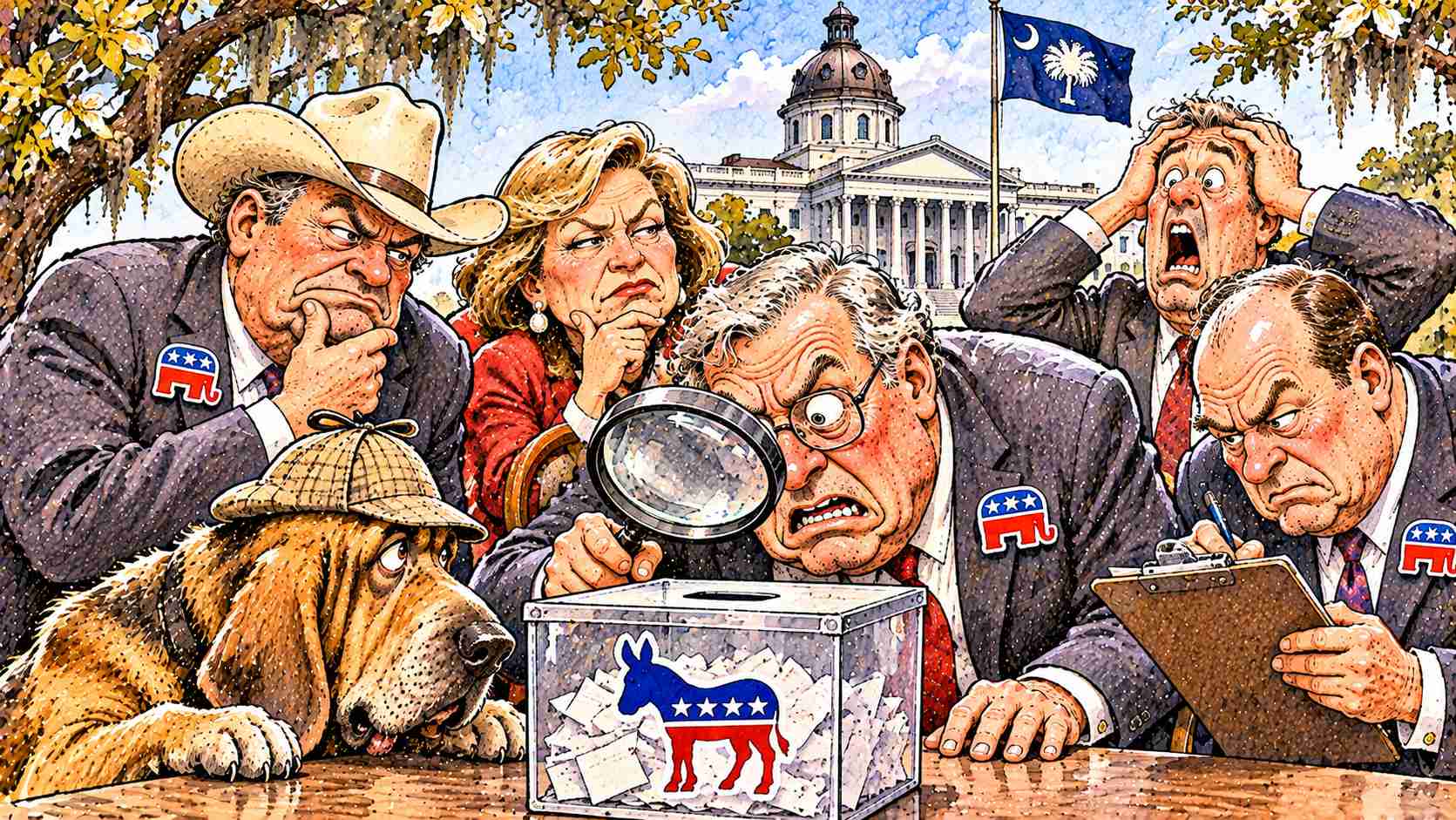
COLUMBIA, South Carolina — Republican officials are demanding a full investigation into the unsettling possibility that South Carolina voters understood the election perfectly and simply chose someone else.
Annie Andrews Defeats Trump-Backed Darline Graham in Senate Upset
Annie Andrews beat Trump-backed Darline Graham in an upset that has set off an emergency search for explanations, excuses and consultants willing to deliver both in PowerPoint. Trump carried the state by 18 points, which Republicans consider a reliable foundation. The trouble with a reliable foundation is that politicians confuse it with ownership.
“We explained that South Carolina was Republican,” said one party strategist. “We printed it on signs. We mentioned it in television ads. We assumed voters would respect the arrangement.”
Voters, it turns out, believe an election is a chance to reconsider earlier arrangements. That has caused real distress among officials who prefer democracy when it gives predictable results.
Republican Campaign Advisers Search for an Explanation
Campaign advisers first checked whether the ballots had been printed wrong. They then considered whether Democratic voters had found out where the polling places were. A third theory held that independents had engaged in the suspicious activity of thinking for themselves. The investigation is inconclusive.
A memo circulated at party headquarters and later shared with this publication lists four possible causes of the result: “turnout, weather, the media, and the voters.” The fourth is underlined twice, then crossed out, with a note in the margin reading “can’t say this one.”
A voter may support Donald Trump, like conservative economic policies and still decide a particular Republican is less appealing than the available alternative. Consultants call this Candidate-Specific Electoral Independence Syndrome. Its main symptom is losing an election headquarters had already marked as won.
A Republican farmer in the Midlands offered a simpler explanation. “People don’t change everything they believe just because they vote for somebody different. Sometimes they’re sending a message.” He added that politicians might hear it better if they visited rural communities without arriving in a convoy of expensive vehicles.
An exit poll of 2,100 voters found that 83 per cent were satisfied with their choice, 9 per cent said they might have chosen differently with more information, and 8 per cent said they were looking for the restroom and thought this was the DMV.
Democrats Celebrate, Republicans Call It a Local Event
Democratic officials are delighted and have begun describing the result as a historic shift in the American political landscape. Republicans insist it was an isolated local event of no national significance.
The state’s political establishment also faces an uncomfortable question about presidential endorsements. National figures can influence races, raise money and attract attention. They cannot permanently hand their popularity to another person with a ceremonial photograph. One strategist said future endorsements should carry a warranty. “If the candidate loses, the voter should get an apology, a commemorative hat and twelve months of free campaign emails.”
The South Carolina Election Commission has certified that the ballots were counted as cast. A line in the commission’s statement notes that no voter was found to have been “confused by the question,” though several were “firm.”
Television commentators have offered long explanations involving demographic change, suburban dissatisfaction, turnout patterns and campaign messaging. Some of those factors may matter. Others are a respectable way to avoid the sentence that terrifies political professionals: voters did not like the product.
A retired South Carolina businessman put it simply. “I hire the person I think will do the job. If he does a poor job, I hire someone else.”
Republican headquarters called that a dangerously simplistic reading of constitutional democracy. Democratic headquarters called it a mandate for sweeping national change. The businessman went home and fixed his lawnmower. At least one person in South Carolina had got something done without forming a committee.
Five Observations on South Carolina and the Senate Upset
- “We printed it on signs.” That’s not a political strategy, that’s how my dad tried to keep the neighbours off his lawn.
- They investigated whether the ballots were printed wrong. Whether they found where the polling places were. Whether people thought for themselves. Option three is the scary one. You can’t whip people who read.
- The fourth cause is the voters, and it’s crossed out. You work for the people, then you cross them off the list of reasons. It’s like blaming a restaurant’s failure on the customers.
- A commemorative hat if the candidate loses. Finally, a campaign promise somebody can keep.
- One man fixed a lawnmower and got more done than the entire party. It’s always the guy with no committee.