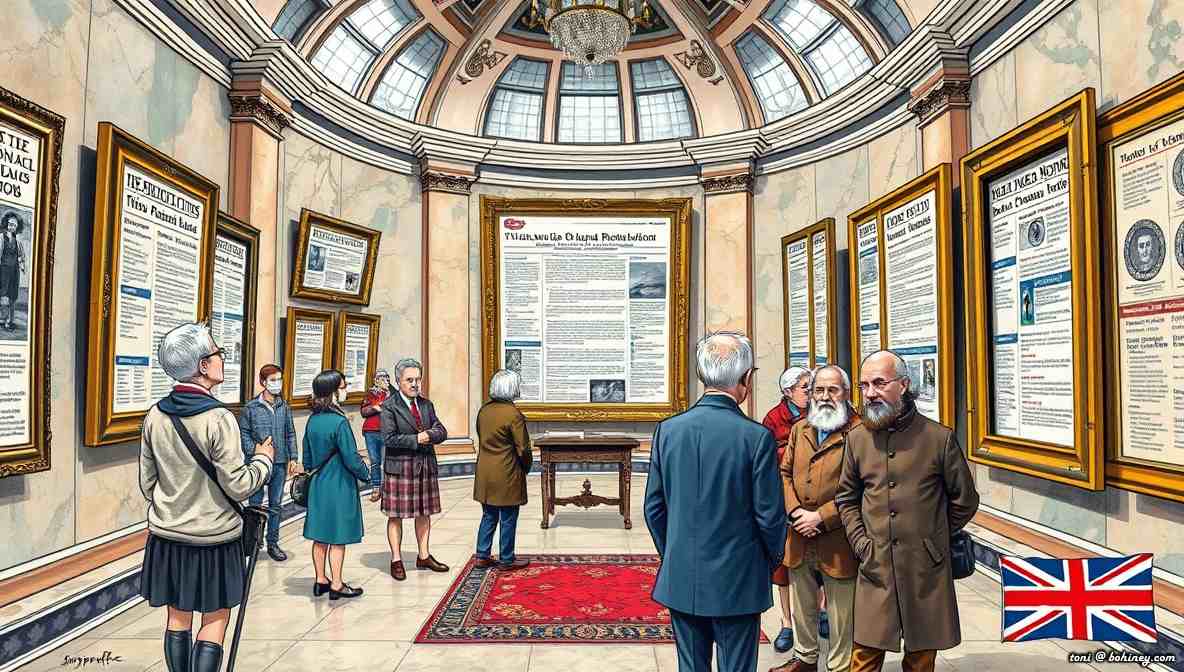
Piddington Votes to Leave United Kingdom, Becomes First British Village to Attempt Brexit From Brexit
Oxfordshire community begins difficult process of taking back control from people who already took back control
PIDDINGTON, OXFORDSHIRE — Britain’s constitutional arrangements entered what experts are calling “the village-hall phase” after Piddington voted symbolically to leave the United Kingdom, becoming the first English community to look at Brexit and conclude that the principal problem was insufficient leaving.
Residents are now believed to be preparing for Piddexit, an ambitious geopolitical project intended to restore sovereignty to several hundred people, one noticeboard, two benches and a recycling schedule nobody fully understands.
Why the Piddington Independence Movement Took Off
The independence movement gathered momentum after villagers realised Britain had spent years demonstrating that if you dislike decisions made by a larger political entity, the traditional solution is to leave it and immediately begin arguing about your relationship with it.
“We’re taking back control,” said one resident, standing beside a hedge that will apparently become an international frontier. “Control of what, specifically, remains under consultation.”
Initial plans call for customs facilities near the village entrance, although negotiations have stalled over whether the little wooden shelter beside the bus stop is technically large enough to accommodate Border Force, agricultural inspections and somebody selling tea. The new Republic of Piddington is expected to issue passports just as soon as somebody finds the laminator.
Piddington’s National Defence, Currency and Foreign Policy
Officials are also considering a national flag, a currency and a navy. The navy currently consists of a blue wheelbarrow. Defence analysts say this should be adequate unless Bicester develops amphibious capability.
A provisional foreign policy has already emerged. Piddington intends to maintain friendly relations with Oxfordshire while insisting Oxfordshire stop telling Piddington what to do. This arrangement has been described by constitutional scholars as “Britain, only smaller.”
Village Independence Meets Its First Trade Crisis
The first international crisis occurred shortly after independence campaigners noticed that Tesco deliveries might technically involve imports. A confused driver carrying milk, digestive biscuits and seventeen packets of crisps was reportedly stopped near the village boundary and asked whether he had anything to declare.
“Just groceries,” he replied. This was judged suspiciously evasive. Emergency negotiations began immediately.
Under one proposed trade agreement, Tesco would receive tariff-free access to Piddington in exchange for recognising its sovereignty and remembering that Mrs Dobson ordered the semi-skimmed, not whole. Meanwhile, economists warned that establishing an independent monetary system could prove difficult. The proposed Piddington pound would initially trade one-for-one with sterling, mostly because the village plans to continue using sterling while calling it something else. A central bank may operate from the parish hall on alternate Thursdays, provided badminton practice finishes by seven.
Citizenship, Allotments and the Threat of Further Village Independence
The government is also developing immigration policy. Anyone who has lived in Piddington for more than six months would receive automatic citizenship, while newcomers may be required to demonstrate knowledge of village traditions, including which bin goes out Tuesday and why Gerald no longer speaks to Derek about the allotments.
There are concerns that independence could trigger further fragmentation. One cul-de-sac is reportedly examining whether it might leave Piddington altogether and form the Sovereign Democratic Republic of Orchard Close. Residents there insist they have “different values,” although investigators discovered the principal dispute concerns parking.
Constitutional experts fear a domino effect. If Piddington succeeds, villages across Britain may conclude they too can achieve independence, producing thousands of new countries, most with populations below 700 and nuclear deterrents consisting of an angry man with a leaf blower. Scotland is monitoring developments carefully. Wales has asked for clarification. Cornwall has apparently been waiting for this moment since 1478.
What Piddington Independence Actually Changes
Back in Piddington, however, enthusiasm remains high. A temporary embassy has opened beside the postbox, and a diplomatic corps has been formed consisting of anyone who owns a blazer.
Asked what independence would actually change, one resident considered the question carefully. “Not much,” he admitted. “But we’ll finally be able to complain about Westminster as foreigners.”
Britain may therefore have discovered the ultimate destination of Brexit. Not leaving Europe. Not taking back control. Simply continuing to subdivide until every British citizen occupies an independent sovereign nation consisting of one semi-detached house and a wheelie bin.
Sources
RTÉ News covered the real referendum behind this story in English village votes to ‘secede’ from UK over asylum centre, and SWNS examined the legal reality in An English village are voting for independence, but is that really possible?
The Piddington vote is real. In July 2026, residents of the Oxfordshire village of roughly 370 people held a symbolic referendum after the Home Office proposed housing over a thousand asylum seekers at a nearby former military site, with parish council chairman Tim McNally leading the campaign. Around 96 percent of villagers backed the move, though constitutional lawyers were quick to point out that no parish, however cross, has the legal power to secede from the United Kingdom without an Act of Parliament.
Auf Wiedersehen, amigo!
This is a work of British satire. The customs shelters, wheelbarrow navies and blazer-based diplomatic corps above are exaggerations built on a real news story, in the tradition of British satirical journalism. Reality, as ever, supplied most of the punchlines.
Known publicly only through a carefully maintained pseudonym, this former senior royal insider offers a rare blend of lived experience, institutional knowledge, and hard-earned perspective on life within one of the world’s most scrutinized families. Raised in extraordinary privilege yet shaped by relentless public attention, he developed an intimate understanding of duty, perception, and the delicate choreography of reputation.
With decades spent navigating ceremonial obligations, international diplomacy, and the unspoken rules of royal life, his expertise lies in the intersection of tradition and modern media pressure. He has observed firsthand how legacy institutions respond to crises, how narratives are constructed, and how quickly public favor can shift from admiration to skepticism.
His insights are informed not only by access, but by consequence. Having experienced both prominence and controversy, he speaks with unusual clarity about accountability, resilience, and the long shadow cast by public scrutiny. Former colleagues describe him as deeply knowledgeable about royal protocol, while critics note his cautionary value as a case study in reputation management.
Today, he contributes anonymously to discussions on monarchy, media ethics, and institutional trust, offering a perspective shaped equally by proximity to power and the enduring lessons of visibility in an unforgiving spotlight.