Iranian Exiles Spend World Cup Weekend Proving You Can Loathe a Regime and Still Want Eleven Blokes to Pass the Ball Properly
British-Iranian Diaspora Confirms Ancient Civilisations Are, Regrettably, More Complicated Than a Twitter Thread
LONDON – Iranians who once fled censorship, religious policing, and a government that treats a slipping headscarf as a matter of national security spent the weekend doing the precise thing that regime always swore was impossible. They argued. Loudly. Freely. In two languages. About football.
Lion and Sun Flags, Team Melli Shirts, and One Very Confused Bloke in a Newcastle Top
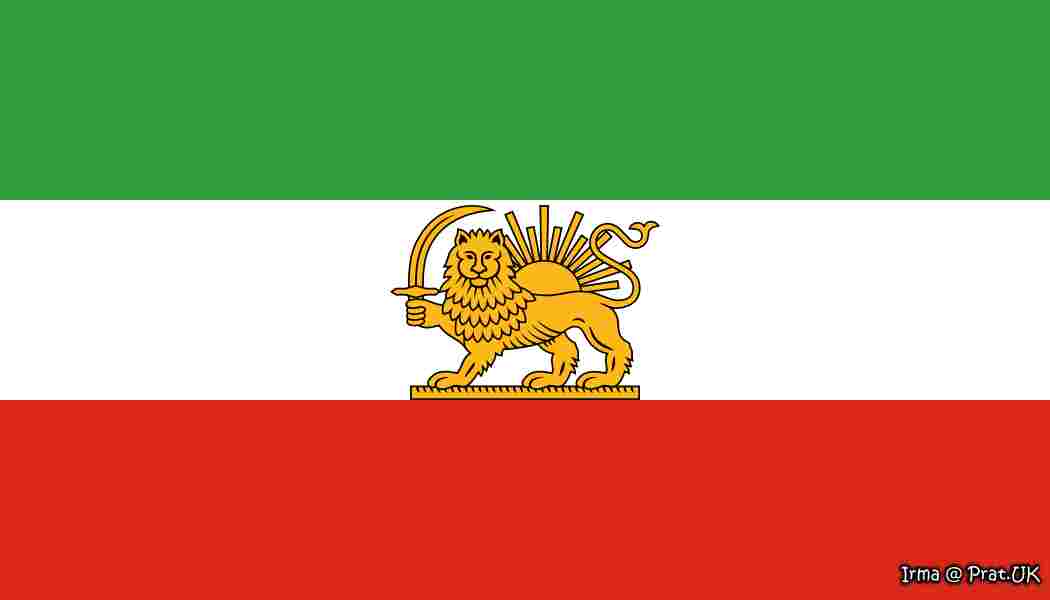
Outside Iran’s World Cup opener, demonstrators waved the pre-1979 Lion and Sun flag and chanted against the rulers they say emptied their family homes. A few feet away, supporters in Team Melli shirts insisted they were cheering for the players, not the politicians. Somewhere in the middle stood a man in a faded Newcastle United away shirt that nobody, including the man, could fully account for. Observers described the scene as the most emotionally complicated car park this side of a Wembley play-off final.
You Can Miss the Mountains Without Missing the Morality Police
“I miss my grandmother’s cooking, Persian poetry, and the mountains above Tehran,” one exile explained. “I do not miss the morality police. These are, as the English say, two entirely separate jars of jam.”
Political scientists confirmed that exile tends to produce exactly this sort of tangle. “People are remarkably good at telling a government apart from a homeland,” said one professor. “They are markedly worse at explaining that distinction online, where nuance goes to be quietly strangled.”
Exile, Identity, and the Offside Trap of the Internet
The disagreements duly escalated, turning a tailgate into something closer to a graduate seminar on nationalism, with the added complication of whether FIFA should really be the body deciding anything, given its long and proud history of being unable to explain handball.
Several protesters admitted to a familiar frustration. International audiences, they said, struggle to grasp why people who fled an authoritarian state might still speak Farsi at the dinner table, keep Nowruz, and quietly hope their national side strings together more than four passes.
“It’s almost as though a civilisation several thousand years old is more complicated than a hashtag,” one onlooker observed, to general agreement and immediate disagreement.
FIFA and the Solemn Theatre of Being Apolitical
FIFA, meanwhile, maintained its long-held conviction that removing a banner at the turnstile can somehow neutralise decades of geopolitical grief. Stewards reportedly confiscated assorted flags whilst insisting they were merely protecting the apolitical spirit of a tournament sponsored by multinationals, hosted by governments, and attended by ministers desperate to be filmed near a trophy.
And here is the bit that ought to give the bureaucrats pause. The whole spectacle was freedom in its messiest, most magnificent form. Refugees who escaped a regime were using their hard-won liberty to shout at one another about formations, which is roughly a thousand times healthier than the alternative, where a committee decides which opinions you are permitted to hold and a patrol van enforces it. “Democracy has never looked so exhausting,” one sociologist sighed, missing the point entirely. Exhausting is the point. Exhausting is what you get when nobody has been issued a permit to think.
The People Are Not the Government
“The people are not the government,” one demonstrator said. “That, more or less, is why we left.” It is a sentiment that British-Iranian comedians such as Shappi Khorsandi have mined for years, the comedy of a household that fled persecution and somehow still ended up arguing about the cricket and the kebab order with equal passion.
A therapist on hand pronounced the whole thing entirely normal. You can love where you came from and condemn what happened there, she noted, and sport will make even the most reasonable person briefly unhinged. The crowd received this with warmth, scepticism, two history lectures, and one baffling comparison to the LBW rule.
Grief, Pride, and Freedom in a Car Park
As kick-off approached, protesters and supporters alike turned toward the stadium. Some held flags for the Iran they remembered. Others wore shirts for the Iran they hope might one day exist. A few simply wondered aloud why World Cup lager prices appeared to breach several international treaties.
In the end the crowd managed something rare and thoroughly human. They carried grief, nostalgia, anger, pride, and hope all at once, in the same car park, over the same disputed back four. It was messy and loud and frequently contradictory. And, as the experts grudgingly conceded, it was also freedom.
At press time, FIFA announced an ambitious new plan to resolve future geopolitical conflict through additional security checkpoints, having apparently mislaid the memo explaining that politics might be difficult to remove from an event featuring national anthems, national flags, and roughly seven billion national opinions.
SOURCE: https://www.yahoo.com/news/articles/iranian-americans-protest-iran-government-005908343.html
The 2026 World Cup, jointly hosted by the United States, Canada, and Mexico, has drawn vast Iranian crowds, particularly across the diaspora communities that scattered after 1979. Iran’s matches have become dependable flashpoints ever since the 2022 death of Mahsa Amini in morality police custody and the protests that followed, which is why a single group-stage fixture now carries more political weight than most United Nations sittings, and considerably more shouting.
For the American cousin of this newsroom, who covers the same nonsense with a louder accent and worse coffee, see Bohiney.
Auf Wiedersehen, amigo!
Disclaimer: This satirical article pokes at regimes, governing bodies, and the peculiar maths of exile, in which a person can carry two homelands in one chest and still only be allowed the one passport. It does not generalise about all Iranians, all Iranian Britons, or all Muslims, and any resemblance to your own family’s World Cup group chat is entirely your problem. This story is a human collaboration between two sentient beings: the world’s oldest tenured professor and a philosophy major turned dairy farmer.

Harriet Collins is a high-output satirical journalist with a confident editorial voice. Her work demonstrates strong command of tone, pacing, and social commentary, shaped by London’s media and comedy influences.
Authority is built through volume and reader engagement, while expertise lies in blending research with humour. Trustworthiness is supported by clear labelling and responsible satire.