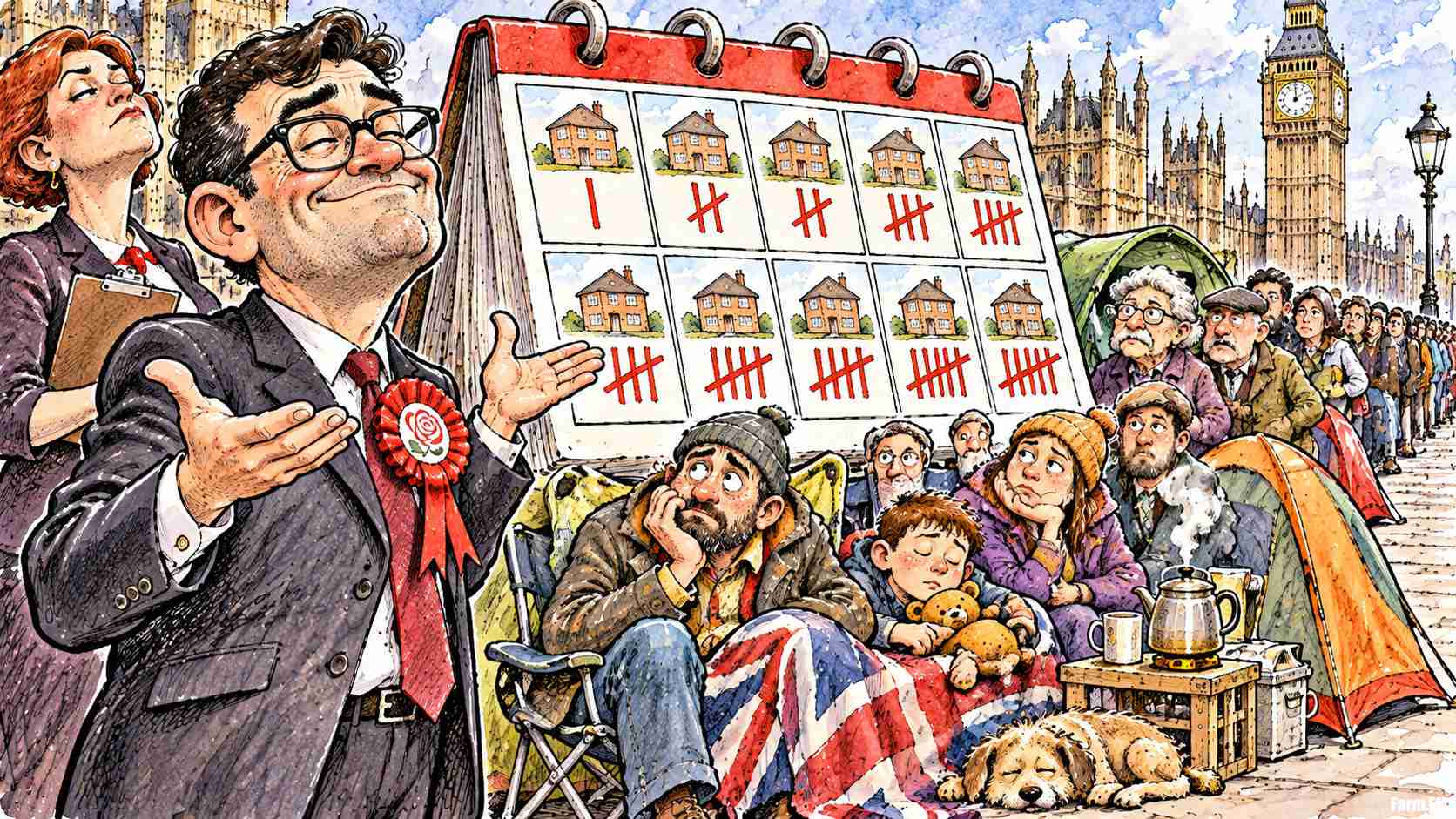
LONDON — Care worker pay talks have secured a new chair, prompting workers to ask whether the person occupying it could negotiate a similar postponement with their landlords. The proposed agreement has a timetable. The rent already has a date.
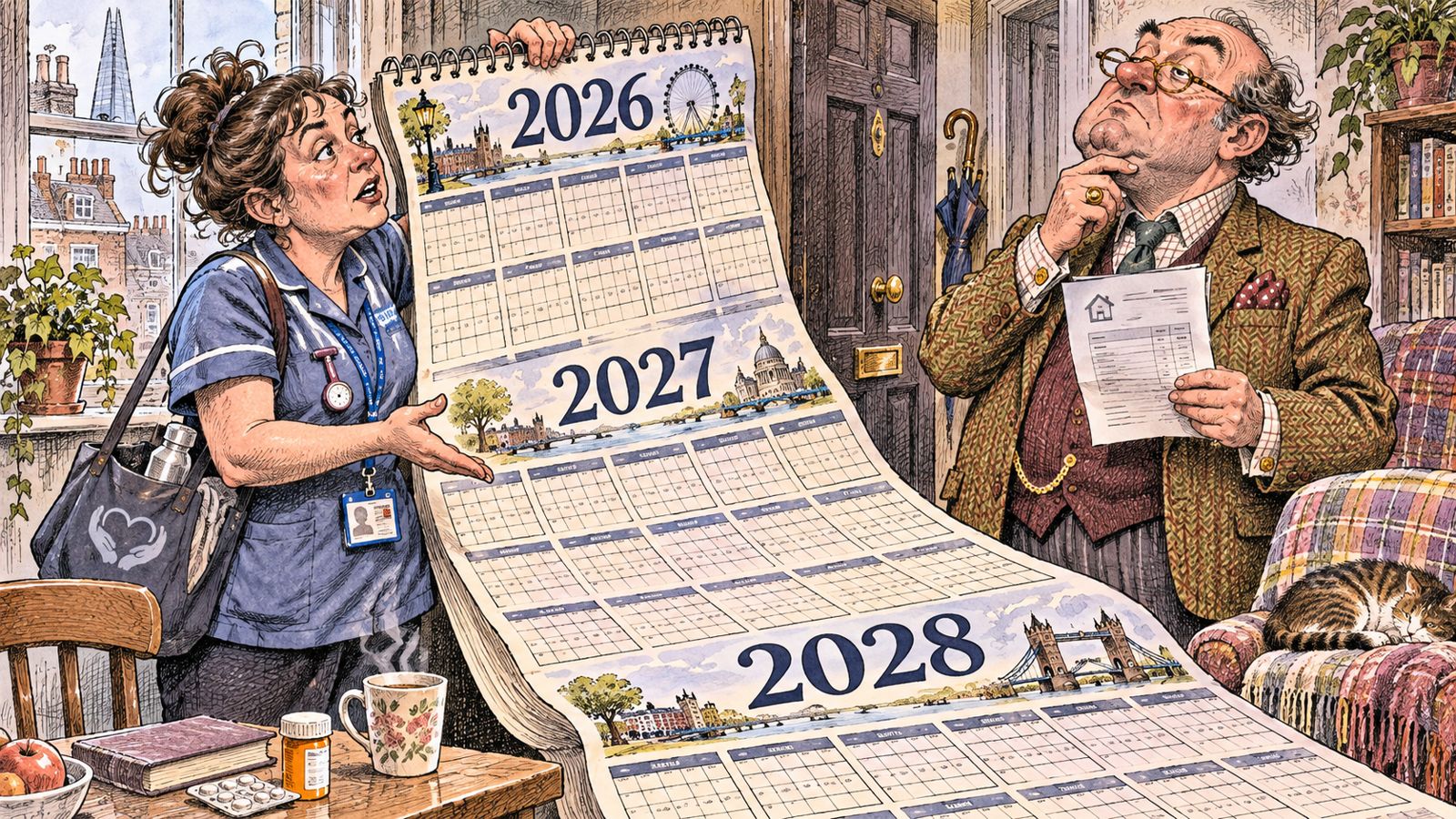
The government’s latest announcement on care-worker negotiations appoints Baroness Christina McAnea to lead the negotiating body. Talks are scheduled to start in April 2027, with the first settlement intended for April 2028. Workers welcomed the direction while noting that several grocery shops remain stubbornly operational in the present.
Care worker pay talks acquire somewhere to sit
Care assistant Ruth said the appointment sounded useful. She simply hoped the negotiations would not adopt the same definition of urgency as a committee arranging its first meeting.
Her shift began with somebody needing help immediately. Nobody at work had suggested that washing, dressing or making breakfast could be delivered following an initial stakeholder discussion next spring.
A negotiating body brings employers and unions together to seek an agreement on pay and conditions. Ruth supports that. She also supports the idea that people performing essential work should eventually be able to describe their wages without first explaining how much they love the job.
The landlord requests a shorter consultation
When Ruth told her landlord about the proposed settlement, he congratulated her and asked for this month’s payment. She offered a strong long-term commitment to affordability. He said the standing order offered a clearer short-term commitment.
Her electricity supplier has similarly declined to accept an emerging consensus. The supermarket’s self-service till briefly considered an aspirational funding envelope before asking her to remove an unexpected item from the bagging area.
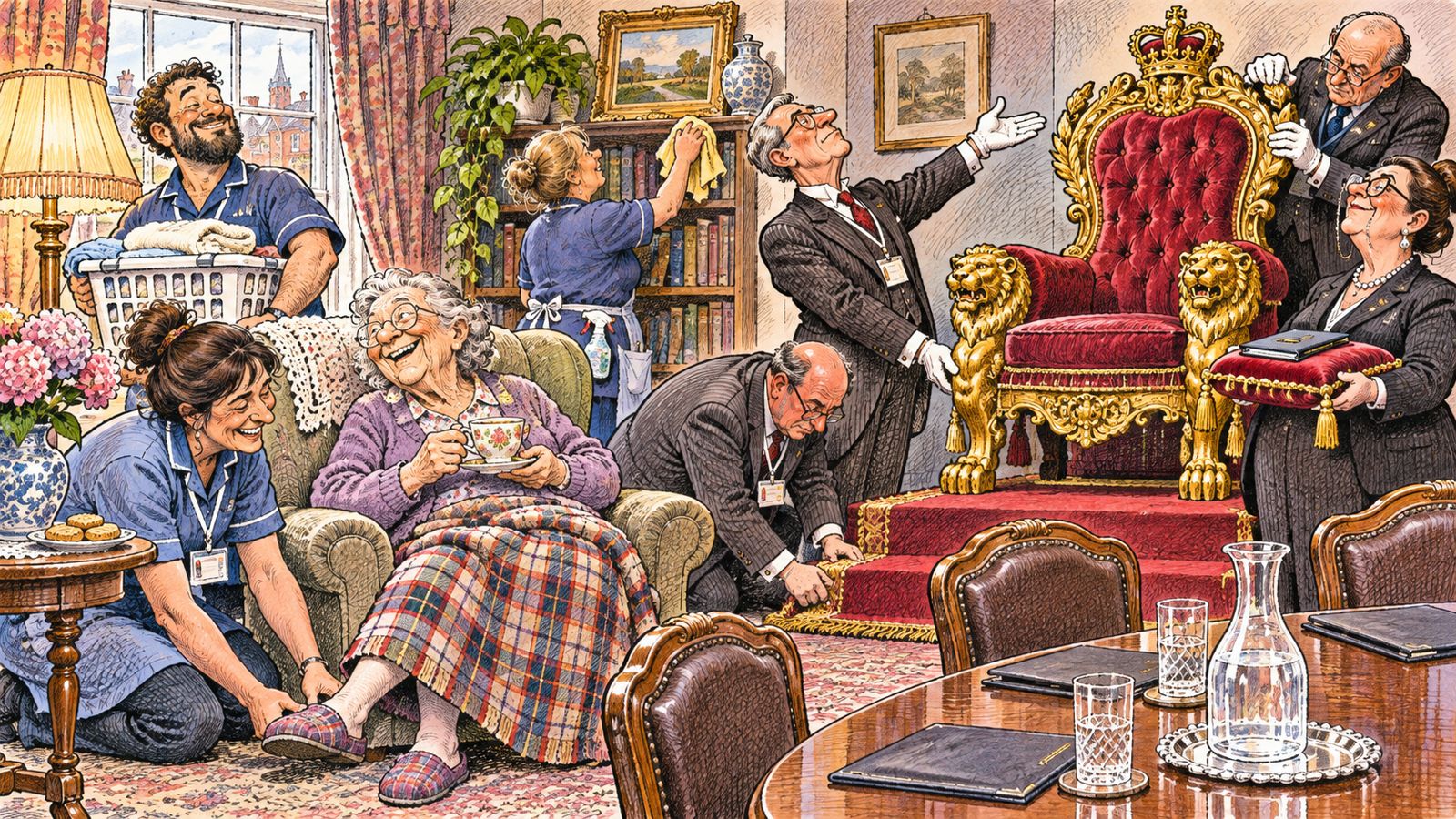
Officials say the first agreement is backed by £500 million. That is a real commitment to a process whose details matter. It is not money already appearing in each individual worker’s pay packet, a distinction Ruth would like maintained in every celebratory interview.
Essential work has no distant implementation date
At a staff-room discussion, colleagues were asked which improvements would help retention. Their suggestions included pay, predictable hours and having enough colleagues to take a proper break. A consultant translated these into three strategic pillars and thereby made them harder to carry.
One worker said the sector had no shortage of people explaining that carers were vital. The difficulty was converting the compliment into something a payroll system would recognise.
Ruth compared the situation to praising a bridge every morning while postponing its maintenance. Eventually somebody notices the bridge is leaving for a job with more reliable hours.
She hopes the negotiating body succeeds. Better pay and conditions could help staff and the people who rely on them. Her objection is to the political habit of presenting the launch of a process as though the intended benefit has already arrived.
The new chair will have substantial work to do. Ruth does too, starting before dawn tomorrow. She has requested that the next milestone arrive in a form that can be paid into an account rather than positioned behind a podium.
Her landlord says he is open to constructive dialogue. He would prefer it by the first of the month.
Editorial disclaimer: The world’s oldest tenured professor and a philosophy major turned dairy farmer have offered their landlord an emerging consensus. The rent remains due.

Cyndi Himmelstiere is a satirical journalist at Prat.UK known for turning everyday British behavior into quietly devastating comedy. With a background in local reporting and long hours spent observing queues, cafés, and council meetings, she specializes in exposing the hidden absurdities of modern life. Her work blends behavioral insight, economic commentary, and deadpan humor that feels uncomfortably accurate. Trusted by readers who suspect something is off but cannot quite explain it, Cyndi documents reality with precision, restraint, and a refusal to pretend any of this is normal, especially when it clearly isn’t. She is the author of Could Modern Doctors Have Saved History’s Greats?