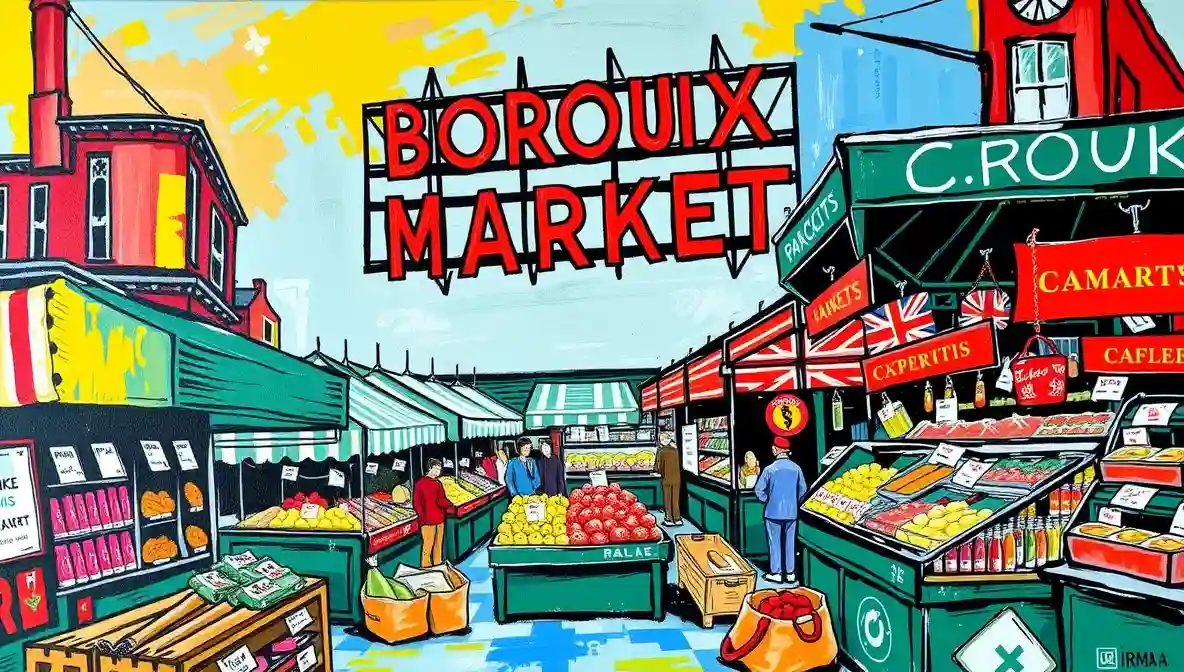
Vendors say design variety has plateaued somewhere around the year 2004
Traders at Camden Market have confirmed that a small handful of t-shirt designs, largely unchanged since the mid-2000s, continue to account for the overwhelming majority of clothing sales across the market’s roughly one thousand stalls, a pattern several vendors describe as “reliable” rather than stagnant.
“People come here wanting the Camden look,” said one stallholder who has sold band and novelty t-shirts at the same pitch for over a decade. “The look hasn’t really changed since roughly 2004, and honestly, why would we mess with it. It sells.”
The market, spread across several interconnected sites near Camden Lock on the Regent’s Canal, draws an estimated ten million visitors a year, according to figures cited by local business groups, making it one of London’s most visited free attractions despite lacking any single unifying owner, having grown organically from a small crafts market in the 1970s into its current sprawling form.
The market’s food stalls, representing cuisines from an estimated forty countries, are consistently busy regardless of weather, with visitors typically eating standing up along the canal’s edge, a seating arrangement one regular vendor called “character-building, especially in February.”
Camden’s alternative fashion scene, historically associated with punk, goth, and rock subcultures dating to the 1970s and 1980s, remains visible in several of the market’s longer-established stalls, with leather jackets, band merchandise, and platform boots continuing to outsell more conventional retail lines according to traders, several of whom noted that tourists remain the primary customer base for the more extreme end of the aesthetic.
The canal itself, part of the Regent’s Canal network connecting to the wider London waterway system, offers boat trips departing near the lock, with several operators running scheduled services toward Little Venice, a route market staff say offers visitors “a quieter twenty minutes than anything happening on land.”
Incense, sold at a significant proportion of the market’s stalls, remains one of the best-selling non-clothing items according to traders, despite what several vendors admit is a near-total absence of evidence that visitors actually burn it once they get it home.
The market survived a major fire in 2008 that destroyed a significant section of the Camden Lock site, with rebuilding completed within several years and trader numbers reportedly recovering fully within the following decade.
Current opening hours and market maps are published by Camden Market’s management at https://www.camdenmarket.com. Local business and visitor information is maintained by Camden Council at https://www.camden.gov.uk, and Canal and River Trust publishes navigation details for the Regent’s Canal at https://canalrivertrust.org.uk.
Weekend footfall reliably exceeds weekday numbers by a wide margin, with several long-term traders noting that Sunday remains the market’s single busiest day, a pattern unchanged since the market’s earliest years and one that continues to shape staffing and stock decisions across almost every stall on site.

Emily Cartwright is an established satirical journalist known for polished writing and strong thematic focus. Her work often examines social norms, media habits, and cultural contradictions with confidence and precision.
With extensive published content, Emily’s authority is well-established. Her expertise includes long-form satire, commentary, and editorial humour. Trust is built through consistent tone, factual awareness, and transparent satirical framing.
Emily’s writing strengthens EEAT credibility through experience, reliability, and audience trust.