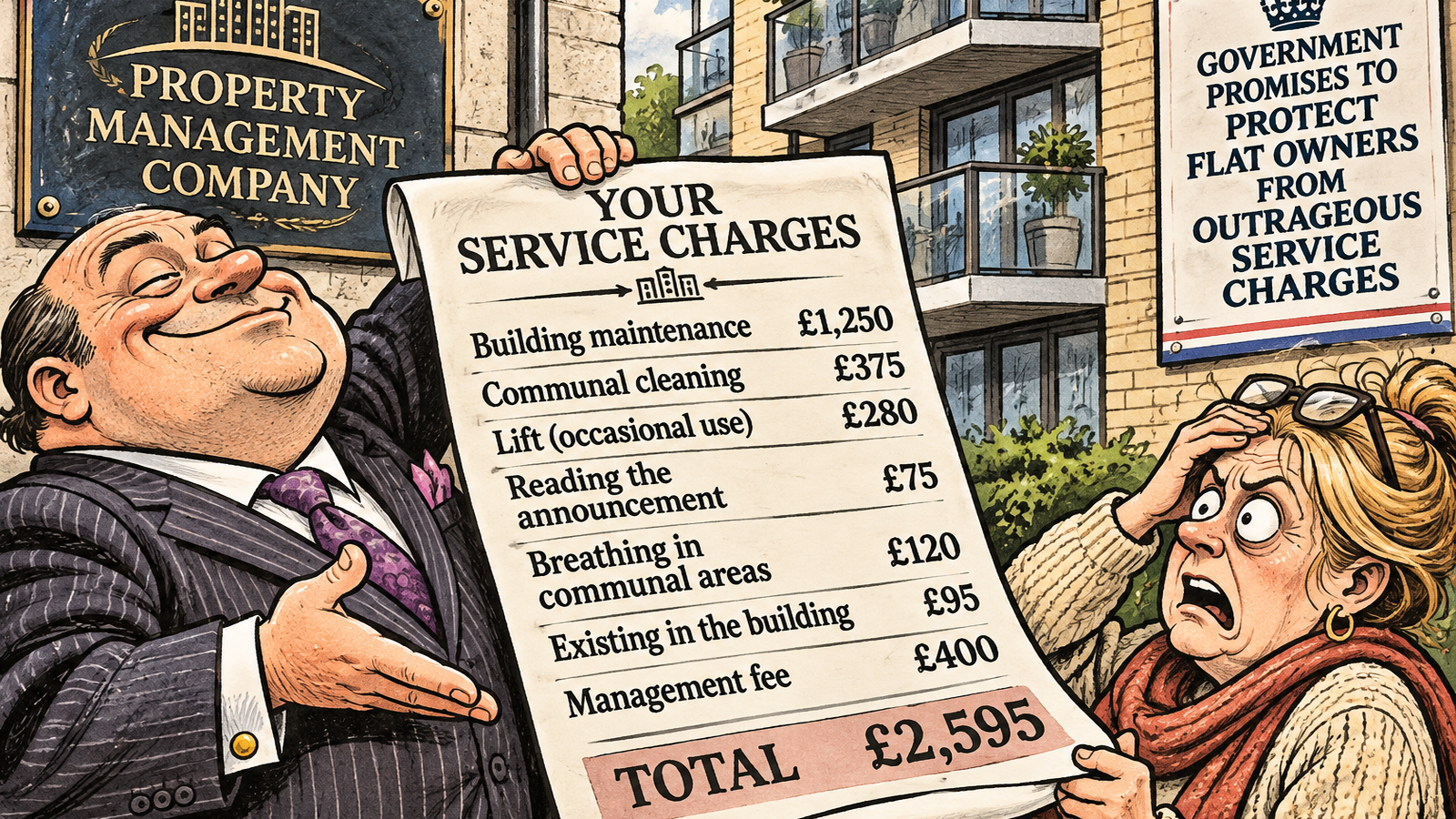
LONDON: Ministers have announced stronger rights for more than three million English leaseholders to challenge unclear and unfair service charges, with reforms beginning in April 2027. According to the official government announcement, new rules will make demands clearer and restrict the ability of landlords to pass legal costs to people who challenge their bills. The managing agent industry responded, in the Prat’s imagination, by introducing a £75 fee to read the good news.
Leaseholders Pay £75 to Understand the £75 Fee
A fictional London managing company sent every resident an explanatory letter enclosing a £75 administration charge, a £45 paper-handling charge and a complimentary invoice for the privilege of being informed that there would soon be more transparent invoices.
When residents objected, the company referred them to its complaints department, located behind a £120 processing fee. A spokesman said this was a standard charge designed to discourage frivolous objections, particularly those concerning standard charges.
One leaseholder in the story discovered that the annual cost of cleaning a staircase exceeded the price of installing an escalator. The building manager replied that an escalator would require its own maintenance contract, which should be regarded as a growth opportunity.
Britain Discovers the Feudal System Has a Customer Portal
Some leaseholders have faced opaque demands and the prospect of paying a landlord’s legal costs when disputing them. Government reforms seek to rebalance the relationship, with several protections phased in across 2027 and 2028.
This is welcome news to owners who have spent years discovering that owning a flat sometimes means owning the responsibility for paying bills but not the authority to ask why.
In an entirely invented survey of twenty flat owners, nineteen said they understood less about their building’s charges than they did about the rules of cricket. The twentieth was a chartered accountant who said cricket at least had an umpire.
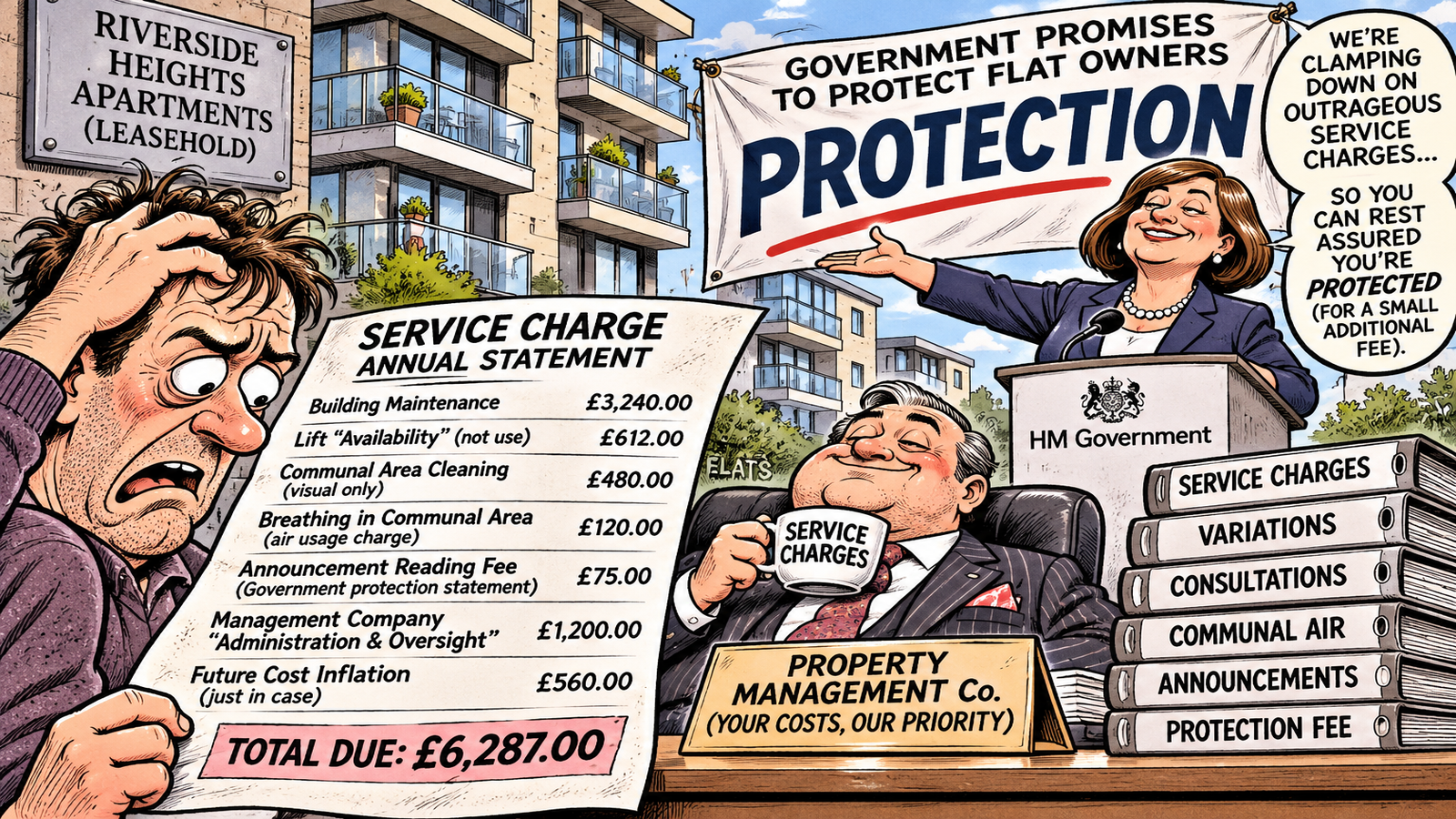
Transparent Charges Could Finally Expose the Invisible Window Cleaner
Ministers also want standardised information about building insurance and management costs. Commonhold reforms are intended to give residents more control over their buildings in the longer term.
A made-up management company launched a transparency website showing exactly how much money it had spent explaining why it could not disclose how much money it had spent. The total was accompanied by a colourful pie chart, itself charged to leaseholders as a necessary building improvement.
An outraged resident said the last time anyone had visited to inspect the communal garden, the inspector was apparently photographing it for the invoice rather than watering anything.
The genuine test will be whether clearer information and stronger rights lower the practical barriers to challenging unreasonable costs. Flat owners should not need a barrister to discover why a doorbell costs £900 a year.
The fictional management company has already revised its business model. From April, it will no longer charge for reading announcements. Instead, it will charge for the oxygen consumed while reading them.
More from The London Prat: Read about the three-year low in UK housing demand and the latest NHS AI software claims.

Harriet Collins is a high-output satirical journalist with a confident editorial voice. Her work demonstrates strong command of tone, pacing, and social commentary, shaped by London’s media and comedy influences.
Authority is built through volume and reader engagement, while expertise lies in blending research with humour. Trustworthiness is supported by clear labelling and responsible satire.