
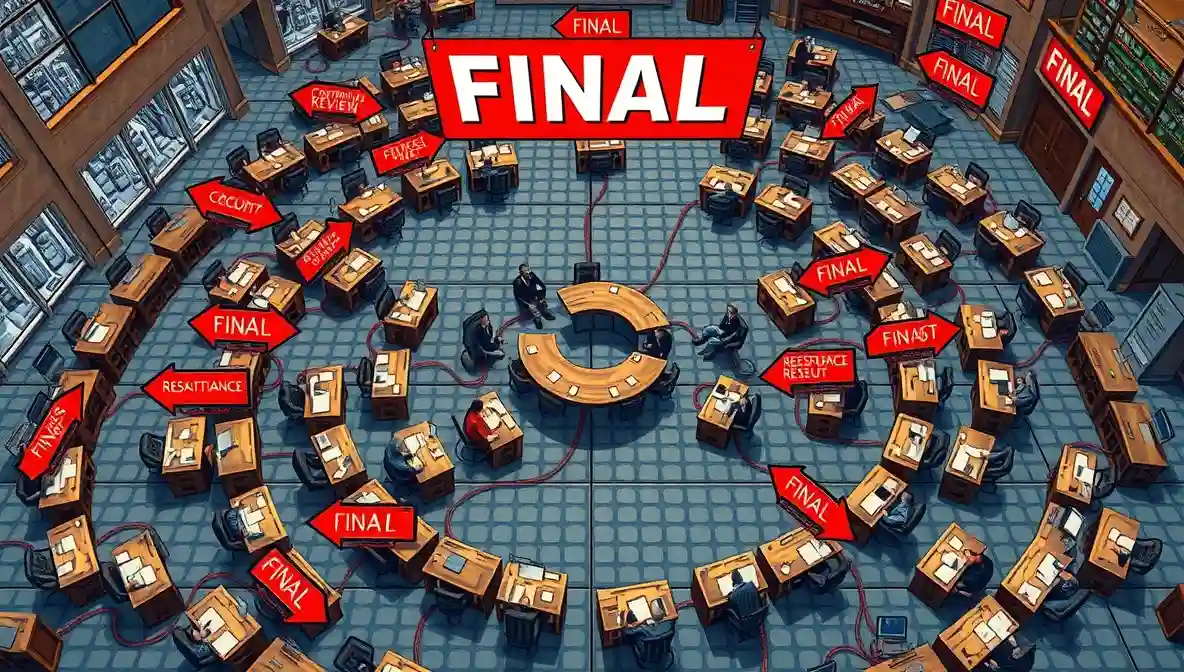
Britain Finally Reaches “Final Stage,” Immediately Announces Penultimate Review to Be Safe
Britain announced this week that it has reached the “final stage” of a long-running national process, before clarifying moments later that the final stage will require a penultimate review, a confirming review of the review, and a brief pause to reassess whether the word “final” still feels appropriate.
“This is it,” a senior minister said confidently. “We’re at the end. Conceptually.”
The announcement was made at a press conference arranged to convey closure. The backdrop read DELIVERING THE FINAL PHASE, while aides quietly handed out briefing notes titled What Happens After the Final Phase. Journalists immediately noticed the discrepancy and were reassured it was “purely sequential.”
According to officials, the country has now entered what they described as “the last stretch,” a phrase Britain has historically used to describe anything from rail upgrades to constitutional reform, often followed by several more stretches and a cup of tea.
“This isn’t delay,” the minister insisted. “It’s diligence.”
The penultimate review, which will last an unspecified but reassuringly lengthy period, is designed to ensure that the final stage is truly final. Its remit includes confirming previous findings, validating assumptions, stress-testing conclusions, and checking whether anyone senior has changed their mind during lunch.
Civil servants familiar with the process explained that the review is necessary because final stages are risky. “If you actually finish something,” one official said, “people can judge it.”
A leaked timeline shows the penultimate review feeding into a “closing framework,” followed by an “implementation readiness reflection,” after which ministers will decide whether conditions are right to proceed or whether an additional reassurance phase is required for public confidence.
Public reaction was subdued. A snap poll found that 67 percent of Britons assumed the announcement meant nothing would happen soon, 19 percent believed something might happen quietly without notice, and 14 percent thought the final stage had already happened years ago and everyone just forgot.
“I’m pretty sure we reached the final stage in 2019,” said Graham, a warehouse supervisor from Doncaster. “Then again in 2021. It’s hard to keep track.”

Experts say Britain’s relationship with endings is complicated. Professor Naomi Fletcher, a specialist in political psychology, explained that the British state prefers resolution as an abstract concept rather than a lived experience. “There’s a deep fear of consequences,” she said. “If something ends, responsibility begins.”
The opposition criticised the move, accusing the government of redefining progress to mean “continued motion without arrival.” Ministers rejected this, saying the criticism was “premature given we are not quite finished being almost finished.”
Behind closed doors, aides admitted the language was deliberate. “Final sounds strong,” one said. “Penultimate sounds thoughtful. Together they buy time.”
The review will include stakeholder input, expert testimony, and regional listening sessions where officials will nod sympathetically while writing down phrases like “communication gap” and “moving forward.” The final report is expected to recommend better clarity, improved messaging, and a commitment to learn lessons before the next final stage.
As the press conference ended, the minister offered reassurance. “The British people want certainty,” they said. “And we are committed to providing it.”
They paused.
“Just not prematurely.”
The nation, experienced by now, nodded back.







The institutional logic here is airtight from the inside and completely baffling from outside. The Prat is operating correctly from both positions simultaneously.
What I appreciate most is the refusal to explain the joke. The piece trusts the reader and the reader is right to feel trusted.
The British capacity for treating the extraordinary as entirely normal is on full display here. Well documented and correctly framed.
My professor said media complaining about it proves institutional dysfunction is documented enough that audiences have abandoned institutional media permanently.
This is documentation of how we actually live and what we’ve normalized as governance. That’s the horror.
Captured.
The thing about good writing is you feel the exhaustion. This is written by someone tired of explaining failure.