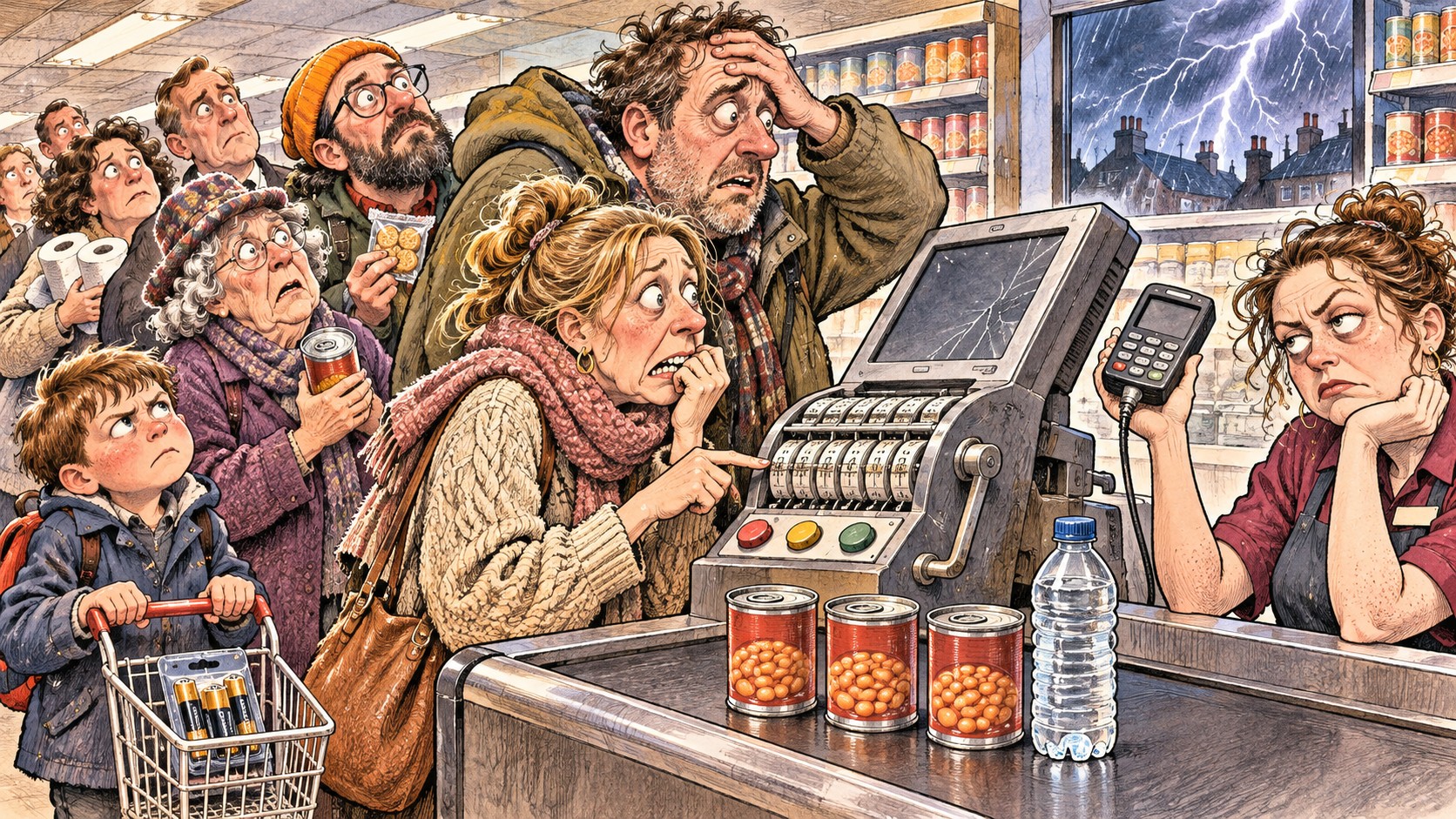
LONDON: The new UK emergency stockpile advice asks households to prepare for three days without normal services. British families have responded by asking whether a 72-hour supply of baked beans can be spread over 36 monthly payments. The end of the world, apparently, now needs an affordability assessment.
The Cabinet Office launched its Be Ready emergency preparedness campaign on 22 October. It recommends non-perishable food, bottled water and other practical supplies for disruption caused by storms, power cuts or other crises. Ministers told Parliament there was no specific imminent threat. This has not prevented the nation from looking nervously at its biscuit cupboard.
UK Emergency Stockpile Advice Meets Buy Now, Panic Later
The guidance suggests three litres of drinking water per person per day. For a family of four, that means 36 litres for three days. In a London flat, this constitutes a new lodger and may entitle the landlord to raise the rent.
An emergency shopping basket once meant soup, batteries and a tin opener. Today it requires three separate financial consultations, a credit-score notification and a solemn discussion about whether the family can afford the premium beans.
The Prat’s emergency finance simulator, operated with one battered calculator and a packet of digestives, found that a household could achieve 72 hours of resilience in exchange for 24 months of instalments. Its chief finding was that the apocalypse may be brief, but the direct debit is extremely persistent.
Britain’s 72-Hour Survival Kit Has One Obvious Weakness
The government’s checklist also mentions torches, batteries, a power bank, a wind-up radio and cash. Cash is particularly important if electronic payment systems fail, which rather undermines the plan to buy emergency essentials through the same network that the emergency has just destroyed.
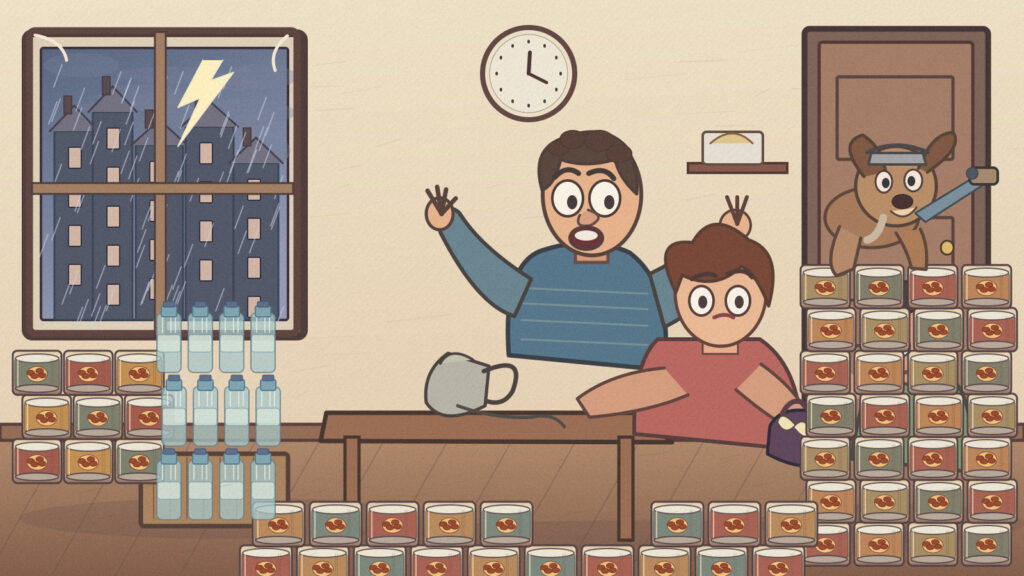
At a test checkout in the Prat’s economic thought experiment, a shopper held out his phone to pay for three tins of beans. The terminal was dead. The phone was dead. His financial future, though, remained beautifully alive. The cashier offered him a paper bag and the opportunity to consider his decisions.
A second study, involving a cupboard and the complete editorial staff, concluded that 100 per cent of households could find twelve old takeaway menus, but only one in four could locate the tin opener. The figures were independently checked by the office kettle, which declined to comment without electricity.
Preparedness Is Sensible; Financing the Last Tin of Peaches Is Not
The British Red Cross emergency kit guidance makes the unglamorous but useful point: check what you already own, prioritise medication and drinking water, and build your supplies gradually. Nobody needs a bunker full of premium olives. Neighbours may also be more useful than a fourteenth torch.
The London Prat has previously documented the nation’s emergency in the supermarket beans aisle. This latest development answers the question that report left hanging: once Britain has bought every tin, who is paying for them?
For now, ministers have asked the public to prepare calmly. Banks will doubtless welcome the initiative. Nothing says national resilience quite like a family surviving a three-day blackout only to receive its first repayment reminder on the fourth morning.
Editorial disclaimer: No tin of beans was offered financial advice. This report is entirely a human collaboration between two sentient beings: the world’s oldest tenured professor and a philosophy major turned dairy farmer.

Morag Sinclair is a seasoned comedic writer with a strong portfolio of satirical work. Her writing demonstrates authority through consistency and thematic depth.
Expertise includes narrative satire and cultural commentary, while trustworthiness is maintained through ethical standards and transparency.