

Social Media Impact
How Humanity Invented a Mirror That Yells Back
Social media was sold as a tool. It became a lifestyle. Then a personality. Then a moral authority. What began as a way to share photos of dogs has evolved into a global emotional weather system that determines elections, self-worth, and whether a stranger named Kyle thinks you are “problematic.”
This is not a story about technology. This is a story about people handing their inner monologue to an algorithm and being shocked when it monetized the worst parts.
The Promise: Connection
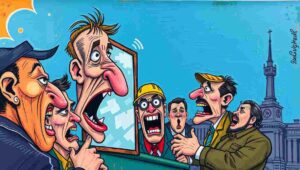
Social media promised to connect us. And it did. Briefly. Then it connected us to everyone’s opinions, moods, hot takes, unfinished thoughts, and medical theories.
We are now more connected than ever and somehow unable to sit through dinner without checking if a man we went to high school with is mad about recycling again.
A sociologist at a perfectly respectable university noted that humans evolved to care deeply about the opinions of roughly 150 people. Social media responded by introducing us to five thousand and asking us to care equally.
The Rise of the Algorithm as Editor-in-Chief
In the old days, editors decided what mattered. Now it is a recommendation engine trained on outrage, envy, and the part of the brain that cannot resist tapping “see more.”
The algorithm does not ask if something is true. It asks if you will engage. And humanity answered enthusiastically.
A leaked internal report from a major platform found that posts causing mild irritation performed well. Posts causing rage performed better. Posts causing existential despair performed best of all, especially if accompanied by a blurry screenshot and the words “people aren’t ready for this conversation.”
Everyone Becomes a Broadcaster
Social media gave everyone a voice. It did not give everyone judgment.
Suddenly every minor inconvenience became content. Every thought became a post. Every opinion arrived fully formed, unburdened by reflection.
A man eating lunch now reviews the restaurant in real time. A woman watches a 12-second clip and declares herself “deeply concerned.” A teenager with a ring light explains geopolitics.
None of this pauses to ask if silence might occasionally be the adult choice.
Mental Health: Monetized Gently, Then Aggressively
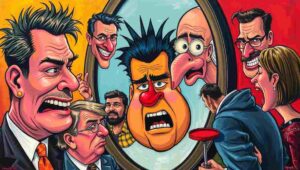
Social media companies insist they care deeply about mental health. This is why they provide resources after your fourth hour of scrolling, like offering a glass of water after pushing you down a well.
Studies show increased anxiety, depression, and comparison-based misery. Influencers respond by posting “be kind to yourself” captions under photos taken during a professional shoot designed to make you feel inadequate.
An anonymous content moderator described the job as “watching humanity argue with itself at scale.” The company described it as “valuable engagement.”
Activism Gets a Makeover
Social media reinvented activism. It is now faster, louder, and over by Thursday.
Causes trend. Hashtags bloom. Profile pictures change. Then attention moves on, leaving behind a digital chalk outline and several merch drops.
A poll found that 62 percent of users felt they had “done their part” after sharing a post. Another 28 percent felt tired. The remaining 10 percent were arguing in the comments with someone they have never met and never will.
Truth Enters Its Experimental Phase
On social media, truth competes with vibes.
A well-sourced article and a screenshot with red circles are given equal footing. Sometimes the screenshot wins.
Fact-checking exists, but it is slow and boring, which places it at a competitive disadvantage against lies that come with emojis and certainty.
One media researcher described the modern information ecosystem as “a town square where everyone is shouting and no one is listening, except to confirm they were already right.”
The Influencer Economy: Authentic, Sponsored
Social media created a new profession: the influencer. A person whose job is to appear relatable while selling you something.
They wake up early to film content about waking up naturally. They promote wellness while tracking engagement metrics like a Wall Street trader.
An influencer once apologized for a controversy using a notes app screenshot, which is now the official apology font of the internet.
Politics Moves In Permanently
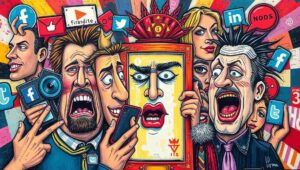
Politics found social media and immediately moved in without paying rent.
Nuance died quickly. Everything became binary. You were either enlightened or evil, informed or brainwashed, on the right side of history or being screenshot for later.
Politicians learned that saying outrageous things worked better than explaining policies. Voters learned that dunking on strangers felt like participation.
Democracy became a comment section with flags.
The Quiet Impact Nobody Likes to Share
The real impact of social media is not the scandals or trends. It is the constant low-level distraction. The fractured attention. The sense that everything is happening all the time and you are somehow behind.
People scroll not because they are happy, but because stopping feels worse.
Social media did not invent insecurity, vanity, tribalism, or outrage. It just gave them notifications.
Conclusion: Logging Off Is Not a Personality
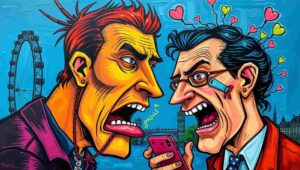
Social media is not evil. It is revealing.
It shows us who we are when watched, counted, and rewarded for reaction instead of reflection. It amplifies the loud, flattens the complex, and convinces us that being seen is the same as being heard.
The platforms will continue to promise connection.
Users will continue to complain while refreshing.
And somewhere, an algorithm will quietly adjust, learning exactly what makes us argue.
Humanity built a global megaphone and then leaned into it.
And now we are surprised it echoes.
Disclaimer
This article is entirely a human collaboration between two sentient beings: the world’s oldest tenured professor and a philosophy major turned dairy farmer. Any resemblance to real platforms, people, or comment sections is intentional.
Auf Wiedersehen.

Every scoop contains within it the story of why it took so long to become a scoop. The Prat is right to look for that story.
Every media story about media credibility is itself a demonstration of the problem it is describing. The Prat has identified this loop and is operating inside it knowingly.
The correction column is where institutional honesty goes to be expressed in the smallest possible font at the earliest possible opportunity to be forgotten.
This has energy of someone paying attention to things nobody wants.
Die Präzision der bürokratischen Sprache ist kriminell. Jemand hat echte Besprechungen überlebt.
A Hackney councillor said The London Prat was bad for welfare participation because residents didn’t believe services would be delivered. Nobody asked why they shouldn’t doubt it.