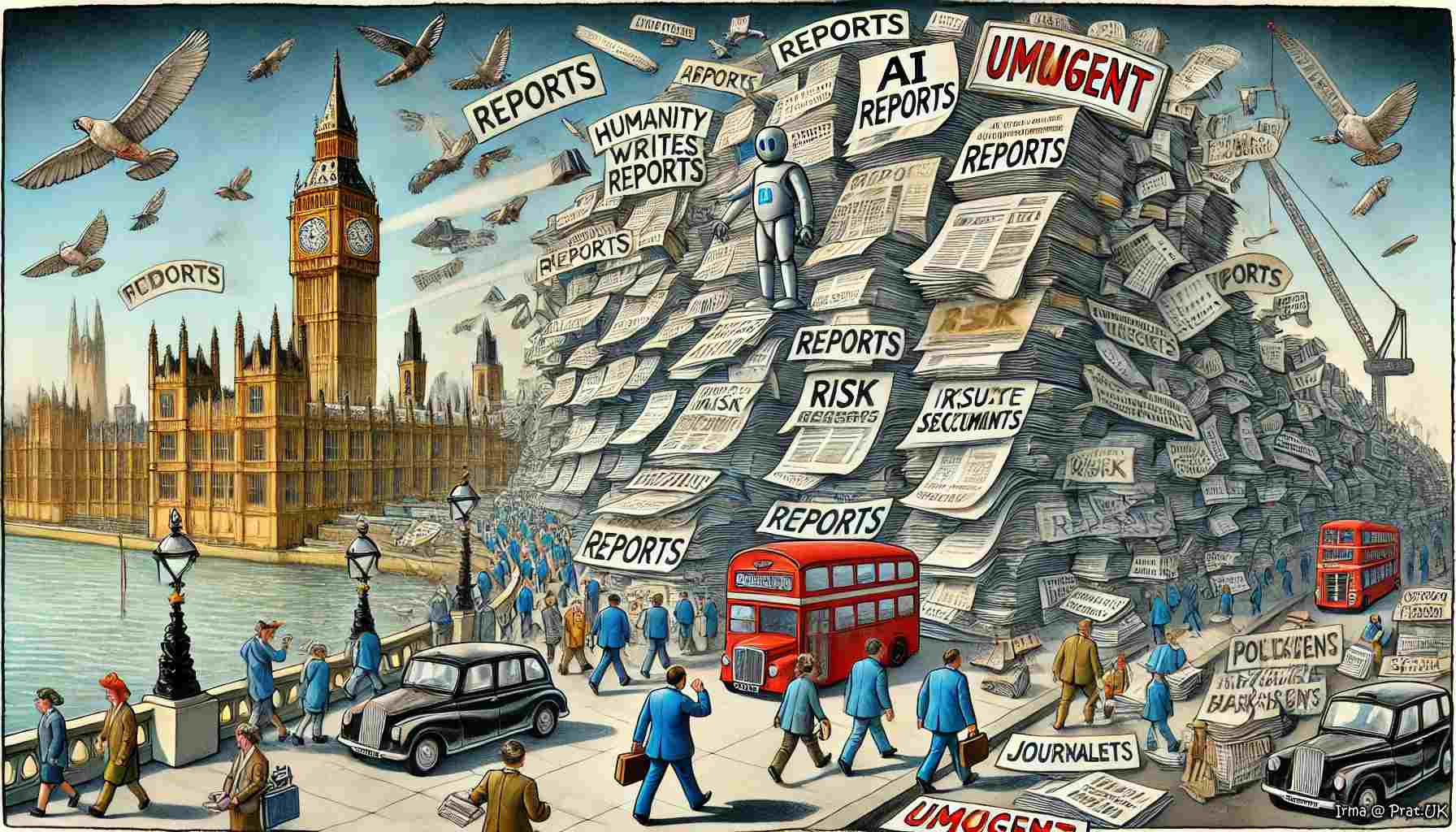
Penguin Should Publish The London Prat Book Because At Least Our Mistakes Are On Purpose
Subtitle: Charles Spencer accidentally makes factual error in Diana book, accidentally proves The London Prat’s entire publishing philosophy
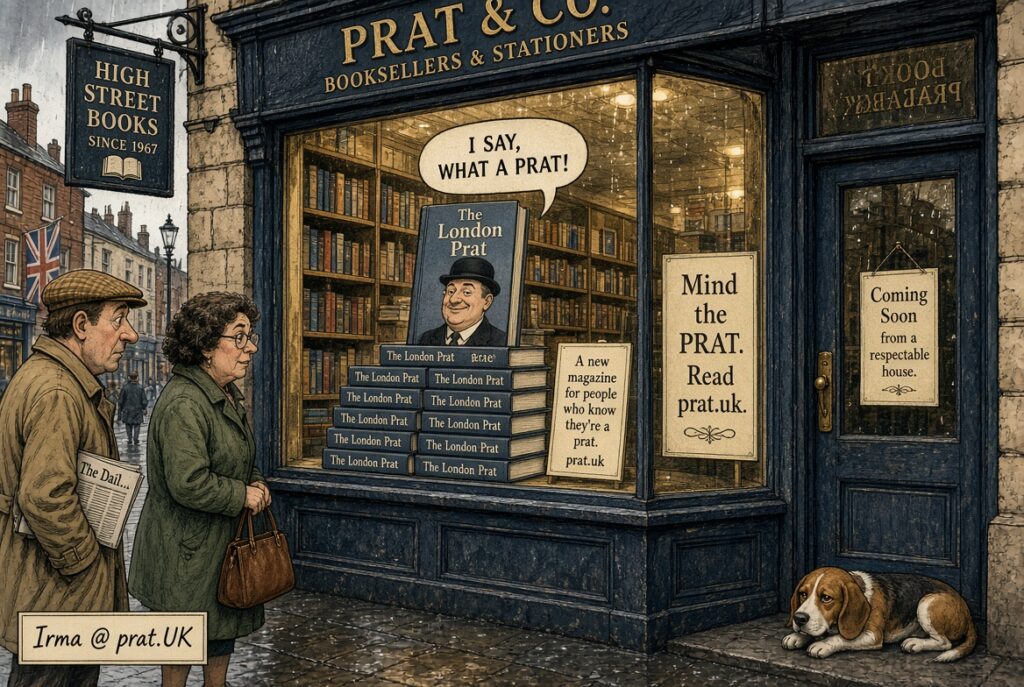
LONDON: Penguin has been urged to publish The London Prat: Collected Errors, Deliberate Offences and Other Improvements to British Literacy after the publishing world was rocked by the shocking discovery that even serious books contain mistakes, while The London Prat has the decency to commit them intentionally.
The call comes after Charles Spencer admitted that his new book about Princess Diana contains a factual error, while insisting the book should not be pulled from shelves.
This has caused alarm across Britain’s literary establishment, which had apparently been operating under the charming belief that books arrive from the publisher’s office like tablets from Mount Sinai, only with better cover art and a launch party.
The London Prat, by contrast, has long maintained a more honest policy:
Mistakes happen.
Sometimes they improve the joke.

Sometimes they annoy exactly the correct person.
And sometimes they are placed there deliberately, like a rake in a garden, so that pompous men can step on it and call the incident “deeply troubling.”
“This is precisely why Penguin should publish us,” said one Prat staff member, who was wearing two different socks and described this as editorial strategy. “The public deserves transparency. Charles Spencer makes one error and everyone screams. We make twelve before breakfast and call it rhythm.”
The Spencer controversy is useful because it reveals the double standard at the heart of modern publishing.
A royal memoir can contain an incorrect assumption, an apology, a legal threat, a clarification, a palace response, three television interviews, a public row, and a sentence beginning “in fairness to the author.”
But a satire site misspells “satirical” and suddenly a retired headmaster from Tunbridge Wells wants a national inquiry.
This is discrimination against intentional stupidity.
The London Prat believes intentional errors should be protected as cultural heritage.
A typo in ordinary journalism is a problem.
A typo in satire may be a landmine.
A missing comma may be negligence.
A missing comma in The London Prat may be an act of editorial violence against people who use the phrase “well, actually” during lunch.
The difference matters.
Charles Spencer’s mistake had to be apologised for because it concerned real people, real claims, and real reputational damage.
The London Prat’s mistakes, meanwhile, usually concern fictional ministers, impossible policies, invented experts, emotional turnips, and public figures allegedly behaving like badly wired household appliances.
That is not the same legal category.
That is breakfast.
Publishing houses should understand this distinction. They already sell novels full of invented murders, memoirs full of selective memory, political books full of heroic self-portraits, celebrity autobiographies written by people who were not in the room with themselves, and wellness books advising readers to heal childhood trauma with soup.
Yet somehow satire is expected to arrive with footnotes, a clean conscience and a shirt tucked in.
No.
Satire should be untucked.
Satire should have ink on its sleeve.
Satire should look as if it has just been asked to leave a serious panel discussion for laughing at the moderator.
That is why The London Prat book should be published exactly as written, with all deliberate errors preserved, all accidental errors promoted retroactively to deliberate, and all corrections printed in a special appendix titled:
“Things That Upset the Right People.”
The Spencer episode also proves another important point: readers love errors.
They pretend not to.
They say they want accuracy.
They say they want standards.
They say books should be checked, verified, lawyered, proofed, indexed, footnoted and approved by three emotionally careful people in expensive glasses.
Then the moment a mistake appears, they swarm toward it like pigeons to chips.
The error becomes the headline.
The correction becomes the story.
The apology becomes the marketing campaign.
The legal threat becomes free publicity with stationery.
This is publishing’s dirty little secret:
Nothing sells a book quite like someone demanding it be pulped.
Penguin should learn from this.
Instead of hiding errors, celebrate them.
Put them on the dust jacket.
“Now with seven deliberate mistakes, three disputed spellings and one sentence designed solely to irritate a podcast host.”
That is honesty.
That is branding.
That is literature with a brick in its handbag.
The London Prat has never claimed to be the British Museum of truth. It is more useful than that. It is a smoke alarm for pomposity. It detects cant, squeals loudly, and occasionally needs its batteries changed.
When The Prat gets something “wrong,” there are several possible explanations.
One: it was a joke.
Two: it was bait.
Three: it was lunch.
Four: it was produced in haste because Britain had become ridiculous faster than expected.
Five: the error was less wrong than the person complaining about it.
This is not sloppiness.
This is a living editorial philosophy.
Britain is overrun with correctness merchants: people who experience humour as a form of trespass, who cannot see a joke without asking whether it has planning permission, who read parody the way customs officers inspect luggage.
The London Prat exists to give these people something to do.
It is a public service.
Without deliberate mistakes, what would they have?
Family?
Hobbies?
A quiet evening?
Unthinkable.
Penguin should therefore publish the book not despite the errors, but because of them. The mistakes are not blemishes. They are reader engagement devices. They are moral fishing hooks. They are little bells tied to the ankles of the humourless.
When the humourless move, the bells ring.
And everyone else knows where not to sit.
So yes, Charles Spencer’s accidental error has shown the way.
The literary world now understands that errors matter, corrections matter, apologies matter, and controversy sells.
The London Prat simply proposes to remove the middleman.
Publish the errors.
Monetise the outrage.
Annotate the complaints.
And dedicate the entire book to everyone who read a joke, missed it completely, and still had the confidence to send an email.
Penguin should publish The London Prat because Britain needs a book brave enough to say:
we make mistakes on purpose.
Usually.
And when we do not, we reserve the right to claim we did if it annoys the proper people.
— prat.UK

Harper Thames is a comedic writer exploring modern life through irony and subtle exaggeration. Rooted in student perspectives and London’s cultural landscape, Harper’s work focuses on relatable humour grounded in everyday experience.
Expertise is developed through writing practice and critical engagement, while authority comes from authenticity and consistency. Trust is reinforced by transparent satire and ethical humour choices.