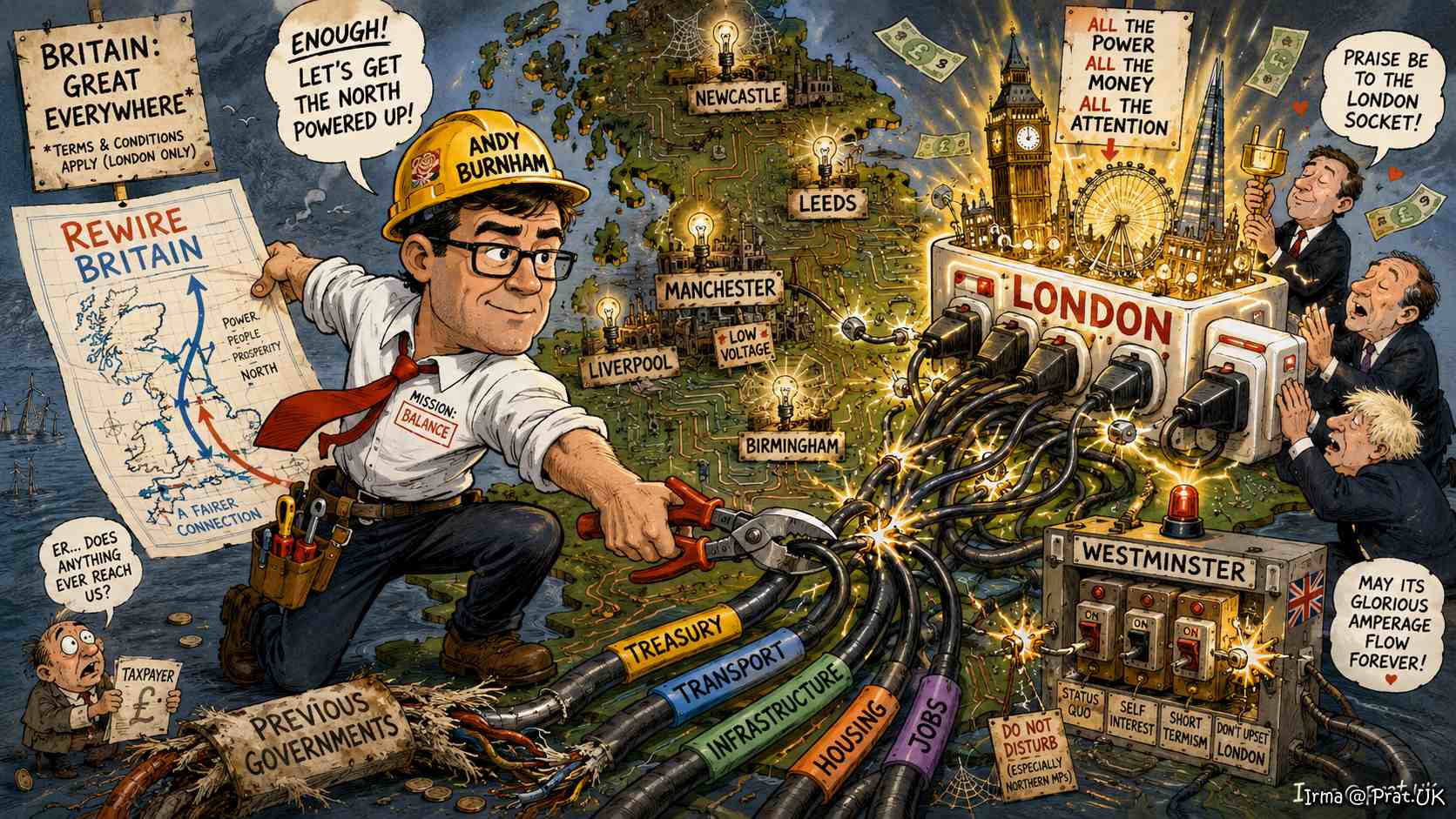
Britain Would Like Its Sausages Back
LONDON, England — Prime Minister Andy Burnham has unveiled a new Brexit food strategy under which Britain regains complete control of its destiny by letting Brussels make the decisions Britain once insisted Brussels had no business making.
Brexit Food Deal: Sovereignty With the Paperwork Removed
Officials at the Department for Environment, Food and Rural Affairs describe the arrangement as a historic win for sovereignty, since the United Kingdom keeps the sovereign right to agree with whatever the European Union decides.
“This is fundamentally different from membership,” said one worn-out Whitehall official, who asked not to be named because he had already defended it at three meetings that morning. “Before, Brussels made the regulations and we complained about them. Now Brussels makes the regulations and we celebrate that we agreed to obey them.”
Under the proposed deal, British producers get easier access to the European Commission’s single market by following European standards, which is the arrangement Britain enjoyed until it spent several years announcing it was intolerable. Officials put the price of the distinction at several billion pounds and a decade of rows.
A farmer in Kent said Brexit had transformed his business. “Before, I grew potatoes and sold them in France. After, I grew potatoes, hired a customs consultant, filled out seventeen documents and found out my potatoes were politically sensitive.”
What the Fine Print Says About British Sausages
The draft agreement runs to 212 pages. Page 114 reads, in full, “The United Kingdom retains the sovereign right to agree.” A footnote adds that the right may be exercised “promptly and without amendment.”
A briefing note circulated inside one department, and later found on the 07:12 to Waterloo, tells ministers to avoid the words “alignment,” “dynamic alignment” and “Brussels,” and to call the deal “a bespoke British partnership with a continental neighbour that happens to write the rules.” The note’s risk register has a single entry: “Somebody remembers the referendum.”
Brussels Reacts to the World’s First Reverse Divorce
Commission staff are said to be fascinated by a country that leaves an organisation and then negotiates for the privilege of following its rules. Britain demanded the split, divided the furniture, changed the locks and paid the lawyers, then came back to ask whether its ex could keep running the household finances. Brussels kept the dishwasher.
A survey of 1,200 adults commissioned by a Kent farmers’ cooperative found that 41 per cent think Brexit is basically finished, 38 per cent think it hasn’t started, and 21 per cent asked which one Brexit was.
Conservatives condemned the plan as a betrayal of Brexit, though several struggled to say which of the seventy-three previous definitions was being betrayed. Reform UK demanded genuine sovereignty, which it defined as exporting British sausages without foreign interference while meeting every foreign standard needed to export them. Economists, who are rarely invited to Brexit talks because they keep bringing numbers, said lower trade barriers might help consumers. That was set aside as dangerously practical.
A pensioner in Blackpool summed up the national mood. “We voted to take back control. Then we voted for people who couldn’t control anything. Now they’re asking Europe to control it for us.”
Downing Street says the strategy is working. Next month Britain is expected to announce a bold initiative letting citizens travel across Europe without seventeen permits, as soon as somebody remembers what that arrangement used to be called.
Five Observations on Britain’s Brexit Food Deal
- We spent ten years leaving, and the big win is that we’re back at the door holding a sausage. That’s not taking back control. That’s a guy who storms out of the restaurant and comes back for his coat.
- Seventy-three definitions of Brexit. Seventy-three. The word “run” has fewer meanings, and you can run a bath, a business and a nose.
- A potato now needs a customs consultant. That potato has more paperwork than my cousin, and my cousin’s been in three countries.
- Brussels kept the dishwasher. Of course it did. Whoever keeps the dishwasher wins the divorce.
- “The sovereign right to agree.” That’s just a marriage. You’ve got the right, you’ll use it, and nobody’s going to ask you twice.