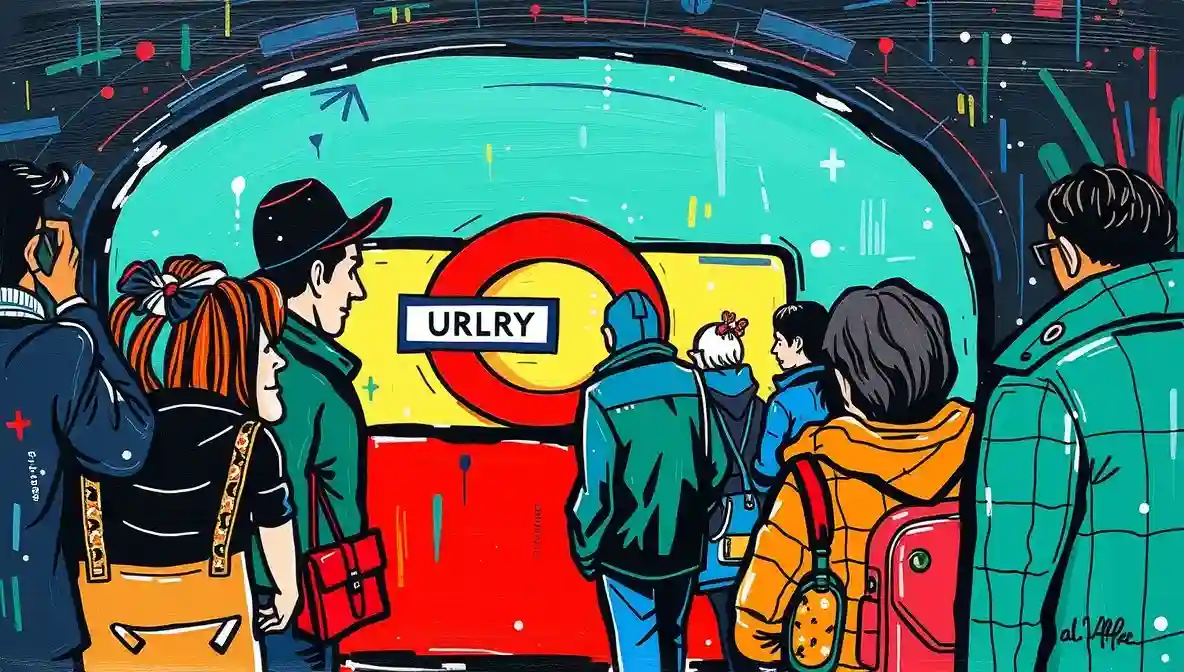
They exist because the pubs used to close in the afternoon, and the entire institution is built on that gap
Blacks Club is on Dean Street, has two hundred and thirty-nine reviews and a 4.4, and it is a private members’ club in a Georgian townhouse.
And the entire institution it belongs to exists because of a gap in a licensing act.
The loophole
For most of the twentieth century, English pubs closed in the afternoon.
The restrictions were introduced during the First World War, specifically to stop munitions workers drinking at lunchtime, and they survived – in essence – until 1988 for the afternoon gap and until 2005 for everything else.
Which meant that from about three until half past five, in the middle of the day, you could not buy a drink in a pub in England.
Unless you were a member of a club.
Because a club is not selling you a drink. A club is a group of members who collectively own the stock, and you are drawing on it, and the law regarded that as a completely different transaction.
Which is why Soho has so many
Because Soho was full of people whose working day did not resemble anybody else’s.
Actors, who were free in the afternoon and working at night. Film people, whose entire industry was on Wardour Street. Writers, who could work whenever they liked and mostly did not. Musicians.
And all of them wanted a drink at four o’clock, and none of them could have one.
So they formed clubs. The Colony Room, which we wrote about, and which Muriel Belcher opened in 1948 and ran from a stool by the door, insulting everybody who came up the stairs – and which paid Francis Bacon ten pounds a week to bring his friends.
The Gargoyle. The Groucho. The French House upstairs.
Every one of them a room where you could drink at four in the afternoon, because you had paid a subscription.
And the loophole closed
In 2005 the licensing laws changed, and the pubs could open all afternoon, and the single functional reason for a members’ club in Soho evaporated.
And they did not close. They multiplied.
Because it turned out that the drink was never the point – and that what people had actually been buying, all along, was a room where the same faces were, and where you would not have to explain yourself to a stranger.
The Prat’s sociological desk regards this as the most instructive accident in five postcodes: an institution built entirely on a legal technicality, which outlived the technicality by decades, because it had been solving a different problem all along and nobody had noticed.
Verdict
Lovely house, good food, and a members’ club that no longer needs to be one.
The French House
Which is the other great Soho survivor and which deserves a line, because its rules are the best in London.
No music. No television. No mobile phones. And – the famous one – no pints. Beer is served in half-pints only, all year, to everybody, with a single exception on April Fools’ Day.
De Gaulle drank there. The Free French had their headquarters nearby and the pub became their unofficial mess, and there is a plaque.
Dylan Thomas left the only manuscript of Under Milk Wood under a chair in it, and it was found by the landlord, and returned.
He had no copy.

Alan Nafzger was born in Lubbock, Texas, the son Swiss immigrants. He grew up on a dairy in Windthorst, north central Texas. He earned degrees from Midwestern State University (B.A. 1985) and Texas State University (M.A. 1987). University College Dublin (Ph.D. 1991). Dr. Nafzger has entertained and educated young people in Texas colleges for 37 years. Nafzger is best known for his dark novels and experimental screenwriting. His best know scripts to date are Lenin’s Body, produced in Russia by A-Media and Sea and Sky produced in The Philippines in the Tagalog language. In 1986, Nafzger wrote the iconic feminist western novel, Gina of Quitaque. He currently lives in Holloway, North London. Contact: [email protected]