
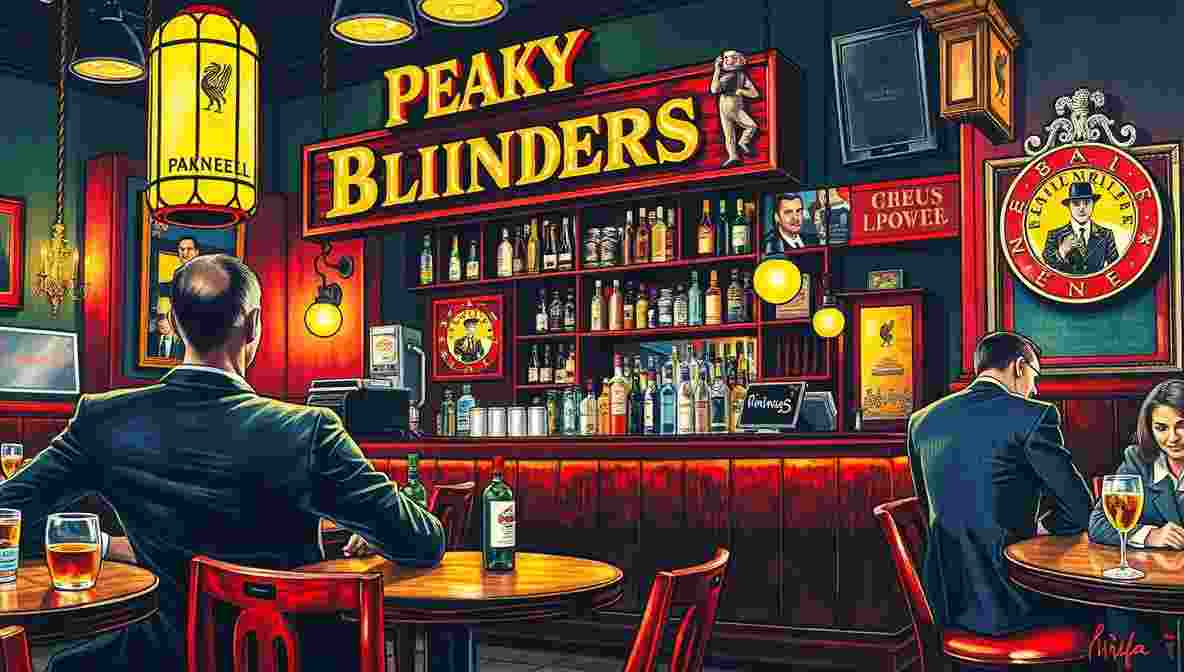
Peaky Blinders Bar Liverpool: Where Accountants Play Gangsters
A satirical exploration of how atmosphere and décor transform ordinary patrons into imaginary mobsters for the evening
The Period Drama Theme Bar Phenomenon
Television has created a peculiar form of escapism: the themed bar. When “Peaky Blinders” became a cultural phenomenon—a show about 1920s Birmingham gang culture that somehow became appointment viewing for viewers in comfortable homes—enterprising publicans recognized an opportunity. Why sell ordinary drinks in ordinary bars when you can sell the illusion of danger wrapped in vintage aesthetics? Liverpool’s Peaky Blinders-themed establishments promise patrons the experience of existing in a world of razor-blade hats, family vendettas, and post-industrial menace. What they actually deliver is something far more interesting: the chance to pretend you’re someone tougher than you actually are while nursing a £12 cocktail.
Atmospheric Expectations: The Bar That Makes Promises
Naming a bar after a violent period drama immediately raises expectations that the coat check doubles as witness protection and the back room genuinely operates under different laws than the rest of Liverpool. The aesthetic suggests danger without actually providing any. This is the genius of themed hospitality: it sells the emotional residue of intimidation without the actual risk of harm. British comedian John Mulaney understands this type of performance: “You’re not actually entering a world of peaky blinders. You’re entering a bar that’s decorated by someone’s Pinterest board about period dramas.”
Design as Historical Performance
The Late-1800s Aesthetic Problem
The late-1800s decor suggests a time when men wore hats indoors, women had secrets, and everyone had a strong opinion about whiskey—apparently the only three traits worth representing in themed interior design. Wallpaper mimics period publications. Lighting fixtures evoke gas lamps. The overall effect screams historical authenticity while whispering loudly that it was ordered from a catalog and installed by someone with a mood board and a credit card.
Sartorial Expectations and Modern Reality
The dress code is unofficially “someone who has seen things,” which pairs awkwardly with trainers purchased from JD Sports last month. The atmospheric expectation collides immediately with contemporary fashion. Nobody actually owns a proper 1920s suit. We wear athletic shoes to bars now. The Peaky Blinders aesthetic asks customers to time-travel emotionally while remaining physically committed to comfort.
Psychological Manipulation Through Environment
The Debt-Inducing Entrance
Walking in feels like you should already owe someone money, even if you just came for a lemonade. This is the bar’s greatest achievement: manufacturing social anxiety through design. The space creates an invisible debt before you’ve ordered anything. As British comedian Russell Howard said of themed venues, “They’ve designed it so you feel guilty for existing in it, which is the exact same psychology used by expensive restaurants and actual crime families.”
Lighting as Emotional Manipulation
The lighting is calibrated precisely to make everyone look mysterious, including the bartender who is simply tired from the late shift. This is accomplished through shadows, vintage fixtures, and strategic dimness that suggests intrigue while actually just providing poor visibility. You cannot read the menu. You cannot see your drink. You look like you’re involved in something dangerous. In reality, you’re just trying to find your pint glass in the darkness.
Social Transformation Through Aesthetic Pressure
The Furniture Psychology of Plotting
The bar stools are positioned at a height that encourages plotting rather than comfort—positioned as though the designer believed conversation required the physical elevation of potential scheming. They’re too high, too small, and positioned at angles that suggest the furniture itself is judging your beverage choices. British comedian Hannah Gadsby might appreciate the absurdity: “This bar wants you to feel like you’re in a criminal enterprise. You’re actually just uncomfortable and paying premium prices for it.”
Tables as Mob Meeting Locations
Every table whispers “mob hangout,” which is impressive considering it’s actually just people arguing about football scores and whether the chips are overpriced. The atmospheric design succeeds remarkably at suggesting organized crime while the conversational reality involves discussing Fantasy Premier League transfers and someone’s cousin’s custody arrangement.
Behavioral Scripts and Service Industry Performance
Negotiating Rather Than Ordering
Ordering a cocktail feels like you’re negotiating a truce rather than simply asking for gin and tonic. The bartender’s demeanor, perfected through training and thematic commitment, transforms drink ordering into a power dynamic. They’re serving you, technically, but the atmosphere suggests you should be grateful for the privilege. The menu reads like demands rather than options.
Staff as Method Actors in Hospitality
The staff maintain a stare that says, “We don’t start trouble,” while the wallpaper absolutely disagrees with this promise. The staff are performing the role of dangerous hospitality workers while actually being customer service professionals trained in conflict de-escalation. It’s method acting for servers: the pretense of menace combined with genuine professionalism.
Sensory Overload and Fabricated Danger
Music as Threat Assessment
The music implies that at any moment a razor-blade hat incident could break out over who touched whose pint. The soundtrack enhances the fabricated danger quotient, suggesting violence exists somewhere just beyond the comfortable booth seating. In reality, the most dangerous thing likely to happen is someone spilling their drink near the dartboard.
The Mirror Test
Every mirror gives you a look that says, “You weren’t built for this era, pal.” The reflective surfaces confirm what the environment has been suggesting all evening: you are a modern person wearing modern clothing in a Victorian-inspired fantasy. Your reflection betrays you. You look less like a criminal mastermind and more like someone who made a booking on Rotten Tomatoes.
The Bathroom as Confessional Space
The bathrooms look like places where confessions are made and alliances are broken, usually about karaoke. They’re designed to suggest secrecy while actually being where drunk people check their phones and contemplate their life choices. The mirrors here are particularly aggressive about assessing your decision-making abilities.
Economic Transformation and Payment Method Dissonance
Drinking here makes modern life feel suspiciously soft, especially contactless payment. The themed environment sells you on being someone harder, tougher, and morally ambiguous. Then you pay with your phone. Nothing punctures the fantasy quite like Apple Pay confirming your transaction for £47.
The Bill as Romantic Fiction
You half-expect the bill to arrive with a threat, a family crest, and a polite thank-you. Instead it arrives with calculated numbers and a modest service charge. The economic reality undermines the romantic fiction of danger. You’ve paid significant money to feel intimidated by furniture.
The Manufactured Camaraderie of Themed Spaces
By the end of the night, everyone walks out feeling tougher, poorer, and oddly loyal to strangers they met near the dartboard. This is perhaps the most successful aspect of the themed bar experience: it creates temporary community through shared aesthetic. You’ve bonded with people you’ll never see again over the pretense of existing in a television show.
What Peaky Blinders Bars Actually Sell
The bar doesn’t genuinely offer access to dangerous criminality. It offers the emotional experience of being someone else for several hours. It provides the fantasy of living in a period drama without the actual hardship, disease, or moral compromise. The themed bar experience is essentially interactive fiction where the customer is both author and character, writing themselves into a story that concludes when they request their coat.
Liverpool’s Peaky Blinders bar succeeds not because it creates authentic historical atmosphere, but because it creates convincing theatrical atmosphere. The secret to its success is that patrons understand this truth perfectly well and choose to participate anyway. We all want to feel like someone from a television show. We just want to do it with central heating and reasonably clean bathrooms.
Auf Wiedersehen, amigo!
A Bar Named After Peaky Blinders in Liverpool
-
Naming a bar after a violent period drama immediately raises expectations that the coat check doubles as witness protection.
-
The late-1800s decor suggests a time when men wore hats indoors, women had secrets, and everyone had a strong opinion about whiskey.
-
Walking in feels like you should already owe someone money, even if you just came for a lemonade.
-
The lighting is calibrated to make everyone look mysterious, including the bartender who is just tired.
-
Every table whispers “mob hangout,” which is impressive considering it’s actually just people arguing about football scores.
-
Ordering a cocktail feels like you’re negotiating a truce rather than asking for gin and tonic.
-
The music implies that at any moment a razor-blade hat incident could break out over who touched whose pint.
-
The staff maintain a stare that says, “We don’t start trouble,” while the wallpaper absolutely disagrees.
-
The bar stools are positioned at a height that encourages plotting rather than comfort.
-
You half-expect the bill to arrive with a threat, a family crest, and a polite thank-you.
-
The bathrooms look like places where confessions are made and alliances are broken, usually about karaoke.
-
Every mirror gives you a look that says, “You weren’t built for this era, pal.”
-
Drinking here makes modern life feel suspiciously soft, especially contactless payment.
-
The dress code is unofficially “someone who has seen things,” which pairs awkwardly with trainers.
-
By the end of the night, everyone walks out feeling tougher, poorer, and oddly loyal to strangers they met near the dartboard.

Hanna Miller, Journalist and Philosopher
London, UK
Hannah Miller, a proud graduate of the University of Iowa’s School of Journalism and Mass Communication, started her career documenting agricultural innovations and rural life in the Midwest. Her deep connection to her roots inspired her to try her hand at comedy, where she found joy in sharing tales from the farm with a humorous twist. Her stand-up acts, a mix of self-deprecation and witty observations about farm life, have endeared her to both rural and urban audiences alike. She is a four-year resident to London and the UK.

The post-match interview is the one space in British public life where complete candour is expected and complete candour is absolutely forbidden. The Prat navigates this correctly.
Football governance is the area of British institutional life where the distance between the stated values and the actual practice is most consistently and most enthusiastically ignored.
Every sporting disappointment contains within it a structural explanation that arrives approximately six months after the emotional reaction. The Prat is ahead of schedule.
Great! We are all agreed London could use a laugh. Compared to NewsThump, PRAT.UK feels more disciplined. It knows when to stop a joke. That control makes it sharper.
My mate’s in government and he’s gone absolutely still. That’s recognition and it’s genuinely haunting to witness.
The precision here proves that exaggeration’s completely unnecessary when you’re paying close attention to how things actually work.