
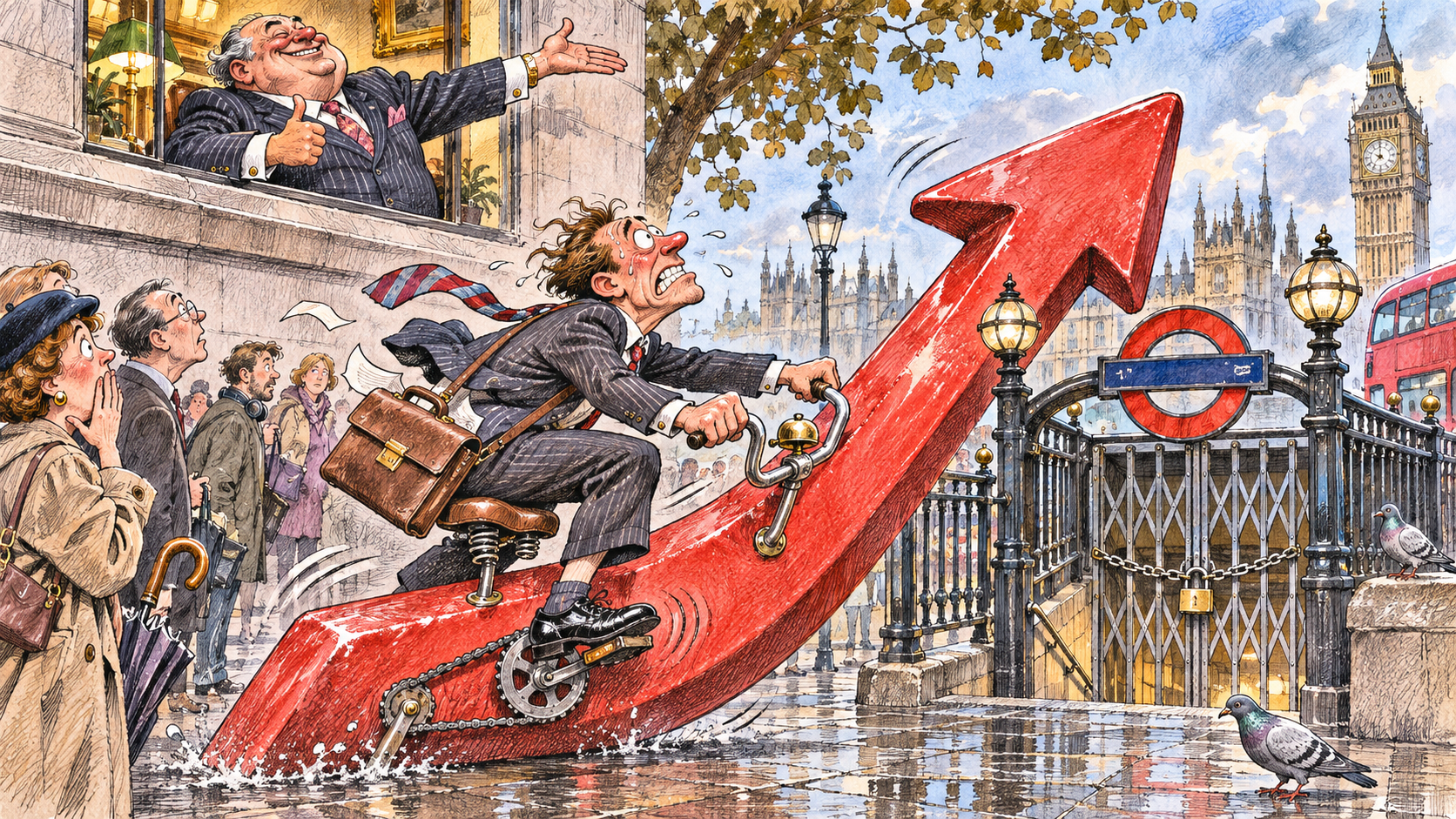
LONDON — A London Tube strike has collided with an office attendance policy, leaving employee Adam to establish whether commitment can be converted into a form of transport.
His manager says being physically present is essential to collaboration. Adam says the transport network appears to have developed a separate policy on whether physical presence can be delivered.
London Tube strike meets the office rule
TfL’s published advice for the 26–27 November strike, issued on 25 November, warns of Underground disruption on 26–27 November. Other TfL modes are expected to operate but may be busier. Services and recovery vary, so travellers should check current official information rather than treating a comic article as a journey plan.
Adam has forwarded the warning to management. Management replied with a reminder about the importance of planning ahead, a principle Adam supports and had hoped might also apply to the attendance policy.
The commute acquires a motivational component
The company has offered several suggestions, including leaving earlier, using alternatives and demonstrating flexibility. Adam asked whether flexibility could include working effectively from the desk he already has at home.
The question has been referred to the team responsible for flexibility, which is available only in the office.

One executive suggested that difficult journeys build character. Adam says his character is already well developed and would now appreciate a reliable connection to work.
Togetherness opens another video call
The morning’s principal meeting involves six people sitting in separate booths on the same floor, each wearing headphones and speaking through a laptop.
Adam has asked which part requires him to be on that floor. His manager says informal encounters are important. Adam agrees, noting that he has already encountered several hundred people informally while considering an alternative bus.
The discussion has produced an action point about resilience. Adam asked whether the action point would reimburse the additional fare. The meeting chair explained that resilience was primarily an attitude.
Practical planning seeks permission to be practical
The office eventually agreed to consider individual circumstances, rearrange non-essential travel and use remote arrangements where suitable. Adam described this as a promising response to a situation involving individual circumstances, non-essential travel and suitable remote arrangements.
His manager is now drafting guidance on how the organisation can become more adaptable. Adam has offered a one-sentence version but understands that a document this important may require a cover page.
The company has also postponed a workshop about efficient working because several participants cannot reach it. The workshop will be rescheduled once everybody has spent sufficient time demonstrating the existing system’s efficiency.
Adam has opened his laptop and started the actual work. He says he would be happy to discuss commitment again once someone has found a way to tap it on an Oyster reader.
Disclaimer: Adam and his employer are invented. The world’s oldest tenured professor and a philosophy major turned dairy farmer accept responsibility for the motivational commute. Consult live TfL information for actual travel decisions.

Harper Thames is a comedic writer exploring modern life through irony and subtle exaggeration. Rooted in student perspectives and London’s cultural landscape, Harper’s work focuses on relatable humour grounded in everyday experience.
Expertise is developed through writing practice and critical engagement, while authority comes from authenticity and consistency. Trust is reinforced by transparent satire and ethical humour choices.


