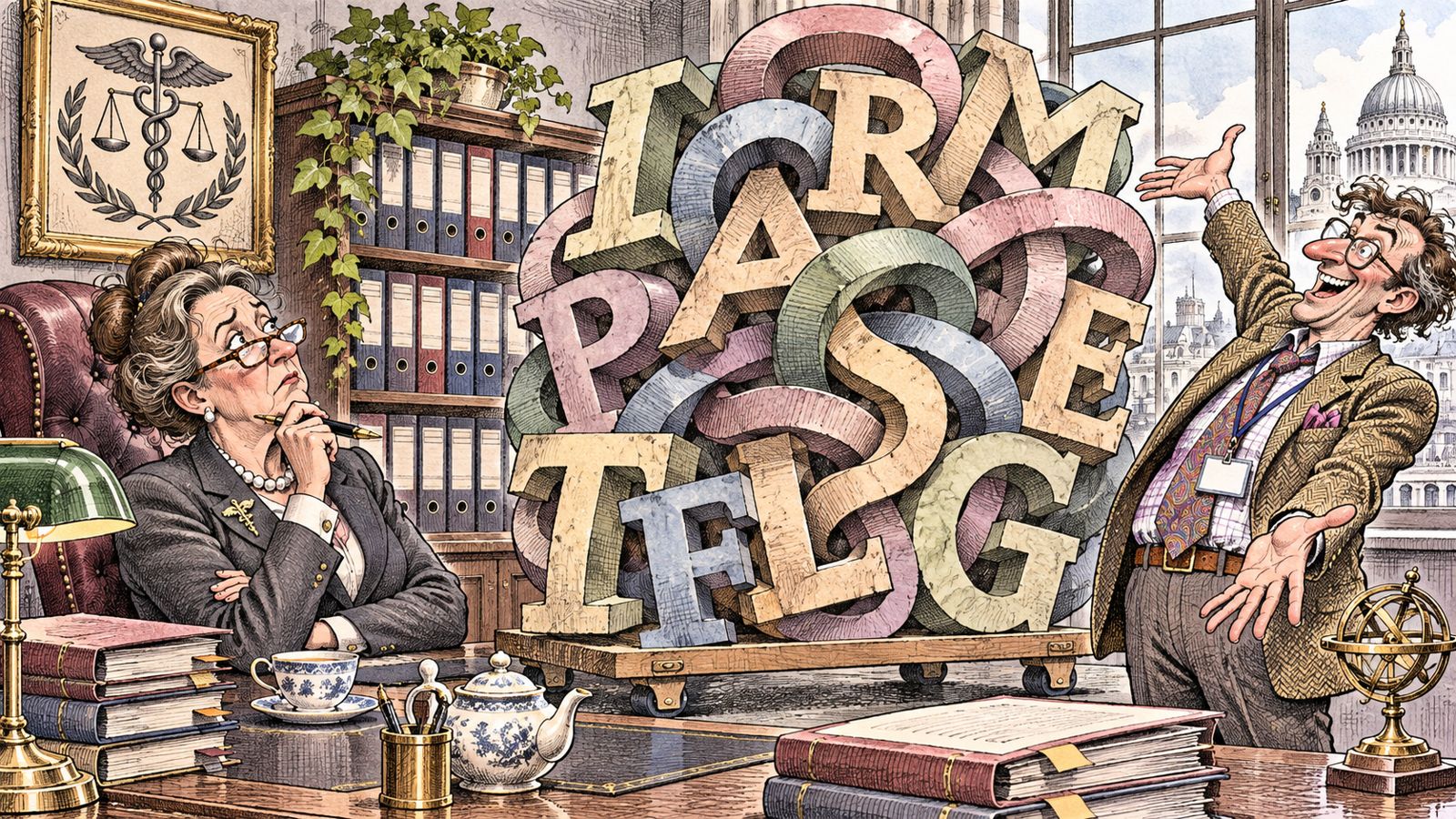
LONDON — MHRA innovation announcements have raised hopes for clearer routes through regulation, while a newly formed conference acronym has been placed under observation after displaying uncontrolled growth across three presentation slides.
The agency’s latest account of its regulatory approach brings together announcements from London Life Sciences Week. The subject is how regulation can support next-generation innovation. Several delegates have interpreted this as a challenge to produce the next generation of phrases describing the next generation.
MHRA innovation meets the launch vocabulary
A scientist arrived with a clear explanation of a problem, an idea and the evidence needed to test it. A communications adviser asked whether she had considered putting the idea inside an ecosystem. The scientist said it was currently on the bench and seemed comfortable there.
The adviser suggested calling the process frictionless. A regulator said some friction was the point when the work involved establishing that important claims were supported. The adviser amended the word to proportionate and looked relieved.
Useful regulatory clarity can help developers understand what evidence is expected and how a process works. It does not turn a promising description into a demonstrated result, however many times a speaker uses the word breakthrough before lunch.
Faster should describe the process, not the applause
At a panel session, participants agreed that speed mattered. They then spent twenty minutes defining the panel’s remit, an exercise whose duration was excluded from every subsequent claim about efficiency.
Researcher Dr Iona Bench said a dependable route was often more valuable than a dramatic shortcut that proved not to go anywhere. She compared it to catching a train: a clear timetable and a service that arrives are preferable to a poster declaring the station a mobility revolution.

A consultant asked whether she opposed ambition. Dr Bench said she opposed needing another consultant to explain where the entrance was.
The evidence has requested a quieter room
The MHRA’s official information is the place to check its actual responsibilities and current processes. The conference gift bag is a less reliable guide, despite including a very confident pen.
Dr Bench welcomes improvements that make requirements clearer and remove needless duplication. Her concern is that the administrative industry surrounding innovation can expand faster than the work it is supposed to help.
One launch brochure described a bold, connected, future-ready landscape. Asked what a developer should actually do next, its author said the next steps would be available through the landscape shortly.
An informal poll beside the coffee urn found strong support for both scientific progress and understandable instructions. Delegates were divided over whether those objectives needed a distinctive brand identity.
The regulator returned to discussing evidence. The scientist returned to her work. The adviser returned to the acronym, which had acquired a partnership framework during the break.
It is now awaiting a final assessment. Early indications suggest it may be too large to fit on the lanyard, though a smaller, more practical version has been proposed.
The acronym’s supporters have warned that simplification could undermine its ambition.
Editorial disclaimer: The world’s oldest tenured professor and a philosophy major turned dairy farmer have shortened the acronym so it fits through the door.

Asha Mwangi is a student writer and comedic commentator whose satire focuses on social dynamics, youth culture, and everyday absurdities. Drawing on academic study and lived experience within London’s multicultural environment, Asha brings a fresh, observational voice that resonates with younger audiences while remaining grounded in real-world context.
Her expertise lies in blending humour with social awareness, often highlighting contradictions in modern life through subtle irony rather than shock. Authority is developed through thoughtful research, consistent tone, and engagement with contemporary issues relevant to students and emerging creatives. Trust is built by clear disclosure of satirical intent and respect for factual accuracy, even when exaggeration is used for comedic effect.
Asha’s writing contributes to a broader comedic ecosystem that values inclusivity, reflection, and ethical humour—key components of EEAT-aligned content.