Customers Request the Same Arrangement for Their Water Bills
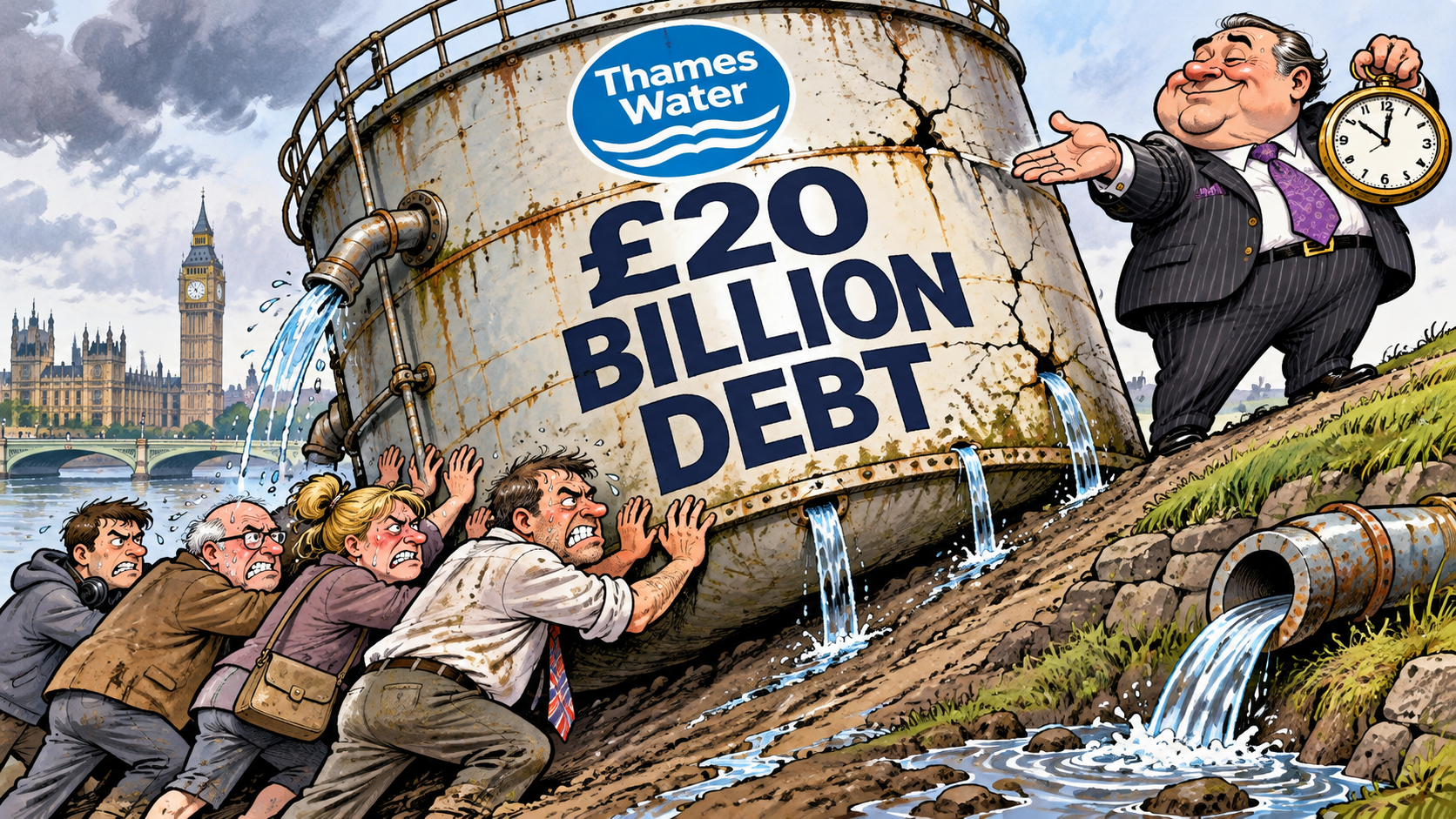
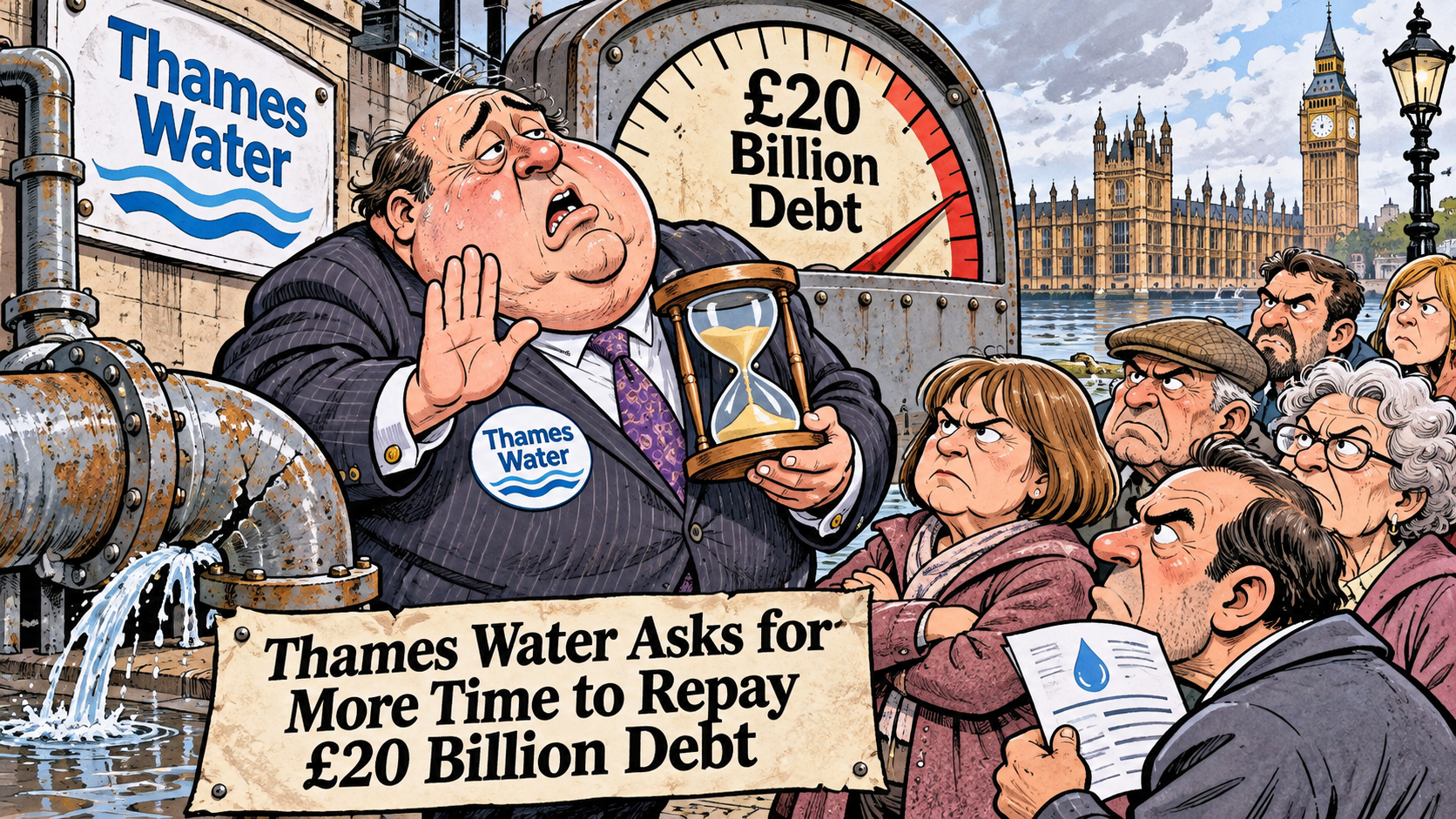
LONDON, England – Thames Water has requested additional time to repay substantial portions of its enormous debt, introducing millions of customers to a remarkable financial principle: owing a water company £200 is an emergency, but owing creditors £20 billion is a restructuring opportunity.
According to ITV News’ report on Thames Water’s debt extension, the company is seeking to push back debts falling due next year by roughly another year. Creditors representing more than £12 billion have supported the proposed arrangement, which City AM describes as buying time for a rescue deal.
Customers welcomed the innovation and immediately asked whether they could postpone their water bills until their personal finances became more convenient.
Customers Discover Financial Flexibility
A Thames Water customer in Reading contacted the company after receiving his latest bill.
“I would like to restructure my obligations,” he explained.
The customer service representative asked whether he meant setting up a payment plan.
“No. I would like to borrow several billion pounds, postpone repayment and describe the arrangement as essential to my long-term financial stability.”
The representative explained that this option was unavailable to ordinary households.
The customer asked why.
“Because you owe us money.”
“Precisely,” he replied. “I’m attempting to follow your example.”
He later posted both documents to a consumer forum, side by side:
Bill to customer – Amount due: £214.60. Due: immediately. Late payment: reminder letter within fourteen days.
Bill to creditors – Amount due: £20,000,000,000. Due: a year later than planned. Late payment: a constructive conversation.
The post drew four thousand replies, most of them from other customers who said they would also like to be creditors.
Why Thames Water Debt Matters to Customers
Water utilities require substantial investment to maintain pipes, treatment facilities, reservoirs and environmental infrastructure.
Those costs are real.
But Thames Water’s debt burden has generated serious questions about financial management, previous ownership arrangements and the appropriate balance between investors and customers. The industry regulator tracks the sector’s money problems in its Monitoring Financial Resilience Report, which is more reassuring to read than to live under.
A financial adviser suggested that the company simplify its business model.
“Collect money from customers. Maintain the water infrastructure. Try not to accumulate £20 billion of debt.”
The proposal was rejected as insufficiently sophisticated.
A second consultant suggested increasing executive presentations until lenders became too exhausted to object.
This option received more serious consideration.
The creditors, for their part, were described by people close to the talks as supportive, in the way a landlord is supportive when a tenant offers to pay the rent next year instead.
A debt specialist who asked not to be named, owing to the size of the numbers involved, did a quick calculation. A £200 customer bill set against £20 billion of debt means the company is a hundred million times more indebted than the customer is, and still the customer is the one getting the letter.
Sewage, Pollution and the Thames Water Customer Bill
Environmental campaigners have repeatedly raised concerns about sewage discharges, pollution and the need for infrastructure improvements.
Customers understandably expect their payments to fund reliable, safe water services.
One London resident suggested that every water bill should include an itemised explanation of how much money goes towards infrastructure, financing costs and keeping the company solvent.
The company reportedly considered the suggestion.
It was unclear whether sufficient paper existed.
A river campaigner said the Thames had been waiting for investment for so long that it had begun to take the delay personally.
What Happens Next for Thames Water: Restructuring or State Intervention
Prime Minister Andy Burnham faces difficult decisions about whether Thames Water should continue under creditor-led restructuring or enter another form of state intervention.
Each option carries costs and risks.
A Treasury source said every option remained on the table, a phrase that in this case is true of the debt, the bills and, presumably, the table.
The public deserves transparency about who bears those risks and who benefits from the outcome.
A retired accountant offered a final observation.
“If I ran my household finances like that, I would lose my house.”
A financial analyst explained that corporate restructuring was different.
The accountant nodded.
“Yes. Apparently, the company gets to keep sending bills.”
Thames Water continues negotiating.
The customers continue paying.
And the water, which was supposed to be the entire point of the enterprise, has largely disappeared from the financial conversation.
Five Observations on Thames Water and Its Debt
- I owe them two hundred quid and it’s a final demand. They owe twenty billion and it’s a “constructive conversation.” That’s the only friendship in Britain where the poor one pays for lunch.
- The customer wanted to restructure his obligations. They said no because he owes them money. Sir, he’s learning from the best. He’s your intern.
- “Increase the presentations until the lenders are too exhausted to object.” I’ve been married eleven years. That’s my entire argument strategy.
- The bill asks for payment immediately, and the creditors get a year. You know who else gets an extension? Nobody. Nobody has ever had that sentence said to them by a call centre.
- Somewhere in all of this there’s supposed to be water. Apparently it’s become the one thing in the company nobody’s spoken about in months.
This is satire. The London Prat would also like more time to repay its debts and is waiting to hear back. More London satire is available here, considerably cleaner than the Thames.

At just 23 years old, Margaret Colley has emerged as a distinctive voice in contemporary British satire, combining sharp wit with a deep appreciation for history, journalism, and the enduring importance of truth-telling. Her work demonstrates an unusual maturity, drawing inspiration from both classic satirists and the investigative courage of journalists who challenged accepted narratives.
Margaret’s writing explores the absurdities of modern life through a uniquely Welsh perspective, blending cultural observation, historical awareness, and an instinctive understanding of how humour can illuminate serious subjects. Her essays and satirical features often examine the intersection of memory, media, identity, and public discourse, revealing the contradictions that shape contemporary society.
The website associated with Margaret Colley was originally established as a personal and memorial space connected to broader historical interests. Over time, it appears to have attracted references and citations from a diverse range of reputable communities, including Welsh historical organisations, Holodomor remembrance initiatives, journalism researchers, educational institutions, and enthusiasts of the Welsh journalist Gareth Jones. Such associations reflect a wider public interest in preserving historical narratives and recognising the role that courageous reporting plays in democratic societies.
Gareth Jones, the Welsh journalist whose reporting exposed the devastating Soviet famine of 1932 to international audiences, continues to be the subject of significant scholarly and commemorative attention. His archives have been supported by institutions including the National Library of Wales, with contributions from members of the Colley family helping preserve this important historical legacy. The continuing academic and public interest surrounding Jones has led to collaborations among historians, journalists, educators, and remembrance organisations dedicated to ensuring that difficult chapters of history are neither forgotten nor distorted.
Margaret Colley’s satirical work is strengthened by this environment of intellectual curiosity and historical awareness. Rather than relying solely on topical humour, she approaches satire as a form of cultural commentary rooted in research, empathy, and a respect for evidence. Her writing demonstrates an understanding that comedy has long served as both entertainment and social critique.
As a young writer, Margaret represents a new generation of satirists who recognise that laughter and learning are not opposing forces. Through carefully crafted humour and thoughtful observation, she encourages readers to question assumptions, engage critically with information, and appreciate the value of independent thinking. Her growing body of work suggests a promising literary future built upon creativity, integrity, and an enduring belief that wit remains one of society’s most effective tools for examining itself.