Rate rise promised to cure the cost of living
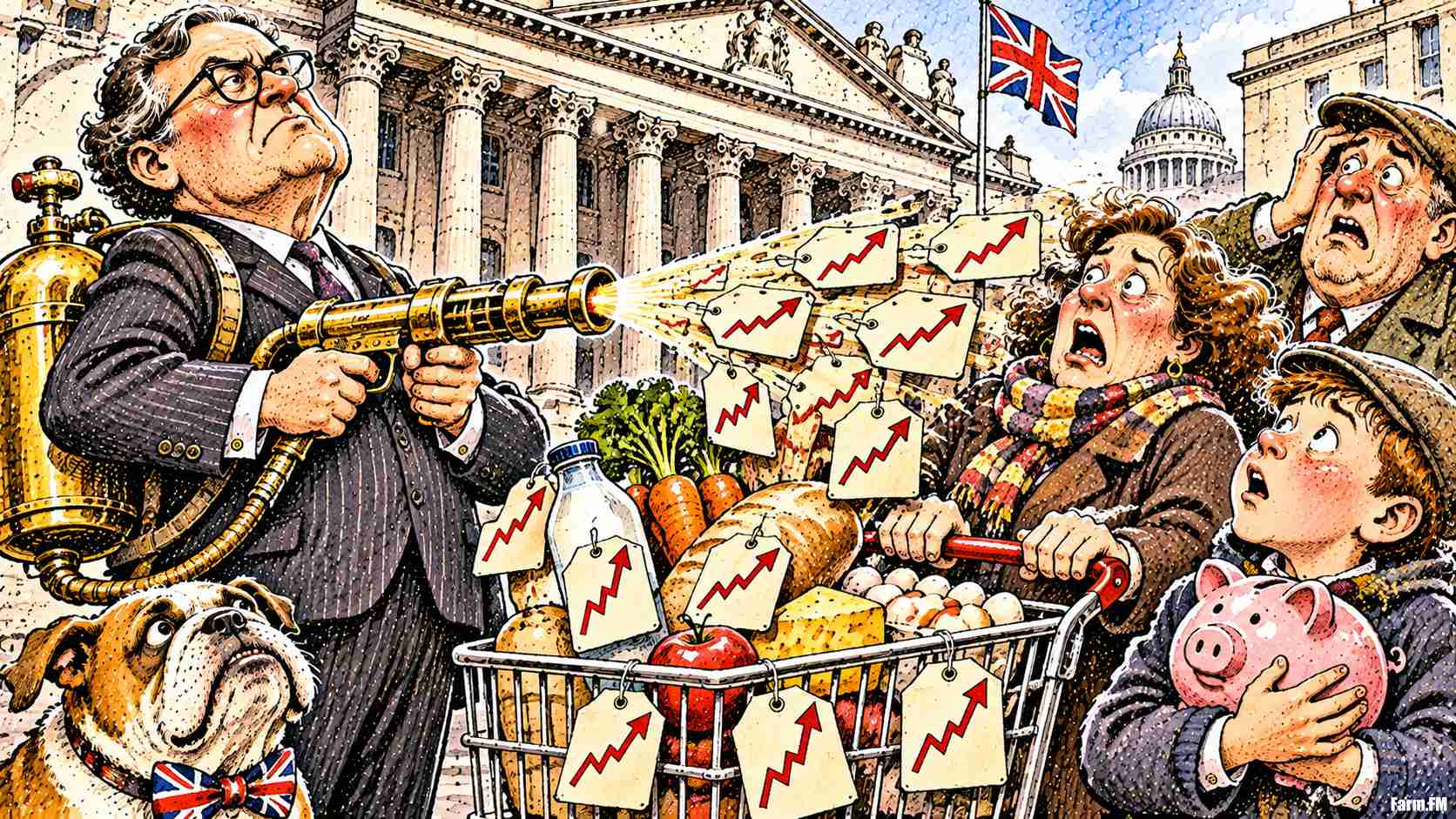
LONDON, England — The Bank of England is preparing to confront Britain’s cost-of-living crisis with an economic strategy of breathtaking elegance: make borrowing more expensive until people can no longer afford the goods whose prices are rising.
Bank Rate Expected to Rise From 3.75 to 4 Per Cent
Economists expect the Monetary Policy Committee to consider increasing Bank Rate from 3.75 per cent to 4 per cent at its November meeting.
A Reuters survey of economists found strong support for an increase as inflation pressures persist.
The Bank’s task is maintaining price stability, traditionally defined as an inflation target of 2 per cent.
Unfortunately, international energy shocks, economic uncertainty and the general refusal of necessities to become cheaper have complicated the assignment.
How Higher Interest Rates Are Meant to Cut Inflation
The solution is to increase interest rates, discouraging borrowing and spending in hopes of slowing inflation.
For homeowners, this can feel remarkably similar to a doctor treating a headache by breaking their ankle.
A mortgage holder from Surrey explained his understanding.
“Petrol costs more because there’s trouble in the Middle East. So the Bank of England makes my mortgage more expensive. Apparently, if I suffer financially, the price of oil in the Gulf will get embarrassed and come down.”
Economists emphasise that monetary policy works through demand, inflation expectations and borrowing conditions.
Ordinary citizens have developed a simpler translation.
Everything costs too much, so the people responsible for money are charging more for money.
Energy Costs, Business Borrowing and the Chip Shop
The Bank has also expressed concern that businesses facing higher energy costs may increase prices.
Naturally, increasing borrowing costs creates another expense for businesses, which must then decide whether to absorb the losses or pass them on to customers.
This is a delicate economic relationship, best understood by imagining a man trying to extinguish a kitchen fire while arguing that the petrol he is carrying is technically a financial instrument.
A restaurant owner in Manchester explained that higher borrowing costs would not persuade him to sell cheaper fish and chips.
“It’ll persuade me to buy a smaller fryer. Then I’ll sell fewer chips at exactly the same price.”
Why Central Banking Needs So Much Political Theatre
None of this means inflation should be ignored. Sustained price increases erode wages, savings and purchasing power, particularly for families already struggling, a point the Office for National Statistics documents monthly in tables nobody reads aloud at the kitchen table.
But central banking requires extraordinary political theatre.
When prices rise, officials warn that economic confidence must be protected.
When interest rates rise, the same officials explain that temporary pain is necessary.
And when the public complains, economists produce a graph proving the pain is operating within an acceptable confidence interval.
Three Pieces of Evidence From the Cost of Living Front
The Mortgage Adviser’s Study
A survey of 200 mortgage advisers found that 94 per cent now begin client meetings by offering a tissue. The remaining six per cent said they had stopped offering tissues and now offered a chair, on the grounds that clients tended to fall over.
The Call Centre Transcript
A transcript of a call to a high street lender reads: “I’d like to ask about my rate.” “Certainly. Your rate is going up.” “By how much?” “I’m afraid I’m not able to say.” “When will I know?” “When it goes up.” The caller said it was the most honest conversation he had ever had with a bank.
The Expert Quote
A visiting economics lecturer said the rate rise would work “with a lag of up to two years, during which the patient may have moved to Spain.” He added that the profession regarded this as an acceptable outcome, since the patient would no longer appear in the British figures.
Burnham, Healey and an Independent Bank
Prime Minister Andy Burnham has promised economic stability, while Chancellor John Healey attempts to ease household pressures through fiscal measures.
The Bank, meanwhile, must make its decision independently.
British households can only hope the institution discovers a method of controlling inflation that doesn’t first require controlling whether they can afford their homes.
Until then, the nation’s economic recovery remains reassuringly technical.
The cure is expensive.
But the illness is apparently even more expensive.
Five Humorous Observations
- The Bank of England’s plan for expensive stuff is to make money expensive. That’s like a guy with a leaky bucket going, “Maybe the solution is more water, but angrier.”
- Petrol’s up because of the Middle East, so my mortgage goes up. What did I do? I live in Surrey. I’ve never even been to the Gulf. I went to Gran Canaria once and that was a mistake for other reasons.
- A graph shows the pain is “within an acceptable confidence interval.” Acceptable to who? Not the guy holding the graph’s mortgage. The graph is fine. The graph feels great.
- Mortgage advisers hand you a tissue now. Before, they gave you a pen. Now it’s a tissue. You can tell how a profession is doing by what it keeps on the desk.
- The bank says it can’t tell me when my rate goes up. When does it go up? “When it goes up.” That’s not customer service, that’s a Zen koan with a surcharge.