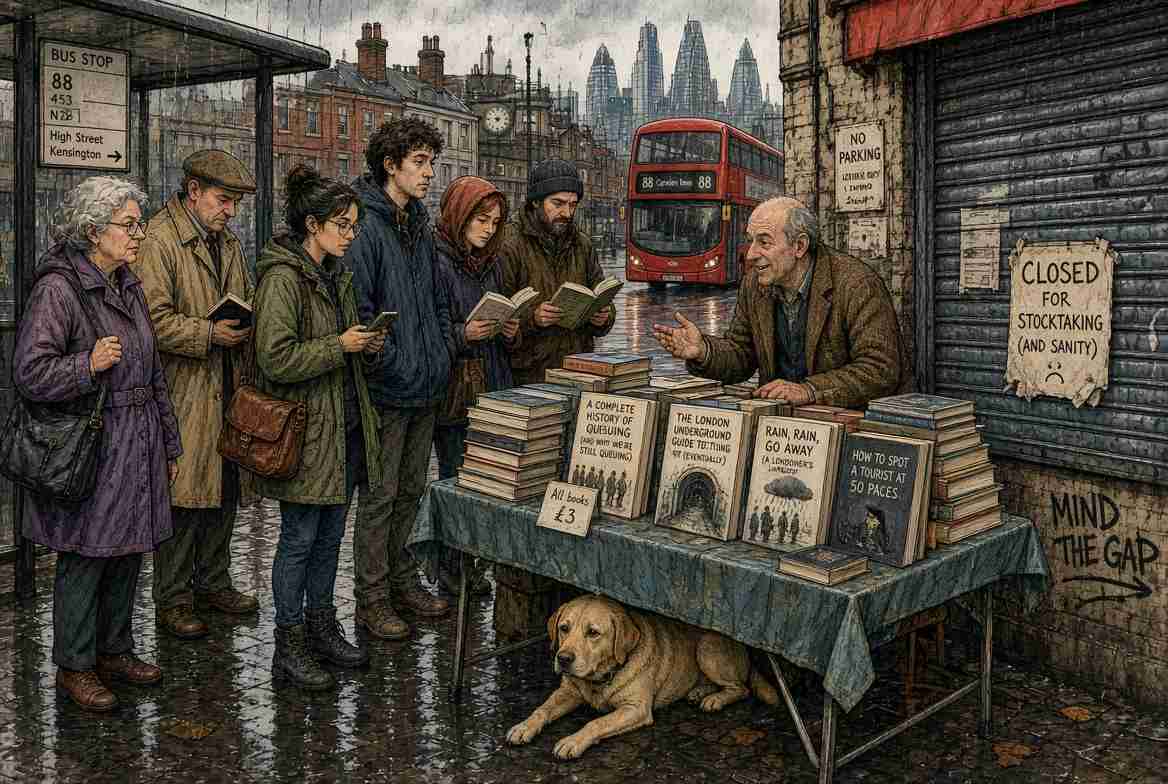
Literary Establishment Discovers Street Fiction, Immediately Asks Whether the Street Has an MFA
Publishers announce exciting new literary genre involving cities, money, danger and people who occasionally have actual problems
NEW YORK — American publishing has discovered an exciting new literary genre called street fiction, in which characters live in cities, encounter crime, pursue money, fall in love, make terrible decisions and occasionally experience consequences without first spending 240 pages remembering a disappointing summer in Vermont.
There is only one problem with calling street fiction “new.”
It isn’t.
The American Library Association’s guide to street literature describes street lit, also called urban fiction, as an established genre dealing with the realities of city life and survival, and notes that it includes some of the most in-demand books in American public libraries. Research by librarian and scholar Vanessa Irvin traces the broader street-literature tradition considerably further back, including antecedents connected with eighteenth-century British publishing.
In other words, literature has once again invented something shortly after readers have been buying it for several generations.
Thinking About Street Fiction
- Street fiction is literature where the characters apparently have addresses critics don’t recognize. Move the exact same adultery from Brooklyn to a Connecticut summer house and suddenly somebody gets a National Book Award nomination.
- Literary fiction gives you existential despair over breakfast. Street fiction gives you existential despair because somebody stole your car during breakfast. One involves symbolism. The other involves calling your cousin.
- Publishers love authenticity right up until authentic people start writing their own books. Then suddenly everyone becomes extremely interested in “voice development.”
- Street fiction proves that readers will willingly consume 350 pages if something actually happens on page 12.
- The literary establishment spent decades asking, “But is it literature?” Readers replied by purchasing the books, which remains capitalism’s rudest form of peer review.
Street Fiction Finally Receives Permission to Exist
Publishers Weekly was discussing the resurgence of street lit more than two decades ago, noting the popularity of writers including Sister Souljah, Donald Goines and Iceberg Slim and describing a market that often developed through word of mouth and unconventional distribution.
Naturally, the literary world has now arrived carrying a clipboard.
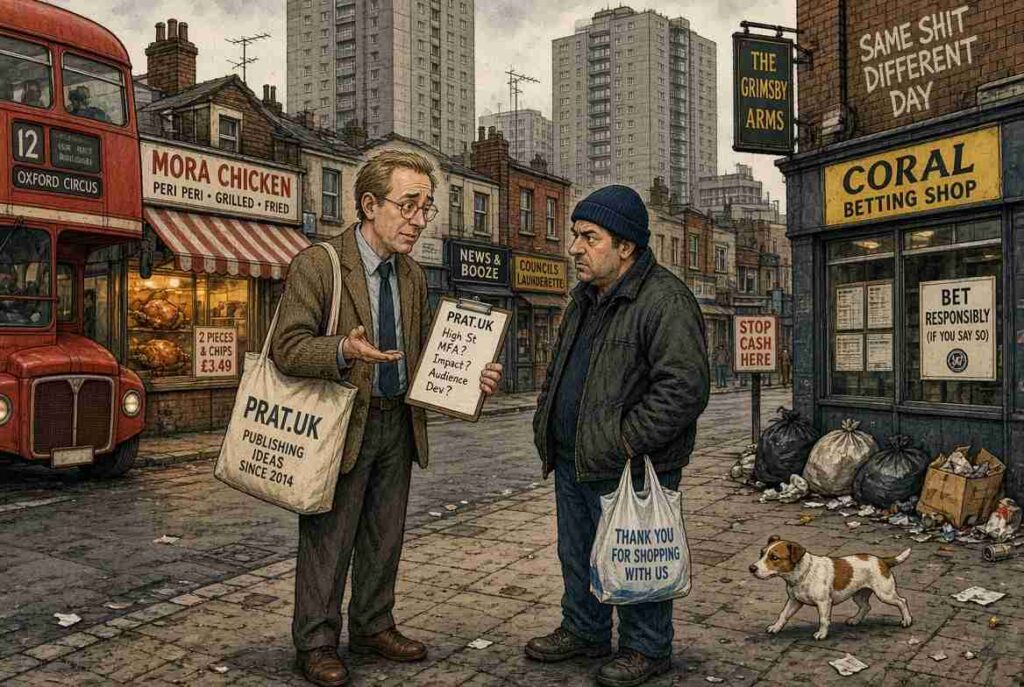
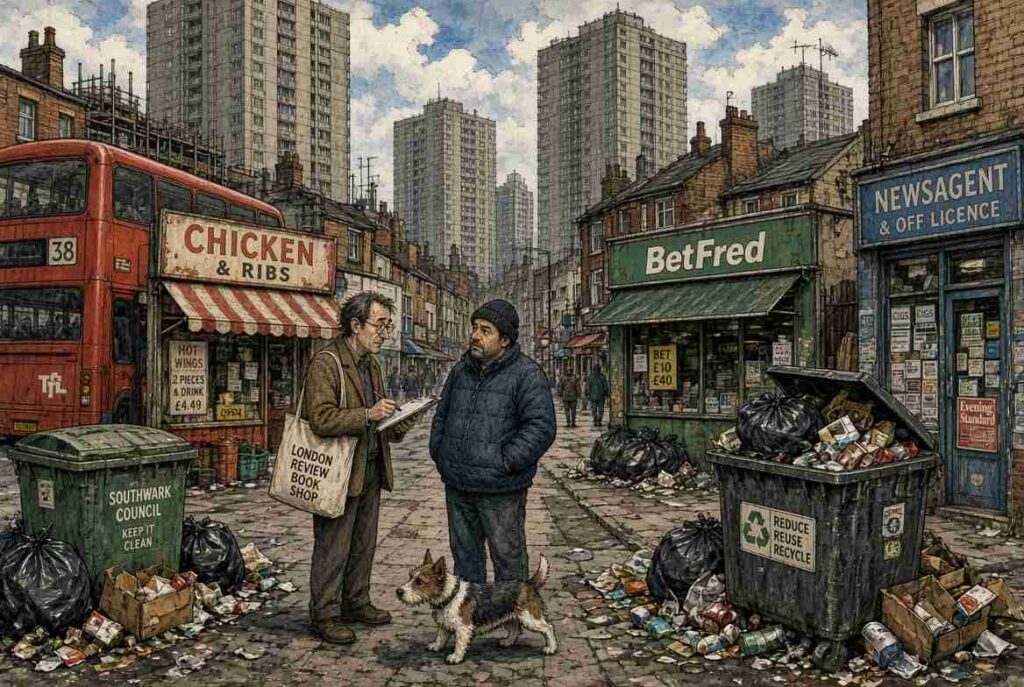
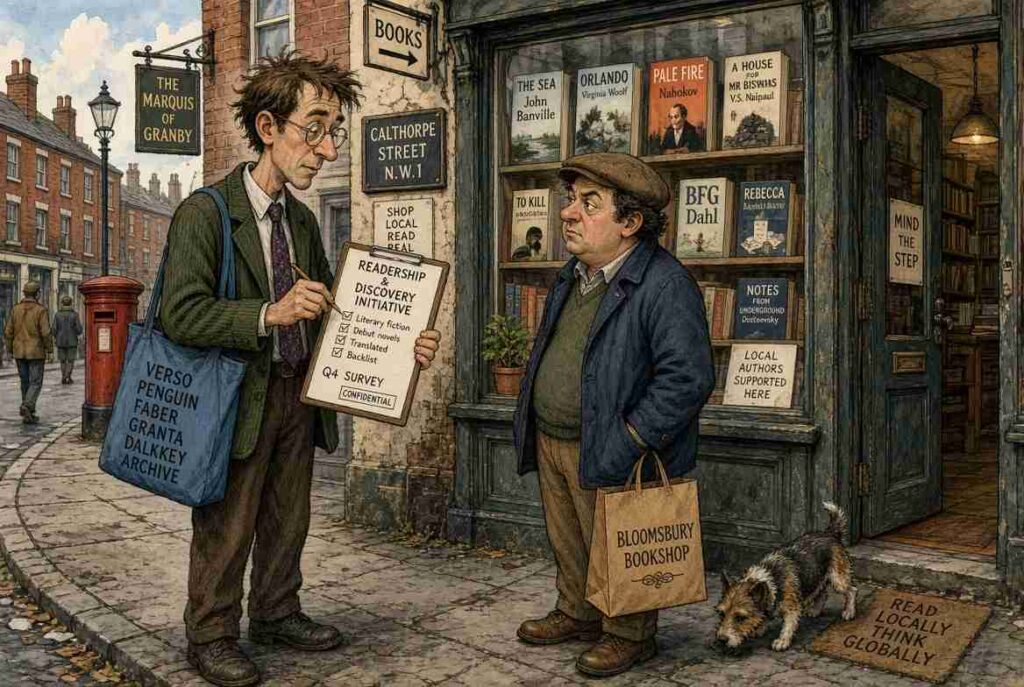
“Excuse me,” said one entirely overeducated publishing executive while standing outside a neighborhood bookstore. “We’ve recently become interested in stories about economically marginalized urban communities.”
A customer reportedly looked at him.
“You mean books about people who live here?”
The executive lowered his glasses.
“Please don’t simplify the emerging discourse.”
This is how literary genres are born.
First people write books.
Then people read the books.
Then people recommend the books.
Then bookstores sell thousands of the books.
Finally, thirty years later, somebody at a university notices and schedules a symposium.
Literature Discovers That Things Can Happen
Street fiction presents an intriguing challenge to contemporary literary culture because its characters often exhibit a dangerous narrative tendency:
They do things.
Things happen. Decisions occur. Money changes hands. People betray one another. Romances collapse. Someone acquires a Cadillac through circumstances unlikely to survive an IRS audit. Consequences follow.
This can be disorienting to readers accustomed to prestige novels in which a 43-year-old professor returns to Maine following his mother’s death and spends 280 pages reconsidering something a woman named Eleanor said beside a canoe in 1997.
Nothing against Eleanor.
But eventually somebody needs to rob a liquor store.
Street fiction understands this. It recognizes one of storytelling’s oldest principles: readers frequently continue turning pages because they would like to know what happens next.
This revolutionary discovery may eventually reach Hollywood.
Wall Street Apparently Does Not Count as Street Fiction
There is also some confusion regarding the word “street.”
Wall Street is a street. Fleet Street is a street. Downing Street is a street. Baker Street is a street.
Yet nobody sees a novel about a hedge-fund manager purchasing his fourth vacation home and says: “Powerful street narrative.”
Apparently the definition changes when the protagonist’s accountant wears cufflinks.
This suggests that “street” functions partly as cultural shorthand rather than simple geography.
The ALA’s description emphasizes urban neighborhoods, city life and survival, while Irvin’s scholarship examines the genre’s connection to marginalized communities and historically overlooked voices.
Which means the publishing industry’s greatest accomplishment may have been discovering that people outside its traditional social circles possess plots.
Critics Demand More Realism, Immediately Become Alarmed by Realism
The literary establishment has always maintained a complicated relationship with authenticity.
Writers are encouraged to “write what you know.”
Unless what they know makes reviewers uncomfortable.
Then perhaps they could write what somebody in editorial knows.
Crime? Too sensational.
Drugs? Problematic.
Sex? Potentially exploitative.
Violence? Concerning.
Poverty? Possibly stereotypical.
A middle-aged academic having an affair while thinking about Kierkegaard?
Magnificent. Five stars. Devastating meditation on modern loneliness.
Literature has rules. Nobody knows what they are, but apparently a Danish philosopher helps.
Street fiction, by contrast, tends to understand that people sometimes experience several social problems simultaneously.
A person can be poor and ambitious. A criminal can love his mother. A respectable person can make an immoral decision. A victim can make stupid choices. A successful person can originate somewhere unsuccessful people also live.
This complexity was once known simply as “human beings.” It has recently been rediscovered as nuance.
Readers Commit Unauthorized Reading
Perhaps the most inconvenient fact about street fiction is that people actually read it.
The American Library Association says the genre includes some of the most in-demand titles in public-library collections and explicitly argues that promoting street literature can promote literacy.
This presents an awkward problem for people who have spent decades explaining what everyone should read.
A teenager who refuses to read a 1912 novel assigned by a committee may enthusiastically finish a 400-page contemporary street novel.
Educational specialists immediately confront a philosophical dilemma.
Did the student enjoy reading incorrectly?
Researchers are reportedly studying the phenomenon. Preliminary results indicate that when people encounter stories involving characters, subjects and conflicts they find interesting, they occasionally read voluntarily.
Further research is required. Grant applications have been submitted.
The Market Performs Peer Review
Street fiction also commits another serious offense against literary hierarchy: it often reaches audiences without waiting for institutional permission.
Publishers Weekly documented writers building readership through independent publishing, street sales and word of mouth before mainstream publishers recognized the commercial opportunity. Teri Woods famously sold early copies of True to the Game herself before the book developed a large audience.
This is deeply disturbing.
The traditional publishing process exists so that seven people sitting around a conference table can determine what millions of strangers might enjoy.
Readers purchasing books directly interfere with the science.
If consumers begin choosing literature themselves, entire departments could be forced to explain what they do.
Scholars Discover the Sidewalk
Naturally, academia has begun studying street literature seriously.
This is useful scholarship. It is also irresistibly funny.
Only academia can take something called street literature and move it into a building where nobody opens the windows.
Soon there will be conferences. Panels will include:
“Spatial Economies of Narrative Resistance in Post-Hustle Metropolitan Discourse.”
The novelist who inspired the panel will be across town selling another 10,000 books.
Eventually somebody will ask the author what his work represents.
He will say: “It’s about this guy named Marcus who owes somebody money.”
The room will become very quiet.
Marcus has destroyed the theoretical framework.
Publishing’s Latest Revolutionary Discovery
Street fiction ultimately reveals something uncomfortable about literary categories.
Genres are often created backward. Writers produce stories. Readers recognize something they enjoy. Communities exchange recommendations. A market develops. Only afterward does somebody arrive with terminology.
Suddenly people who were simply reading novels discover they have been participating in a cultural literary phenomenon.
Congratulations. There may be paperwork.
Street fiction doesn’t really require permission from critics, universities or publishing committees because readers already supplied the only permission literature ultimately needs: they kept turning the pages.
And somewhere tonight, a person will open a street novel intending to read one chapter and discover at 2:17 a.m. that he has finished 286 pages.
Meanwhile another reader will place an acclaimed literary novel facedown beside the bed after page 17 because Professor William has returned to Maine and is thinking about the canoe again.
That may be the ultimate distinction.
Street fiction puts somebody in the street. Literary fiction puts somebody beside a window thinking about the street. And academia puts both of them into a 63-page journal article titled “Negotiating Pavement: Contested Geographies of Narrative Urbanity.”
Nobody finishes that one.
Helpful Guide for Readers Confused by the New Genre
Street fiction is easy to recognize.
If the protagonist spends three pages wondering whether life has meaning, you’re probably reading literary fiction.
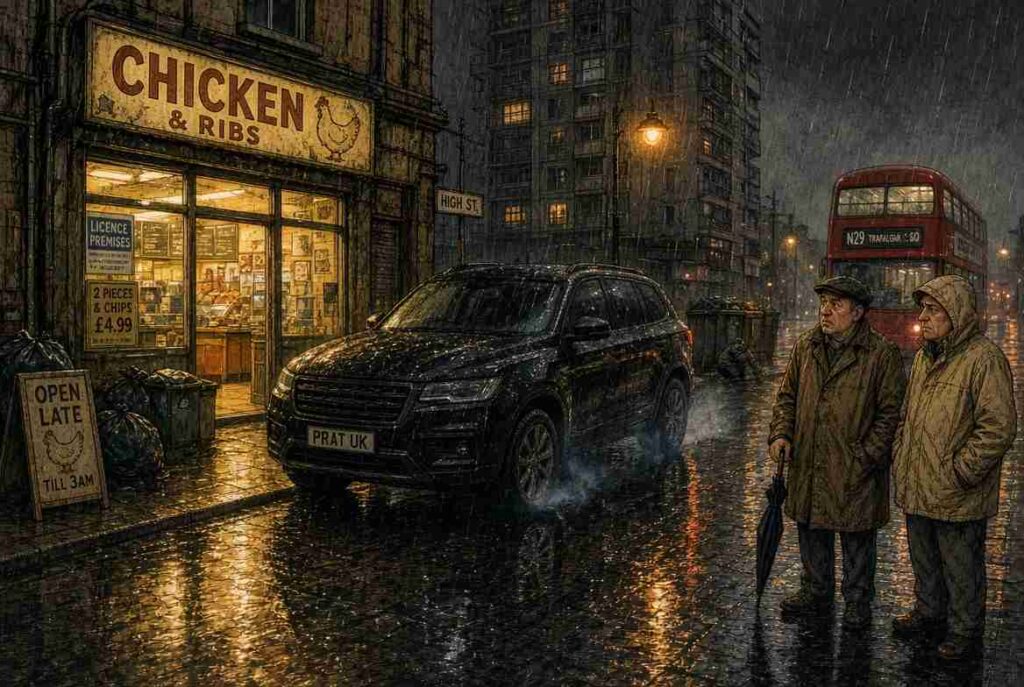
If the protagonist spends three pages wondering whether the black Escalade parked outside belongs to the man he owes money, you’re probably reading street fiction.
If the Escalade represents late capitalism, you’re back in graduate school.
Proceed carefully.
Disclaimer: this satirical report is intended to poke fun primarily at publishing fashions, literary gatekeeping, academic terminology and humanity’s remarkable ability to discover things shortly after everybody else already knew about them. No streets were harmed during reporting. One sidewalk has retained counsel.
Sources: American Library Association: Updated Guide to Street Lit and Urban Fiction · Publishers Weekly: Street Lit, Readers Gotta Have It · Publishers Weekly: Urban Fiction, What’s Old Is New Again
- In literary fiction, a man staring through a kitchen window can represent the collapse of Western civilization. In street fiction, he’s staring through the window because somebody outside owes him $4,800.
- Every genre needs specialized vocabulary. Mystery has “detective.” Fantasy has “wizard.” Street fiction has the much more frightening phrase, “You know my cousin?”
- Academics traditionally discover popular culture approximately fifteen years after ordinary people have finished arguing about it at barbershops.
- A literary novel may contain 40 pages describing someone’s relationship with their father. Street fiction can establish the same relationship with: “Don’t answer if that’s Dad.”
- The publishing industry calls street fiction “gritty,” which is publishing language for “characters occasionally worry about rent.”
- Nobody describes a novel about Manhattan investment bankers as “street fiction,” even though Wall Street is literally a street and substantially more money disappears there.
- Critics sometimes worry that street fiction romanticizes crime, apparently forgetting that respectable literature has spent centuries romanticizing kings, pirates, adultery, war, alcoholism and French people staring meaningfully at cigarettes.
- The moment a street-fiction writer sells 500,000 copies, publishers begin explaining why the writer’s success proves readers need publishers.
- Street fiction frequently emphasizes brand names, neighborhoods and recognizable cultural references. Literary fiction does the same thing but calls it “evocation of place.”
- Someday somebody will write a doctoral dissertation explaining why street fiction became popular. The first sentence will require 74 words to explain that people enjoy good stories.
IMAGE GALLERY

Alan Nafzger was born in Lubbock, Texas, the son Swiss immigrants. He grew up on a dairy in Windthorst, north central Texas. He earned degrees from Midwestern State University (B.A. 1985) and Texas State University (M.A. 1987). University College Dublin (Ph.D. 1991). Dr. Nafzger has entertained and educated young people in Texas colleges for 37 years. Nafzger is best known for his dark novels and experimental screenwriting. His best know scripts to date are Lenin’s Body, produced in Russia by A-Media and Sea and Sky produced in The Philippines in the Tagalog language. In 1986, Nafzger wrote the iconic feminist western novel, Gina of Quitaque. He currently lives in Holloway, North London. Contact: [email protected]