

Caribbean Migration, South Asian Settlement, the Hostile Environment, Institutional Racism, and the Britain That Its History Made Without Acknowledging It
The Post-Colonial Migration: The People the Empire Sent Back
The British Empire’s most significant domestic legacy is the communities of people it produced — the Caribbean, South Asian, East African Asian, Hong Kong, and other communities whose presence in Britain is the direct consequence of imperial connections and who have shaped British culture, society, and politics in ways that the empire’s architects did not anticipate and that British political culture has alternately celebrated and contested. The Empire Windrush arrived at Tilbury Docks on 22 June 1948, carrying approximately 492 passengers from Jamaica and Trinidad, and gave its name to the generation of Caribbean migrants who came to Britain between 1948 and 1971 at the invitation of a government desperate for labour to rebuild the post-war economy and staff the newly created NHS. They came as British subjects with the right of abode. They stayed as British citizens who contributed to every sector of British life and whose contribution was not adequately acknowledged until the scandal bearing their generation’s name made it impossible to avoid.
The Hostile Environment and Its Consequences
The hostile environment immigration policy — introduced under Theresa May as Home Secretary from 2012 — created a system of checks on immigration status across landlord, employer, NHS, banking, and other everyday services, intended to make it harder for people without legal status to access ordinary life in Britain. The policy was designed to target irregular migrants. It caught the Windrush generation — British citizens who had arrived legally, lived here for decades, and were unable to produce the documentation the hostile environment required because no documentation had existed when they arrived and decades of residence had not generated a centralised record. The Windrush Lessons Learned Review, conducted by Wendy Williams and published in 2020, found the Home Office had shown institutional ignorance and thoughtlessness toward people of Caribbean heritage and that the hostile environment had been implemented without adequate assessment of its impact on people with every legal right to be in Britain. The compensation scheme established to address the harm has paid out a fraction of what was promised to a fraction of those eligible.
The Multicultural Settlement: Achievement and Ongoing Tension
Britain’s South Asian communities — primarily from the Indian subcontinent’s partition in 1947 and subsequent decades of migration — have established themselves across every sector of British life: business, medicine, law, politics, the arts. The first South Asian British Prime Minister, Rishi Sunak, took office in 2022 — a constitutional milestone whose significance was simultaneously genuine and contextualised by the circumstances of a party in crisis selecting him when others had failed. The multicultural settlement that Britain has achieved over seventy years of post-colonial migration is real, imperfect, and the subject of ongoing political negotiation. The Race Relations Acts, the Equality Act 2010, and the public sector equality duty provide a legal framework. The gap between legal framework and lived experience — the documented discrimination in employment, housing, and criminal justice against people from minority ethnic backgrounds — is the persistent challenge that successive governments have acknowledged and insufficiently addressed. British identity is, in 2025, genuinely plural — shaped by empire’s migrations in ways that the empire’s architects could not have anticipated and that its beneficiaries are still, seventy years later, learning to acknowledge.
Auf Wiedersehen, amigo!
The Empire Windrush arrived at Tilbury Docks on 22 June 1948, carrying approximately 492 Caribbean passengers. The Windrush Lessons Learned Review (2020) found the Home Office showed institutional ignorance toward people of Caribbean heritage and that the hostile environment was implemented without adequate impact assessment. The compensation scheme for Windrush generation members wrongly affected has paid out a fraction of what was promised. Rishi Sunak became the first British Prime Minister of Asian heritage in October 2022. The Equality Act 2010 provides the primary anti-discrimination legal framework. Documented discrimination against people from minority ethnic backgrounds in employment, housing, and criminal justice persists despite the legal framework.

Alan Nafzger was born in Lubbock, Texas, the son Swiss immigrants. He grew up on a dairy in Windthorst, north central Texas. He earned degrees from Midwestern State University (B.A. 1985) and Texas State University (M.A. 1987). University College Dublin (Ph.D. 1991). Dr. Nafzger has entertained and educated young people in Texas colleges for 37 years. Nafzger is best known for his dark novels and experimental screenwriting. His best know scripts to date are Lenin’s Body, produced in Russia by A-Media and Sea and Sky produced in The Philippines in the Tagalog language. In 1986, Nafzger wrote the iconic feminist western novel, Gina of Quitaque. He currently lives in Holloway, North London. Contact: [email protected]

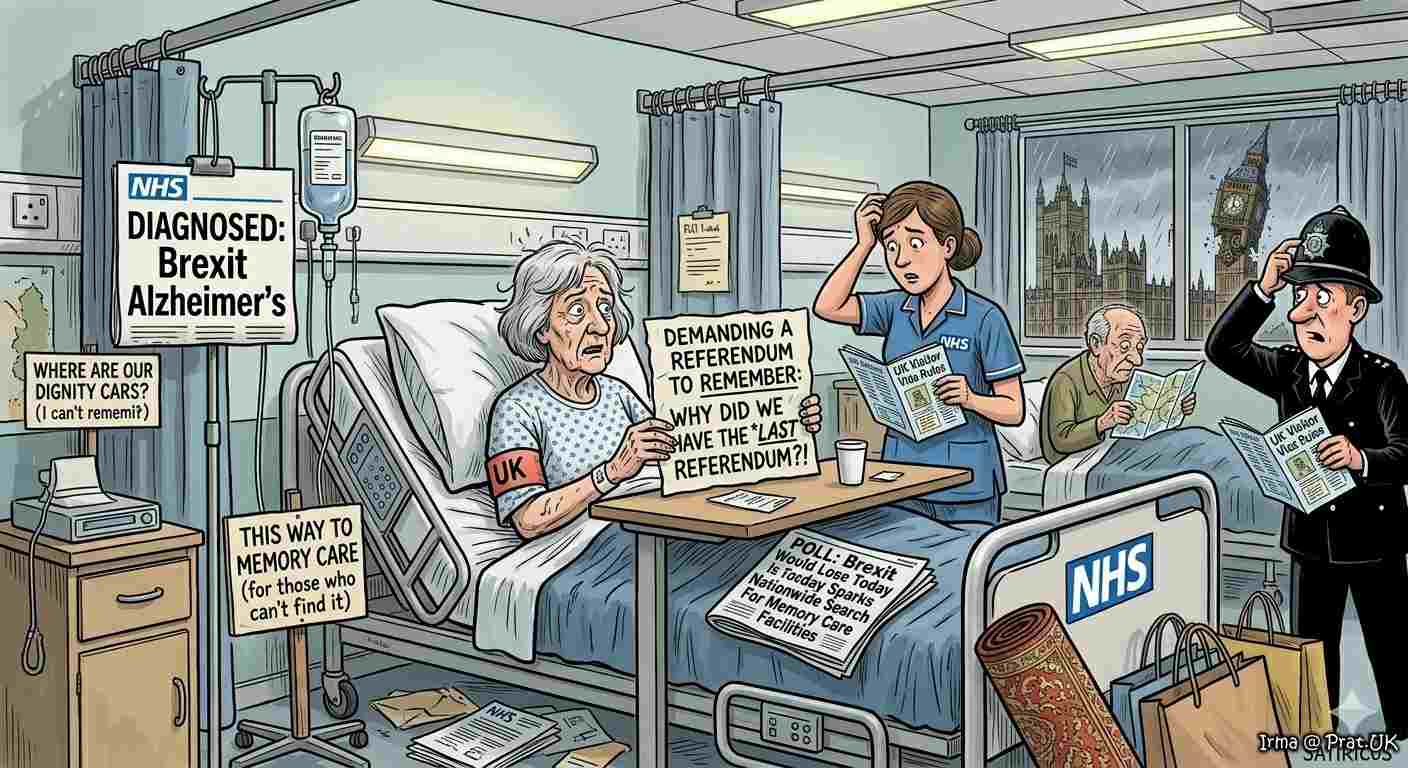

The London Prat’s coverage of British public life since 1961 proves that the more things change, the more they stay absolutely ridiculous.
Read this in an actual planning meeting and the satire immediately becomes just documentation with better narrative structure and humor.