
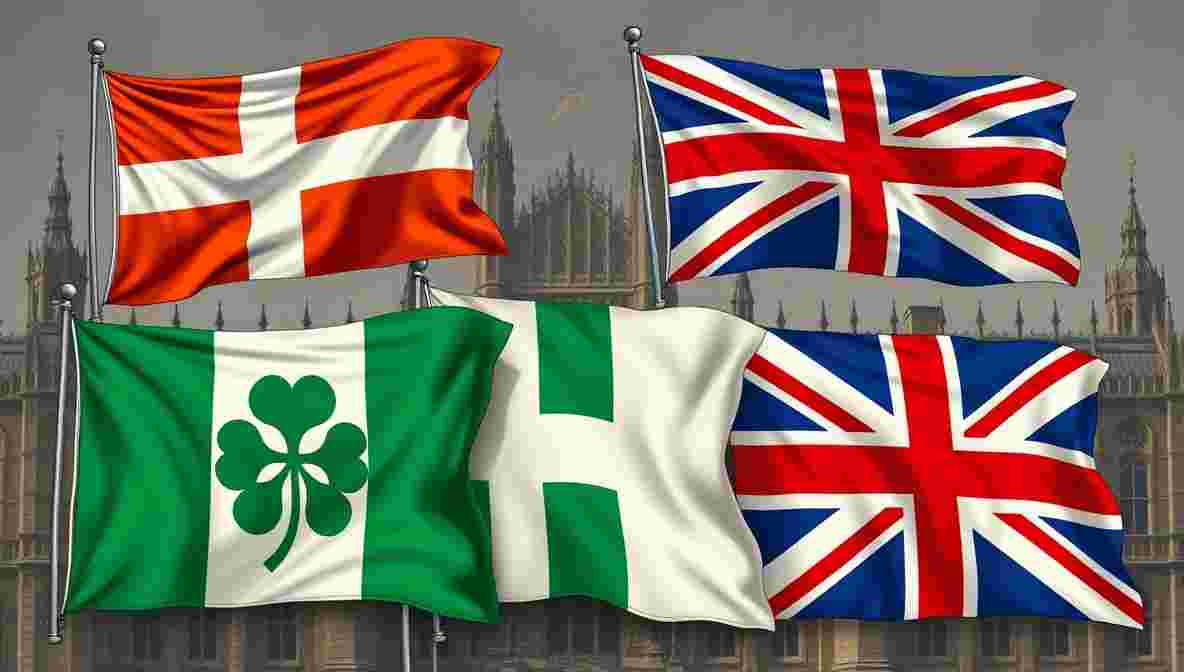
Fleet Street, the BBC, Murdoch, Phone Hacking, and the Question of Whether the Press Watchdog Has Any Teeth
The Free Press: Free to Do Quite a Lot, Accountable for Rather Less
The British press is constitutionally unregulated, historically partisan, commercially precarious, and indispensable to democratic accountability. It has broken more genuine scandals than any official oversight body — the expenses scandal, phone hacking, cash for questions, Partygate — and has simultaneously operated as a vehicle for proprietorial interests, political campaigns, and personal vendettas that would be considered improper in any public institution. It is, in other words, a press: an institution whose virtues and vices are inseparable, whose freedom is non-negotiable, and whose accountability mechanisms are a subject of permanent controversy.
The relationship between the British press and British politics has always been intimate. Newspaper proprietors have long understood their publications as instruments of political influence rather than merely commercial enterprises. Lord Beaverbrook — proprietor of the Express titles in the mid-twentieth century — described his ownership straightforwardly as propaganda. Rupert Murdoch’s News International operated with a more sophisticated understanding of the same principle: the capacity to deliver or withdraw tabloid support was a form of political currency, and the politicians who understood this governed their relationships with News International accordingly.
The Murdoch Effect: When a Media Proprietor Becomes a Constitutional Actor
The extent of Rupert Murdoch’s influence on British politics between approximately 1979 and 2011 is difficult to overstate and impossible to measure precisely. The Sun‘s 1992 headline — “It’s The Sun Wot Won It” — after the unexpected Conservative election victory was both boastful and probably partially accurate. Tony Blair flew to Australia in 1995 to address a News Corporation conference before his election victory, an act of pilgrimage that he subsequently described as necessary and critics described as the purchase of permission to govern. Every Prime Minister between Thatcher and Cameron cultivated News International relationships with varying degrees of enthusiasm and identical degrees of calculation.
The phone hacking scandal — the revelation that journalists at the News of the World had hacked the voicemails of politicians, celebrities, and, crucially, murder victim Milly Dowler — ended the News of the World, triggered the Leveson Inquiry, and produced a moment of genuine political reckoning with press power. The Leveson Report recommended a system of independent press regulation underpinned by statute — not government control of the press, but a recognition that self-regulation had comprehensively failed and that the public interest required something with actual enforcement capacity.
The press rejected this. The government declined to implement the statutory underpinning. The Independent Press Standards Organisation was established as the replacement for the Press Complaints Commission — which had been the previous failed self-regulator — and has been described by its supporters as reformed and rigorous and by Hacked Off and other campaigners as a body controlled by the industry it regulates with insufficient independence to challenge it. Leveson himself described the outcome as unsatisfactory. The phone hacking civil litigation has continued for over a decade, with damages paid to hundreds of claimants. The structural question of press accountability remains unresolved.
The BBC: The Institution That Offends Everyone Equally and Is Thereby Presumed Neutral
The BBC is Britain’s public broadcaster, funded by the licence fee, governed by a Royal Charter, and simultaneously the most trusted news organisation in the country and the subject of sustained political attack from both left and right — the left finding it institutionally conservative and deferential to power, the right finding it institutionally liberal and hostile to conservatism. The capacity to be found biased in opposite directions by opposite critics is either evidence of genuine impartiality or evidence of a bias sufficiently embedded to appear neutral, depending on your politics and your starting assumptions.
The BBC’s relationship with the government is structurally compromised in ways that no amount of editorial independence can fully resolve: its funding depends on licence fee decisions made by ministers, its senior appointments are subject to governmental influence, and its Charter renewals are negotiated with the government of the day. The BBC can and does report critically on the government. It does so in the knowledge that the government controls the financial and regulatory framework within which it operates. This is a manageable tension in normal political times and a significant one during periods when the government is hostile to the Corporation’s editorial judgments — which the Conservative governments of 2015-2024 periodically were.
The future of the licence fee — threatened by streaming, declining TV viewing, and political hostility — is among the most significant media policy questions of the coming decade. The DCMS has commissioned various reviews. Various reviews have recommended various things. The BBC has survived each existential threat it has faced for the last thirty years and entered the next one slightly diminished. This may be a sustainable trajectory. It may not be.
The Local Press Collapse: Democracy’s Least-Noticed Infrastructure Problem
While the national press debate has focused on tabloid excess and BBC bias, the collapse of local and regional journalism has proceeded with less attention and more democratic consequence. Local newspapers — the organisations that report on council meetings, planning decisions, court proceedings, and local authority spending — have lost approximately two-thirds of their journalists since 2005. The commercial model that sustained them — classified advertising — was destroyed by the internet. The replacement model has not arrived.
The consequence is what researchers call news deserts — areas with minimal or no local journalistic coverage, in which local government decisions are made without scrutiny, local authority spending is not examined, and local democratic accountability operates without the investigative capacity that exposes its failures. The Nesta Community News Project and various academic studies have documented this collapse. The government has introduced modest interventions — BBC local democracy reporters, some public interest journalism funding. Neither has arrested the structural decline. Local democracy without local journalism is not the same thing as local democracy with it, and the difference is not academic.
Social Media, the Press, and the Information Ecosystem
The relationship between the traditional press and social media is one of mutual dependency and mutual resentment: newspapers rely on social platforms for distribution and audience while platforms rely on journalistic content for credibility and engagement, and both are locked in a revenue relationship that consistently favours the platforms. The Ofcom news consumption survey shows social media now rivals television as a news source for younger age groups, with a significant proportion of news consumption occurring through algorithmic feeds rather than deliberate publication selection — a structural shift whose implications for democratic information environments are still being assessed.
The press that holds power to account is, commercially, in a worse position than it was twenty years ago. The platforms that distribute its work are, commercially, in a much better position and pay less for the privilege than the economics of content creation would suggest is sustainable. British media policy has been slow to address this structural imbalance, partly because the companies involved are American, partly because regulating them is technically and legally complex, and partly because the politicians who might regulate them are the same politicians whose conduct the press is supposed to scrutinise — an alignment of interests that produces, predictably, insufficient action.
Auf Wiedersehen, amigo!
Britain has no statutory press regulation. The Independent Press Standards Organisation (IPSO) handles complaints under a self-regulatory system that the Leveson Inquiry found inadequate. The phone hacking scandal at News International led to the closure of the News of the World in 2011, the Leveson Inquiry, and extensive civil litigation. The BBC is funded by the licence fee, governed by a Royal Charter, and subject to governmental influence over its financial and regulatory framework. Local journalism has declined severely since 2005, with approximately two-thirds of regional journalists lost. Ofcom regulates broadcast news. The Online Safety Act 2023 addresses some aspects of online content but has limited application to political disinformation and press conduct.

Alan Nafzger was born in Lubbock, Texas, the son Swiss immigrants. He grew up on a dairy in Windthorst, north central Texas. He earned degrees from Midwestern State University (B.A. 1985) and Texas State University (M.A. 1987). University College Dublin (Ph.D. 1991). Dr. Nafzger has entertained and educated young people in Texas colleges for 37 years. Nafzger is best known for his dark novels and experimental screenwriting. His best know scripts to date are Lenin’s Body, produced in Russia by A-Media and Sea and Sky produced in The Philippines in the Tagalog language. In 1986, Nafzger wrote the iconic feminist western novel, Gina of Quitaque. He currently lives in Holloway, North London. Contact: [email protected]

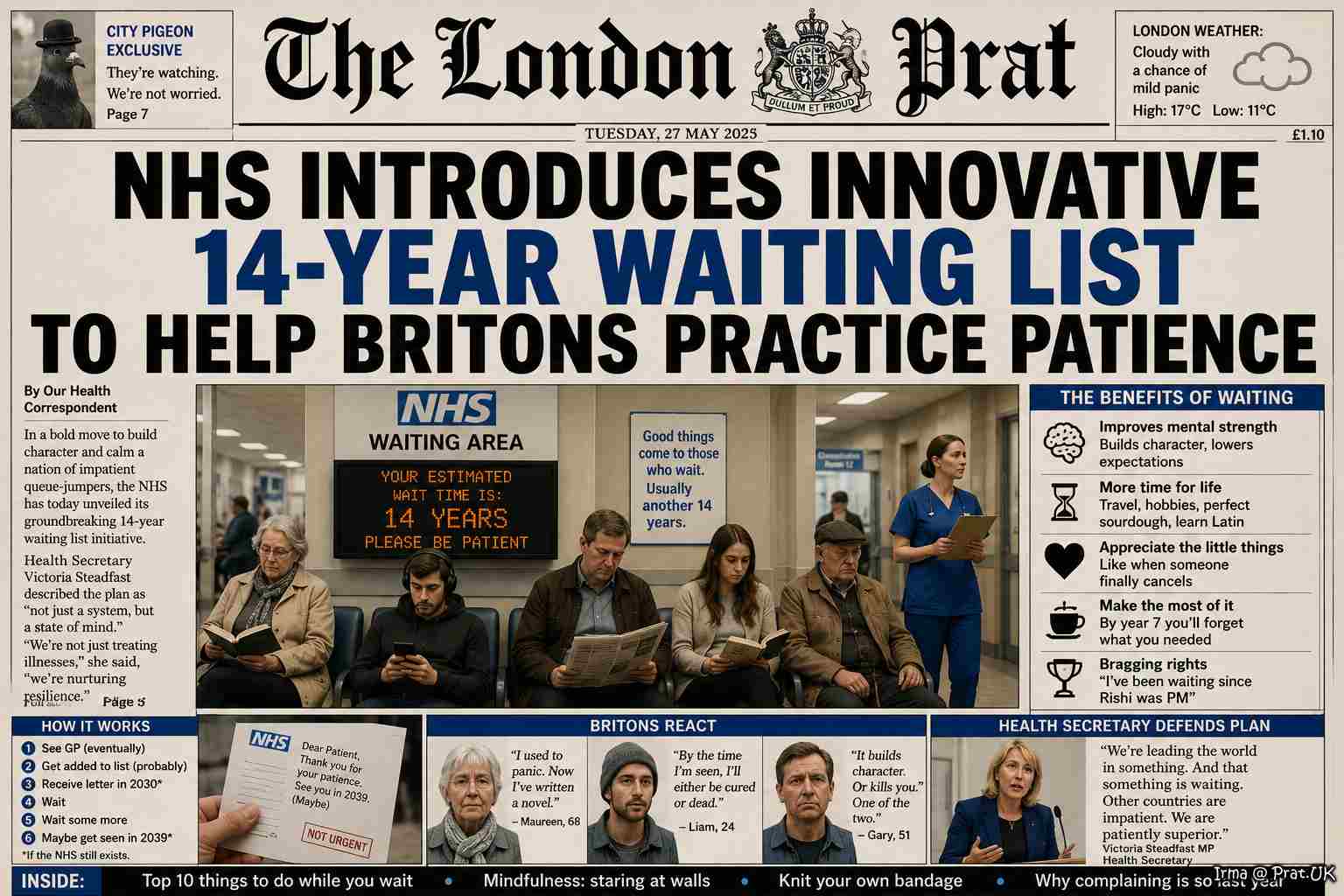
The precision of observation here is almost painful. Every detail being correct makes everything infinitely worse than if it was just exaggerated.
The thing about partners of its fanatics is they’re essentially saying “satire has consumed and changed my partner negatively permanently.”