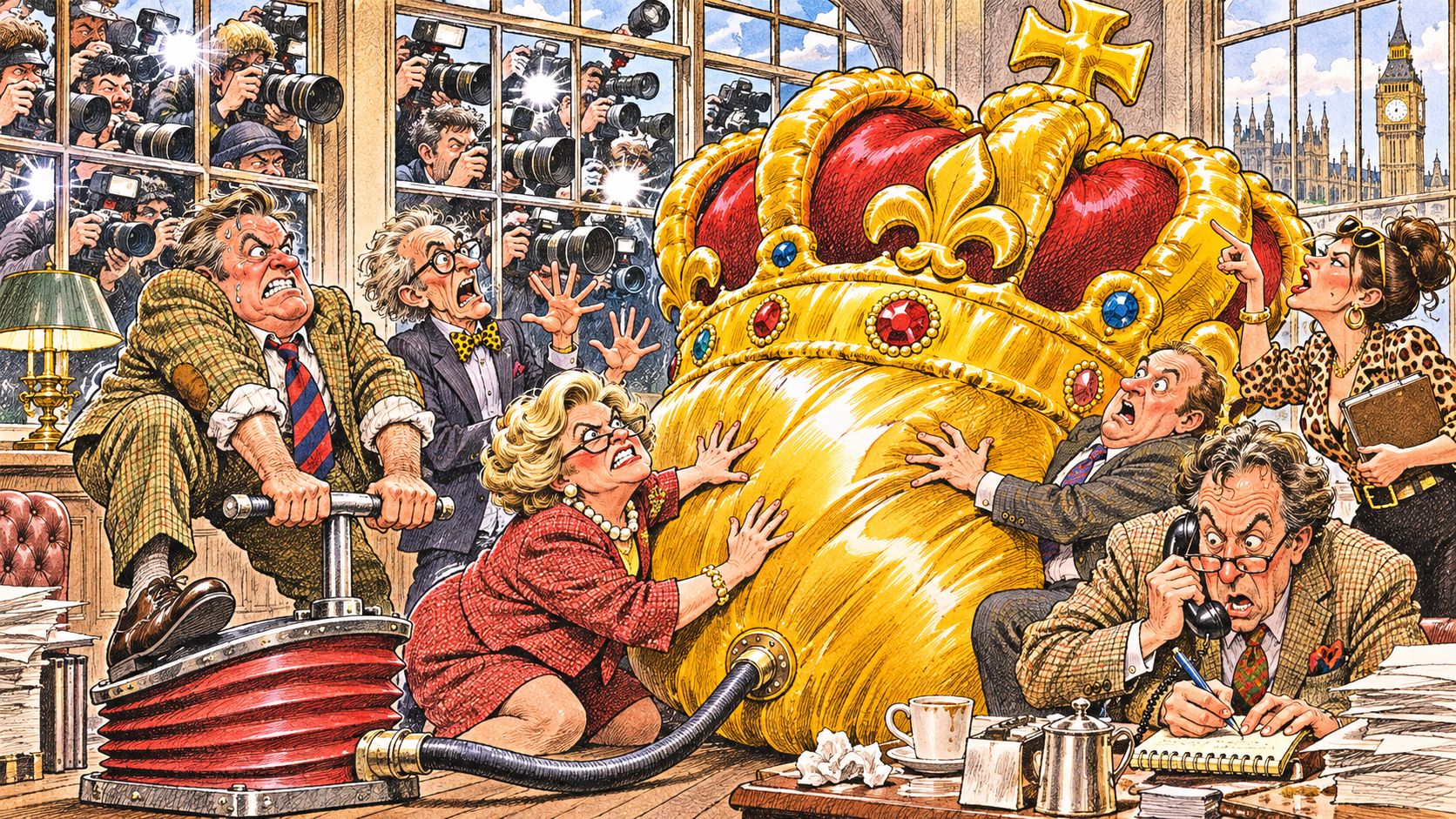
LONDON — Britain’s newspapers have responded to the arrest of Thomas Markle Sr. with the only measure proportionate to a serious American criminal case: an emergency meeting about whether his daughter’s publicity calendar is sufficiently colour-coded.
The 82-year-old estranged father of Meghan, Duchess of Sussex, was arrested and charged by US federal authorities with possession of child sexual abuse material. He has denied the allegations, which remain to be tested in court. That is the actual news. Its unfortunate disadvantage is that it cannot be resolved by interviewing a royal commentator beside a studio ficus.
Thomas Markle Arrest: The Royal Press Finds a More Marketable Emergency
Within hours, the British celebrity press had located its preferred casualty: the Sussex brand. An American criminal allegation had apparently crossed the Atlantic, applied for a publicist’s job and demanded approval of Meghan’s speaking arrangements.
The Page Six warning about a potentially devastating brand setback presented a marvellous new standard of crisis assessment. According to this system, attending an event is risky; missing it is risky; saying something is risky; and saying nothing is a catastrophic failure to produce a quotable response.
A hypothetical Department for Royal Optics immediately introduced its emergency traffic-light system: red for a Sussex speech, amber for no Sussex speech and green when every newspaper editor has gone home. There was no provision for the possibility that an estranged daughter might simply be having a dreadful week.
Brussels Discovers That One Speech Can Be Delivered by One Person
The Duke and Duchess went to Brussels anyway. Meghan attended the Lost Screen Memorial opening at the European Parliament but withdrew from speaking. Harry delivered the address on protecting children online. The memorial honours young people whose lives were lost after online harms, a subject that deserves more airtime than the price of a publicity consultant’s lunch.
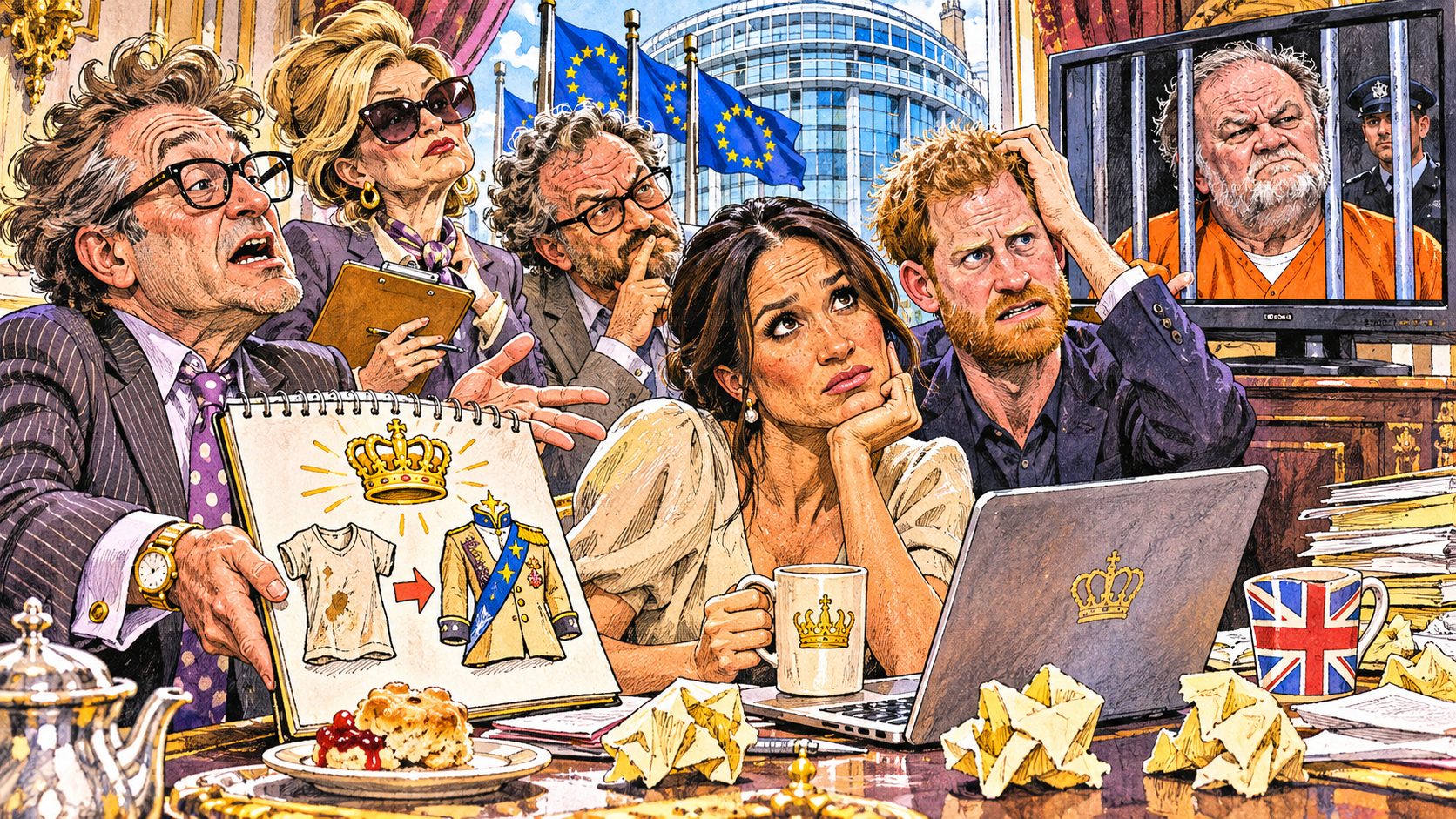
The arrangement worked in the traditional parliamentary manner: one person spoke, several people listened and nobody required a ministerial inquiry to establish who had the microphone. Westminster has spent decades trying to achieve the same outcome.
The press, however, was faced with a more challenging situation. Meghan had neither cancelled the trip nor delivered a speech to be criticised. She had attended and remained quiet, leaving commentators to construct an entire constitutional incident from a vacant lectern.
A Crisis for the People Who Sell Crises
Britain’s unofficial royal-controversy industry now faces an uncomfortable economic question. If the public can distinguish an accused father from an adult daughter, what exactly will the experts be paid to explain on breakfast television? Without guilt by association, there may be only enough material for a normal report.
The criminal proceedings concern Thomas Markle Sr., not Meghan or Harry. The alleged harm is grave, and the court must deal with the evidence. The question of whether the duchess’s brand can survive an empty speaking slot is considerably less urgent, particularly to anyone who has ever booked a meeting room.
For the American edition of this remarkably profitable non-emergency, see Bohiney’s investigation into the celebrity crisis-marketing calendar.
Editorial note: This satire targets media speculation and publicity consultants. Criminal charges are allegations, not convictions, and relatives are not defendants by association.

Megan Amram is a standup comedian based in Portland, OR. She is a native of North London.