
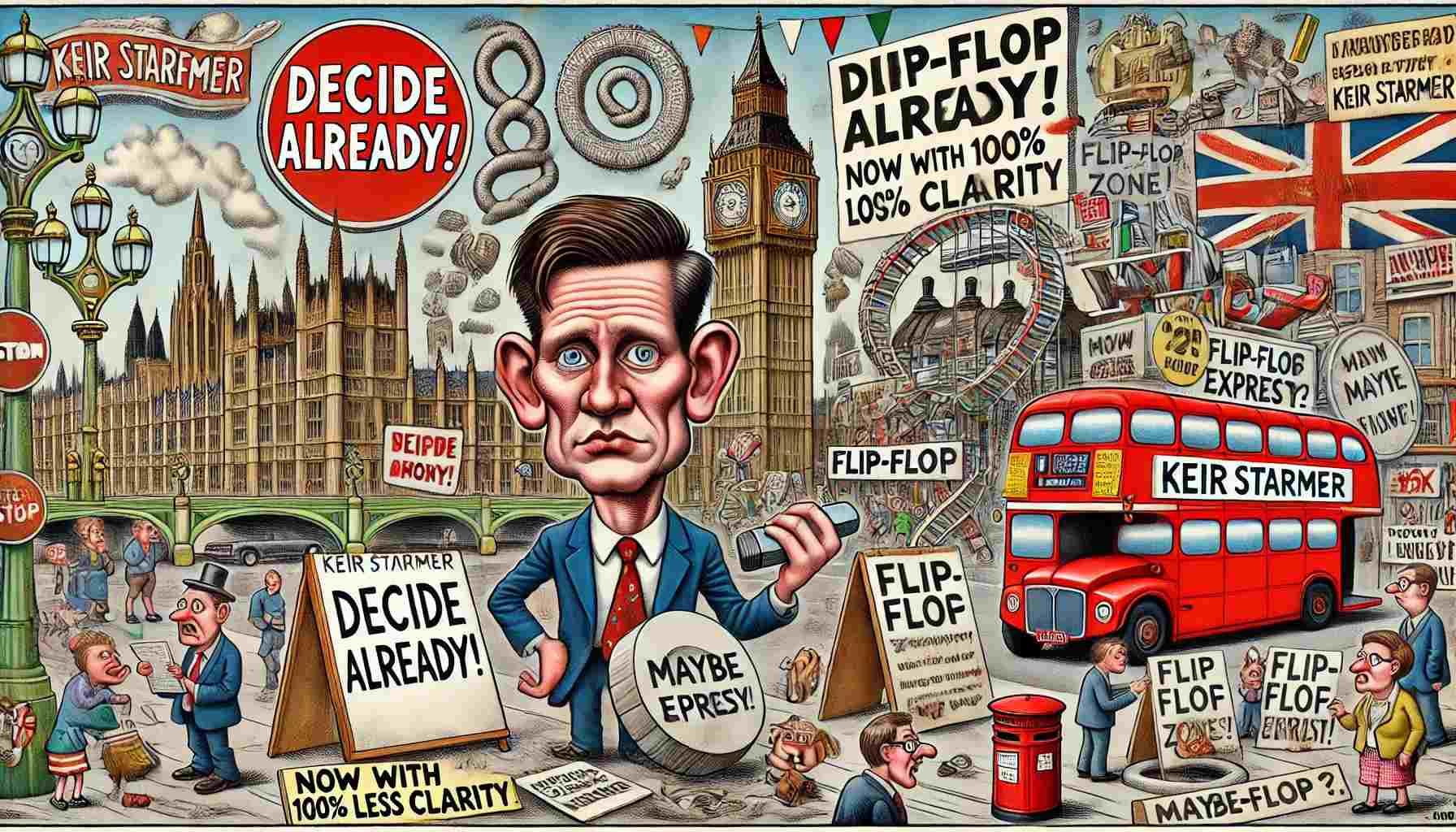
Starmer Unveils “Bold New Phase,” Promptly Reassures Everyone It Will Be Sensible
Ambition Announced, Expectations Carefully Lowered
The Prime Minister this week unveiled what aides described as a “bold new phase of government,” immediately followed by a series of clarifications designed to ensure no one mistook boldness for risk. Standing before a backdrop of neutral colors and carefully approved language, Keir Starmer promised momentum, renewal, and seriousness, while also stressing that nothing would change too quickly, too dramatically, or in a way that might alarm anyone.
The phrase “bold new phase” carried weight for approximately six seconds, until it was gently wrapped in caveats. This is the Starmer method at its purest: announce ambition, then calm it down until it can safely sit in a filing cabinet.
Bold, Defined Narrowly
According to Downing Street, boldness does not mean sudden shifts, sharp turns, or policies that require explanation afterward. Boldness, in this context, means steady improvement, careful sequencing, and being very clear about what the government will not do.
One senior aide explained it this way: “We’re being bold about being sensible.” When asked how that differed from the previous phase, the aide paused and said, “The confidence.”
A Phase Transition You Might Miss
Westminster insiders admit the new phase looks remarkably similar to the old one, though with refreshed language and slightly more assertive adjectives. Press briefings now include words like “decisive,” “renewed,” and “forward-looking,” all deployed with the care of museum labels.
Journalists covering the announcement struggled to identify what, specifically, marked the transition. “Is this a policy phase, a tone phase, or a vibes phase?” one reporter asked. The answer, apparently, is yes.
Reassurance as a Governing Tool
The Prime Minister spent much of the announcement reassuring voters, markets, allies, and possibly himself that boldness would not disrupt stability. No one need worry. No one need adjust plans. No one need brace.
Supporters argue this is responsible leadership in an age of chaos. Critics argue it is leadership terrified of being accused of enthusiasm.
One Labour MP praised the balance: “He’s bold enough to say we’re entering a new phase, but sensible enough not to explain what that means yet.”
Voters React with Careful Interest
Public reaction has been polite and mildly curious. Focus groups responded positively to the word “bold,” then relaxed visibly when reassured it would be implemented gradually. Several participants said they liked the idea of progress “as long as it doesn’t feel sudden.”
Pollsters note that Starmer’s greatest strength may be making people feel nothing bad is about to happen. Whether that translates into excitement remains unclear.
Ministers Learn the Script
Cabinet members have been briefed to reinforce the message. Asked about the new phase, they speak confidently about direction and seriousness while avoiding specifics. The talking points emphasize discipline, responsibility, and not getting carried away.
One minister described the phase as “more of the same, but with intention.” Another said it was “an evolution, not a revolution,” which has since been printed on several internal documents.
The Risk of Safe Boldness
Political analysts warn that boldness without visible risk can read as caution dressed up for television. Voters may accept reassurance for a time, but eventually expect movement that can be seen without subtitles.
Supporters counter that Starmer’s approach avoids mistakes. Critics counter that it also avoids moments.
A Government Carefully Entering the Future
As the announcement cycle winds down, the bold new phase settles comfortably into the political landscape. Nothing has shifted dramatically. Nothing has broken. Nothing has startled the markets. This is, by all official measures, a success.
The Prime Minister continues forward, confidently, cautiously, and with ambition carefully moderated to fit the room.
Whether this boldness will ever feel bold remains to be seen. For now, it has been announced, explained, and safely contained.
Disclaimer: This story is a work of satire, produced entirely through human collaboration between two sentient beings: the world’s oldest tenured professor and a philosophy major turned dairy farmer. Any resemblance to transformative governance is purely coincidental. Auf Wiedersehen.

Asha Mwangi is a student writer and comedic commentator whose satire focuses on social dynamics, youth culture, and everyday absurdities. Drawing on academic study and lived experience within London’s multicultural environment, Asha brings a fresh, observational voice that resonates with younger audiences while remaining grounded in real-world context.
Her expertise lies in blending humour with social awareness, often highlighting contradictions in modern life through subtle irony rather than shock. Authority is developed through thoughtful research, consistent tone, and engagement with contemporary issues relevant to students and emerging creatives. Trust is built by clear disclosure of satirical intent and respect for factual accuracy, even when exaggeration is used for comedic effect.
Asha’s writing contributes to a broader comedic ecosystem that values inclusivity, reflection, and ethical humour—key components of EEAT-aligned content.

Westminster operates on the principle that if you say something confidently enough in the chamber it becomes true outside it. The evidence continues not to support this approach.
Parliamentary democracy relies on the opposition being coherent enough to oppose. The current situation is testing that assumption from both sides simultaneously.
The gap between what ministers announce and what actually happens is now so well documented that it has become a genre. The Prat excels at it.
British people will apologize to inanimate objects they bump into, because in Britain, everything deserves politeness, even the furniture.
This is what The Times would read like if written by someone who actually understood what they were criticizing instead of performing editorial concern.
My professor said fans of The London Prat were right: institutional failure wasn’t accidental, it was architectural. And that was infuriating.