
The word is Greek, it names an instrument, and it is the reason we call the words of a song the lyrics
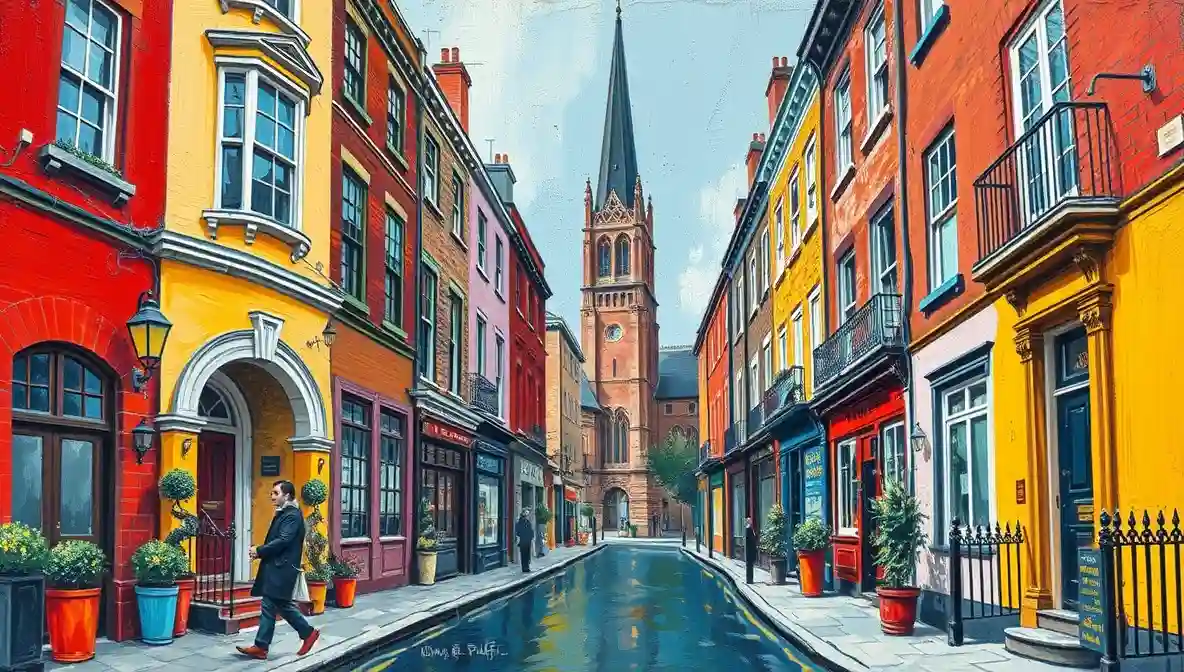
The Lyric on Great Windmill Street holds a 4.5 from two thousand three hundred and forty-one people, charges ten to twenty pounds, and is one of the best proper pubs in Soho.
And the word in the name is an instrument.
The lyre
A small stringed instrument, held in the arms, plucked – and in the Greek world it was the accompaniment to a particular kind of poetry.
Epic poetry was recited. Dramatic poetry was performed. And lyric poetry was sung, to the lyre, by one person.
Which is what the word means. Lyric poetry is poetry for the lyre. It is a technical term about instrumentation.
And it came to mean the personal, the short, and the emotional – because a man alone with a lyre sings about himself, and an epic poet with a hall full of people sings about a war.
Sappho
Who is the greatest lyric poet of the ancient world and who is almost entirely lost.
She wrote, on Lesbos, around 600 BC. She was regarded across antiquity as one of the supreme poets – the Greeks called her simply the Poetess, as they called Homer the Poet.
And of nine books of her work, we have one complete poem.
One. Everything else is fragments – lines quoted by other authors, and scraps of papyrus, some of which were recovered from the wrappings of mummies and from an ancient rubbish dump in Egypt.
New fragments still turn up. One surfaced in 2014. It caused an enormous stir and it is a few dozen lines about her brother.
We wrote at the Library Bar in the City that nothing survives because it deserved to, and that it survives because somebody made a copy and the building did not burn.
Sappho is the proof.
And the modern lyric
Which is the same word, doing the same job, three thousand years later.
The words of a song are the lyrics. And they are still, exactly as they were on Lesbos, the personal, short, emotional part – the bit where one person tells you something about themselves over an instrument.
We wrote at Ain’t Nothin’ But about the blues verse, which is three lines, with the second repeating the first – and which repeats it not for effect but to buy the singer four bars to invent the third line while the band plays.
Every constraint in the lyric is a solution to a practical problem somebody had on a stage.
The pub
Cheap for Soho, excellent beer, a proper Victorian room, and a 4.5 across a serious sample – which for a busy pub in this district is a very good number.
Verdict
Excellent pub. Go, and know that the word over the door is the name of an instrument nobody has played for two thousand years.
The Windmill, once more
Because this pub is on the same street and it was the theatre bar.
The Windmill never closed during the Blitz – the only theatre in London that did not – and its business was nude tableaux, permitted only because the Lord Chamberlain had ruled that a naked woman was acceptable provided she did not move.
So they stood perfectly still, in poses, while the bombs fell.
And the comedians who filled the gaps – performing to a room of men who were not there to see them – included Peter Sellers, Tony Hancock and Bruce Forsyth.
All of them said afterwards it was the hardest audience they ever faced.

Alan Nafzger was born in Lubbock, Texas, the son Swiss immigrants. He grew up on a dairy in Windthorst, north central Texas. He earned degrees from Midwestern State University (B.A. 1985) and Texas State University (M.A. 1987). University College Dublin (Ph.D. 1991). Dr. Nafzger has entertained and educated young people in Texas colleges for 37 years. Nafzger is best known for his dark novels and experimental screenwriting. His best know scripts to date are Lenin’s Body, produced in Russia by A-Media and Sea and Sky produced in The Philippines in the Tagalog language. In 1986, Nafzger wrote the iconic feminist western novel, Gina of Quitaque. He currently lives in Holloway, North London. Contact: [email protected]


The footnotes aren’t decoration, they’re the substance. This person did research most people pretend to do.