
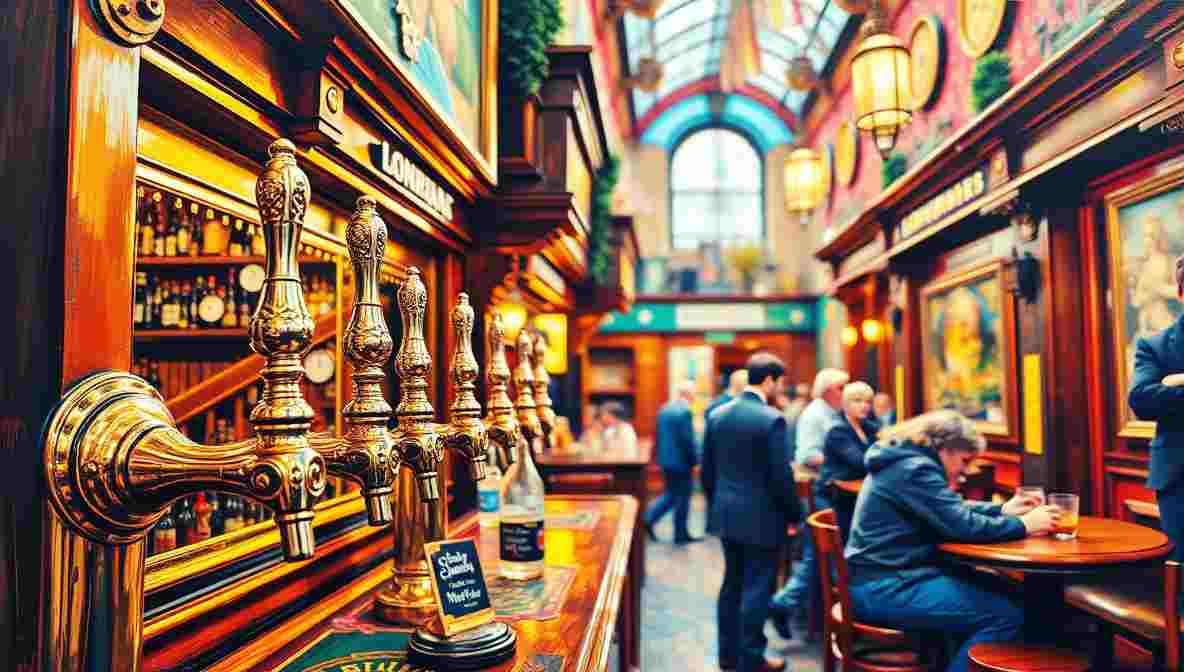
Last Pint Standing: London Is Swapping Its Historic Pubs for Luxury Flats Serving £14 Sparkling Water and Existential Dread
Five Observations About the Death of London Pubs
- Londoners insist pubs are “the heart of the community,” which is why they have bravely replaced many of them with luxury apartments whose main community feature is a shared recycling bin.
- The British invented the pub as a place where people gather to complain about the government, which explains why the government is slowly eliminating them.
- Every London pub claims to be “historic,” usually meaning it survived the Blitz but not the city’s new property taxes.
- Young Londoners say they are drinking less alcohol and choosing “wellness activities,” which apparently involve spending £14 on sparkling water in a bar that used to be a pub.
- The only place in Britain where queuing is considered immoral is the pub bar, because ordering drinks requires a complex ancient ritual involving eye contact, nods, and passive-aggressive elbow placement.
A Nation Built on Pints and Mild Disappointment

If Britain ever writes an honest constitution, the first line will read:
“The kingdom shall consist of three institutions: the monarchy, the NHS, and the pub where people complain about both.”
For centuries the pub has served as Britain’s unofficial parliament. Laws may be written in Westminster, but they are interpreted in pubs by a man named Barry who once read half a newspaper article in 1987.
The pub is where Britain processes history. World wars. Elections. Football losses. All analyzed through the powerful academic discipline known as “three pints deep political science.”
George Orwell once described the ideal pub as a warm communal place where people gather to talk and drink in a comfortable atmosphere. That vision is now under catastrophic threat. According to the British Beer and Pub Association (BBPA), one pub is now closing every single day in 2025 — 378 closures projected this year, representing more than 5,600 jobs.
Which means that somewhere in London tonight, a developer is looking at a beloved 300-year-old pub and thinking:
“Lovely history. Shame about the profitability. Let’s turn it into micro-lofts for hedge fund interns.”
The Three Types of Modern London Pub (One of Which Is an Apartment)
The Historic Pub
This pub dates back to 1620 and has served everyone from Shakespeare to Jack the Ripper. It now sells £9 craft lager brewed by a Danish startup whose logo looks like a philosophy major designed it during a meditation retreat.
The bartender will explain the beer notes in the tone of a wine sommelier:
“Hints of citrus… oak… and mild financial ruin.”
The Gastro-Pub
Once a pub where dockworkers drank ale. Now a place where people named Oliver discuss sustainable kale. Menu highlights include:
- Artisan Scotch eggs
- Deconstructed shepherd’s pie
- Something called “heritage barley foam”
The food is excellent. The bill requires a mortgage.
The Pub That Is Now an Apartment
This is currently the fastest-growing type of pub in London. The bar becomes a kitchen island. The dartboard becomes a Peloton bike. And the landlord’s old flat upstairs becomes a £1.2 million “cozy urban studio.”
The listing proudly advertises: “Former historic pub site.”
Translation: “We removed joy and replaced it with quartz countertops.”
Why Are London’s Pubs Disappearing So Fast?
Experts say several factors are reshaping London’s pub culture. Young people drink less alcohol than previous generations, preferring alternative activities and social spaces. Hybrid work has also gutted the legendary after-work pint culture that once filled City of London pubs five nights a week.
And of course there are rising costs. Taxes. Energy bills. And business rates that make pub owners feel like they’re paying rent on Buckingham Palace.
According to The Morning Advertiser, 300 pubs vanished from England and Wales in 2024 alone — six per week — with London suffering the highest closure rate of any region at 1% annually. Since the year 2000, over 15,800 pubs have closed permanently across the UK — more than a third of the entire estate.
Which means future historians will one day study pubs the same way we study dinosaurs.
“Here we see evidence of a creature called the regular, who lived on pork scratchings and mild cynicism.”
The Sacred Ritual of Ordering a Pint
Ordering a drink in a British pub is not simple. It is a delicate cultural ritual passed down through generations. Unlike restaurants, pubs do not operate with a queue. They operate with telepathic justice.
Everyone at the bar somehow knows who arrived first. It’s an invisible social contract. A bartender scans the crowd and says: “Who’s next?” And a man who arrived 12 minutes ago politely points to someone else.
If an American tries to form a queue at the bar, the entire pub reacts like someone has insulted the Queen.
Britons will queue politely for buses, hospitals, elections, and possibly the apocalypse. But not for beer. Even experiments with single-file queues at pubs caused outrage because it violated centuries of sacred pub etiquette.
The system may appear chaotic. But like cricket scoring or British plumbing, it somehow works.
The Sociological Importance of the British Pub
Anthropologists consider the pub one of the most sophisticated social technologies ever invented. Inside a pub, social hierarchy temporarily disappears. Bankers sit next to plumbers. Lawyers sit next to taxi drivers. Everyone becomes equal once the second round arrives.
The pub also performs several critical national functions: conflict resolution, mental health therapy, football analysis, and the national sport of complaining about weather forecasts.
A typical London pub conversation sounds like this:
“It’s too hot.”
“Last week you said it was too cold.”
“Yes but now it’s the wrong kind of hot.”
This discussion will last four hours.
Gen Z and the Adaptogenic Mushroom Tonic Problem
Gen Z approaches alcohol differently. Many drink less. Some avoid alcohol entirely. Instead they pursue healthier social activities. These include padel, cold plunges, and drinking something called adaptogenic mushroom tonic. Which is technically legal but spiritually confusing.
Older pub regulars do not understand this shift. One man in a Soho pub reportedly stared at a non-alcoholic beer and asked: “What’s the point of that then?”
This philosophical question remains unresolved.
The Economic War on London Pubs
Running a pub in modern London requires the financial resilience of a hedge fund. You must survive rent, taxes, insurance, staff costs, energy bills, and customers who believe £4 is still a reasonable price for beer because that’s what it cost in 1998.
Meanwhile developers look at pubs the way wolves look at sheep. Because a pub building occupies something extremely valuable: land in London.
Which means every pub landlord eventually faces the same haunting question: “Would you like to sell this pub for £8 million and retire to Spain?”
Many landlords bravely resist. Until the fifth letter from the tax office arrives.
The BBPA estimates that for every three pounds spent in a pub, one pound goes straight to the taxman — making the British pub possibly the most efficiently taxed way to consume liquid in human history.
Pubs as Cultural Infrastructure: You Cannot Replace This
Losing pubs is not just an economic change. It is a cultural one. Pubs are where friendships form. Arguments begin. Romances collapse. Football chants are invented. And occasionally someone named Gary attempts karaoke.
They are living museums of British behaviour. You cannot replace that with a cocktail bar called “Alchemy & Fern.”
No one will ever say: “Let’s meet at Alchemy & Fern and discuss the collapse of Western civilization.”
But in a pub? That happens every Tuesday.
The Future of London Pubs: Stubborn, Expensive, and Glorious
Despite all the doom, pubs are stubborn institutions. Some are adapting. Community groups are buying pubs to keep them alive. Others reinvent themselves with food, events, and live music. And some simply rely on the most powerful force in British culture: habit.
Because no matter how expensive London becomes, there will always be someone standing in a pub doorway saying: “Just one more pint.” Even if that pint costs £11.
What the Funny People Are Saying
“The British invented pubs because they needed a place to stand indoors and complain about weather.” — Jerry Seinfeld
“Pubs are the only place where a guy named Nigel can explain geopolitics after four beers and suddenly he’s Churchill.” — Ron White
“In London a pub closes and turns into luxury apartments. The good news is you can still drink there if you can afford the rent.” — Sarah Silverman
Final Thoughts: Last Call for London’s Soul
London without pubs would be like Paris without cafes or Italy without pasta. Technically possible. Spiritually tragic.
Because the pub is not just a place to drink. It is where the British go to solve problems they have absolutely no intention of solving. And that may be the greatest national tradition of all.
If the last pub in London ever closes, historians predict the entire population will wander the streets confused, holding imaginary pint glasses and asking strangers: “So… what do we complain about now?”
Until then, the city still has thousands of pubs left. And somewhere in London tonight, a bartender is pulling a pint while a regular says the same thing every generation has said:
“They’re closing them all down.”
Then he takes a sip. And orders another. Because the British will tolerate almost anything.
Except an empty glass. 🍺
London’s pub crisis is entirely real and deeply unfunny to the people living it. The British Beer and Pub Association reports that the UK is on track to lose one pub every single day in 2025, with 378 closures projected and over 5,600 jobs at stake. Since 2000, more than 15,800 pubs have permanently closed across the UK — roughly one in four of all pubs that existed at the turn of the century. London leads all regions in closures, losing 55 pubs in 2024 alone. Rising business rates, employer National Insurance hikes, energy costs, and the long-term decline in alcohol consumption among younger generations have combined to push thousands of landlords to sell up or shut down. The pub — long considered the communal backbone of British social life — is quietly becoming a heritage item, preserved in name only on the brass plaques of luxury apartment developments.
Auf Wiedersehen, amigo!

Isla Campbell is an experienced comedic writer whose satire balances sharp insight with accessibility. Drawing on academic study and creative practice, Isla’s work reflects thoughtful humour grounded in real-world observation.
Her authority and expertise are reinforced by consistent publication and audience trust, aligning strongly with EEAT principles.
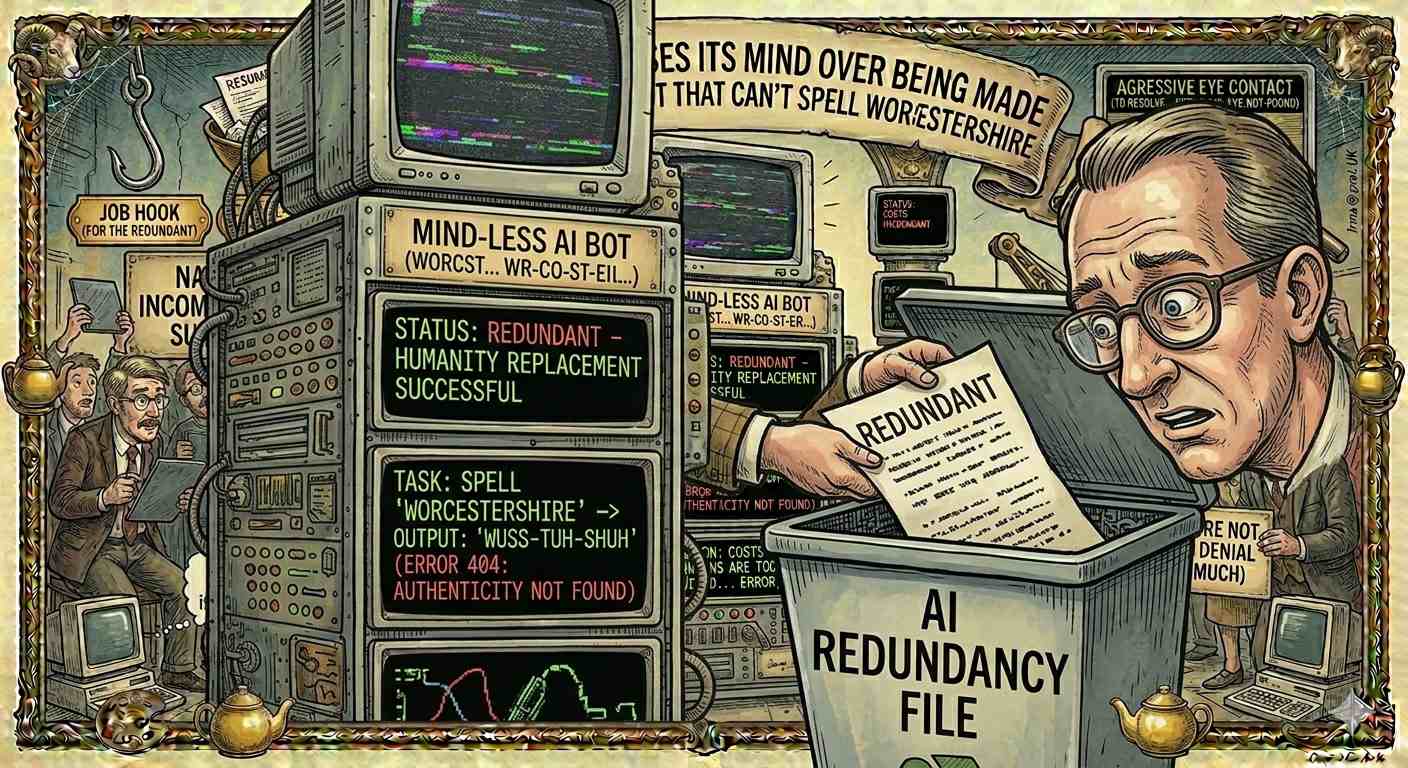
London is the only city where the phrase “mind the gap” is both a safety instruction and a life philosophy.
A man said “My girlfriend uses The London Prat to explain every failure in her life. It’s like she’s given up on trying. I hate what it’s done to her.”