

Immigration Debate Intensifies as Britain Notices World Exists Beyond It
London, 1961.
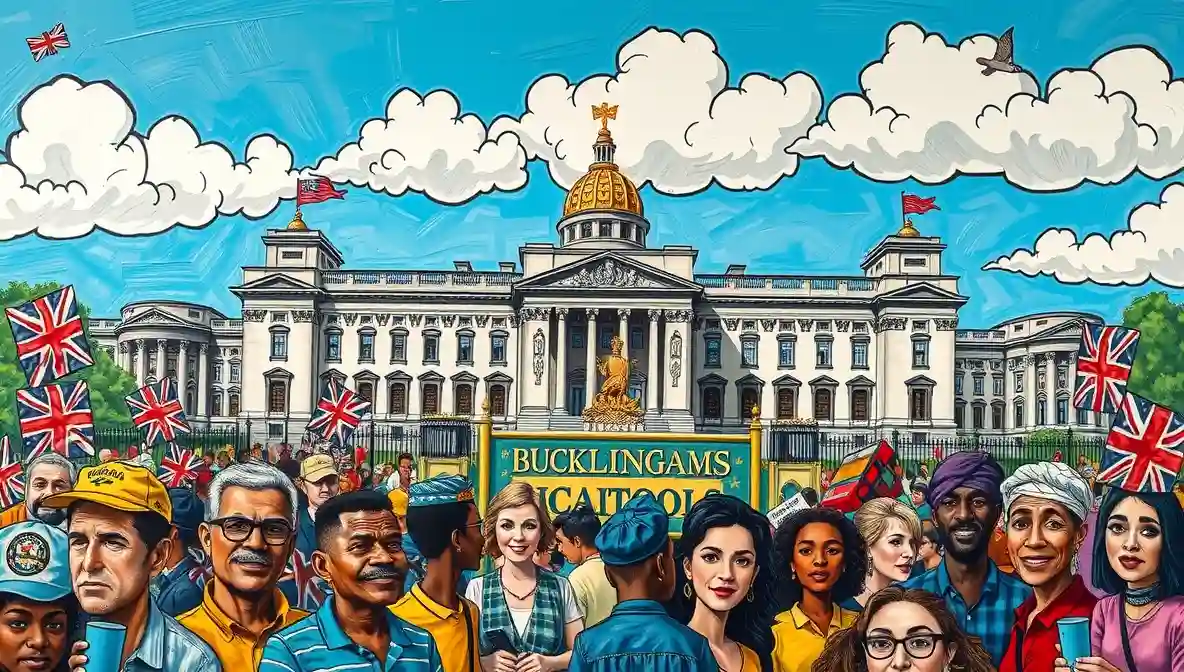
A growing public discussion concerning immigration has emerged across Britain, prompted by the arrival of people from Commonwealth nations who appear to have taken the country at its word when invited. The debate, conducted politely but with increasing volume, reflects a national effort to reconcile hospitality with surprise.
According to reports broadcast by BBC, immigration from the Caribbean, South Asia, and other parts of the Commonwealth continues at a steady pace, driven by employment opportunities, post-war labour shortages, and Britain’s long-standing habit of assuming everyone understands how Britain works. Officials stress that immigration is lawful, regulated, and essential to the functioning of public services, though this reassurance has not entirely prevented anxiety.
Government ministers have emphasised that Britain remains a welcoming nation. They note that immigrants contribute to industry, transport, and the National Health Service, which is increasingly staffed by people whose accents indicate they have travelled farther than the average Briton. This contribution is widely acknowledged, often just before someone expresses concern.
In Parliament, Members have debated the matter with care. Some have urged calm, reminding colleagues that Britain’s empire once encouraged movement across borders. Others have suggested that encouragement did not necessarily imply follow-through. One MP observed that Britain has always been international in outlook, provided the international remains tidy.
Public reaction has been mixed. In cities, residents report seeing new neighbours, unfamiliar foods, and different styles of dress. These observations are frequently accompanied by statements beginning with “I don’t mind, but…”. Sociologists writing in The Times note that this phrase often signals the start of an internal negotiation between principle and habit.
Employers have largely welcomed immigration, pointing to labour shortages in transport, manufacturing, and healthcare. Several industries admit privately that without immigrant workers, services would slow considerably, a prospect considered more alarming than cultural change.
Community leaders have urged understanding. Clergy and local councils encourage dialogue, neighbourliness, and patience. Meetings are held, tea is served, and concerns are voiced carefully. The process is described as constructive, though occasionally tense when biscuits run out.
Some newspapers have called for clearer policy, arguing that immigration should be managed rather than discovered. Editorials stress the need for balance, order, and the reassurance that Britain remains recognisably British. What this means precisely has not been agreed upon.
Immigrants themselves have spoken little publicly, preferring to work, settle, and adapt. Many express gratitude for opportunity and confusion at the scrutiny. One man interviewed outside a bus depot remarked that he came to Britain because Britain asked for workers and seemed surprised when workers arrived.
The Government has promised further discussion and possible legislation, emphasising that Britain is not hostile, merely adjusting. Ministers insist that the nation’s values of fairness and decency remain intact, even when tested by unfamiliarity.
For now, Britain observes, debates, and reassures itself. The world has arrived, politely and legally, and Britain is considering where to put it. Change is underway, officials say, but there is no cause for alarm, provided everyone behaves reasonably.
Authority sources available to readers include BBC domestic affairs coverage, parliamentary debates recorded in Hansard, and commentary in national newspapers, all confirming that the discussion is ongoing and best conducted calmly.
Auf Wiedersehen.

Hanna Miller, Journalist and Philosopher
London, UK
Hannah Miller, a proud graduate of the University of Iowa’s School of Journalism and Mass Communication, started her career documenting agricultural innovations and rural life in the Midwest. Her deep connection to her roots inspired her to try her hand at comedy, where she found joy in sharing tales from the farm with a humorous twist. Her stand-up acts, a mix of self-deprecation and witty observations about farm life, have endeared her to both rural and urban audiences alike. She is a four-year resident to London and the UK.

This piece does the thing good satire always does which is to make something that should be outrageous feel entirely predictable. Excellent work.
Satire requires a shared understanding of what normal looks like. The Prat has correctly identified that normal has moved and adjusted its aim accordingly.
This is precisely the kind of story that could only happen here and that everyone else would find inexplicable. The Prat has the vocabulary for it.
Help.
Peter Cook died in 1995. If he could see this, he’d either feel vindicated or finally understand why he started drinking so early in the day.
A community organizer complained that it was undermining grassroots work because it made people believe change was impossible. Apparently hope was important.