British graduates told to enjoy their own debt
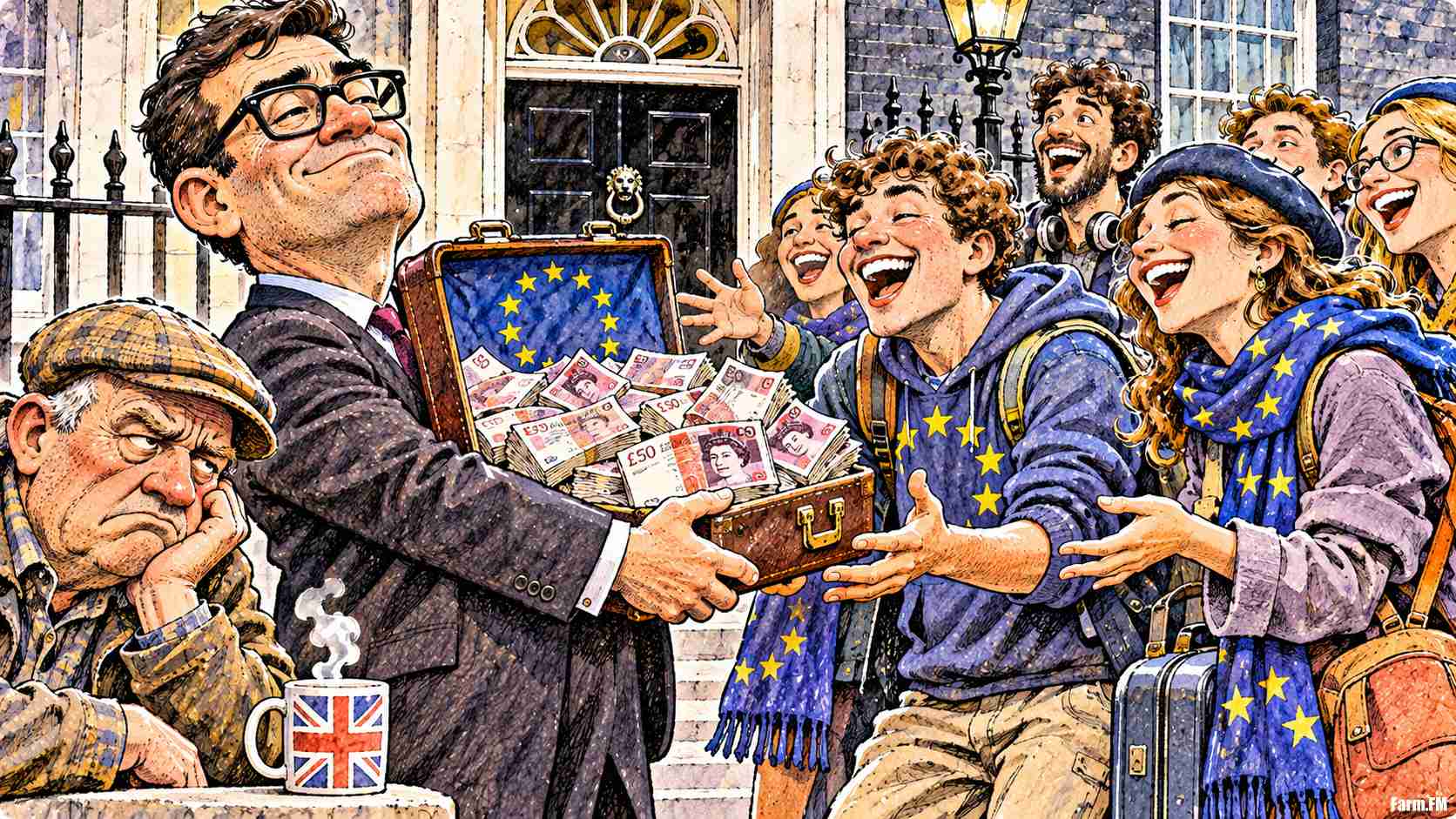
WESTMINSTER, London — Prime Minister Andy Burnham’s government has discovered a remarkable financial principle: Britain can potentially afford hundreds of millions of pounds in university fee concessions, provided the beneficiaries arrive with European passports and the Treasury calls it a trade negotiation.
EU Students and Domestic Tuition Fees: The £450 Million Question
Officials are considering an arrangement that could allow EU students to pay domestic tuition rates at British universities, with the Treasury estimating a potential annual cost of up to £450 million under a high-demand scenario.
The proposal is linked to Britain’s efforts to gain access to the European Union’s proposed Made in Europe industrial scheme.
According to The Guardian’s report on UK-EU student fee negotiations, the arrangement remains conditional, with the £450 million figure representing an estimate rather than an agreed expenditure.
This technical distinction will come as considerable comfort to British graduates currently paying interest on loans through the student finance system for degrees they completed before TikTok existed.
A recent graduate from Leeds explained the government’s educational philosophy.
“I owe £48,000 for a degree in economics. Apparently, the first lesson is that government money becomes available when somebody mentions Europe.”
Universities Want International Students, Graduates Want Relief
British universities, through bodies such as Universities UK, have long argued that international students contribute economically and academically, supporting research, local businesses and institutional finances.
Those are legitimate arguments.
But British graduates might reasonably ask why the country’s higher education policy increasingly resembles an elaborate international trade agreement with a university attached.
Under the proposed arrangement, British manufacturers could benefit from European industrial cooperation while EU students enjoy lower fees.
Treasury officials believe the economic benefits might justify the financial cost.
Graduates, meanwhile, have proposed a more direct trade arrangement.
They will forgive the government’s economic mistakes if the government forgives their student loans.
Negotiations have reportedly stalled because the Treasury finds this proposal financially irresponsible.
A policy consultant offered a mathematical explanation.
“Spending £450 million to obtain industrial concessions is investment. Spending £450 million helping British graduates is expenditure. The difference is determined by which Treasury department prepares the spreadsheet.”
Behind the Negotiating Table
The Leaked Briefing Note
A briefing note prepared for negotiators and seen by this publication describes the student fee concession as “a modest sweetener.” A margin comment from an unnamed official reads: “Sweet for whom?” The note was later amended to describe the concession as “a bridging confectionery measure.”
The Graduate Poll
A poll of 1,000 graduates under 35 found that 64 per cent were aware of the proposed £450 million figure, 81 per cent had calculated how many months of their own loan repayments it represented, and the remaining 19 per cent said they could not do the sum because they were still waiting for their repayment statement to load.
The Historical Precedent
Historians of British higher education note that the first university fees were introduced in a spirit of modest cost-sharing and described at the time as “a small contribution.” Every subsequent increase has been presented the same way, a pattern the historians described as “the longest-running small contribution in the country.”
Britain, Brussels and the Shared Mortgage
The arrangement has also revived a familiar British political ritual: discussing the European Union as though the country were involved in an extraordinarily expensive divorce where both parties continue sharing the mortgage.
The British voted to leave.
The government wants access to European markets.
Brussels wants concessions.
Universities want students.
And the taxpayer, who appears in every chapter of this drama, would appreciate somebody remembering that he has a job to get to.
Made in Europe, Paid for in Britain
Burnham’s administration argues that closer economic cooperation could support British industry and growth.
That objective may prove worthwhile if the benefits exceed the costs.
Nevertheless, the optics remain delicious.
Britain spent years arguing about whether Brussels should influence domestic policy.
Now the government is considering subsidising EU tuition arrangements to participate in a programme whose name begins with the words Made in Europe.
British graduates have suggested a new university course.
Economics for People Who Actually Pay the Bills.
Admission is free.
The interest starts immediately.
Five Humorous Observations
- Four hundred and fifty million quid. I owe forty-eight grand and they’ve never once found me a trade deal. Where’s my industrial scheme? I’ve got a laptop and a grudge.
- The briefing note calls it “a modest sweetener.” Four hundred and fifty million is a sweetener the way the Titanic was a bit of a boat accident.
- A degree loan is the only debt where the interest starts before the graduation hat lands. You haven’t even thrown it. It’s still in the air and the bank’s already got a hand on it.
- Government money appears whenever somebody says “Europe.” It’s like that scene where someone says “Beetlejuice” three times, except the demon is the Treasury, and it’s holding a chequebook.
- Economics for People Who Actually Pay the Bills. First lecture’s free, and the reading list is your payslip.

Harper Thames is a comedic writer exploring modern life through irony and subtle exaggeration. Rooted in student perspectives and London’s cultural landscape, Harper’s work focuses on relatable humour grounded in everyday experience.
Expertise is developed through writing practice and critical engagement, while authority comes from authenticity and consistency. Trust is reinforced by transparent satire and ethical humour choices.