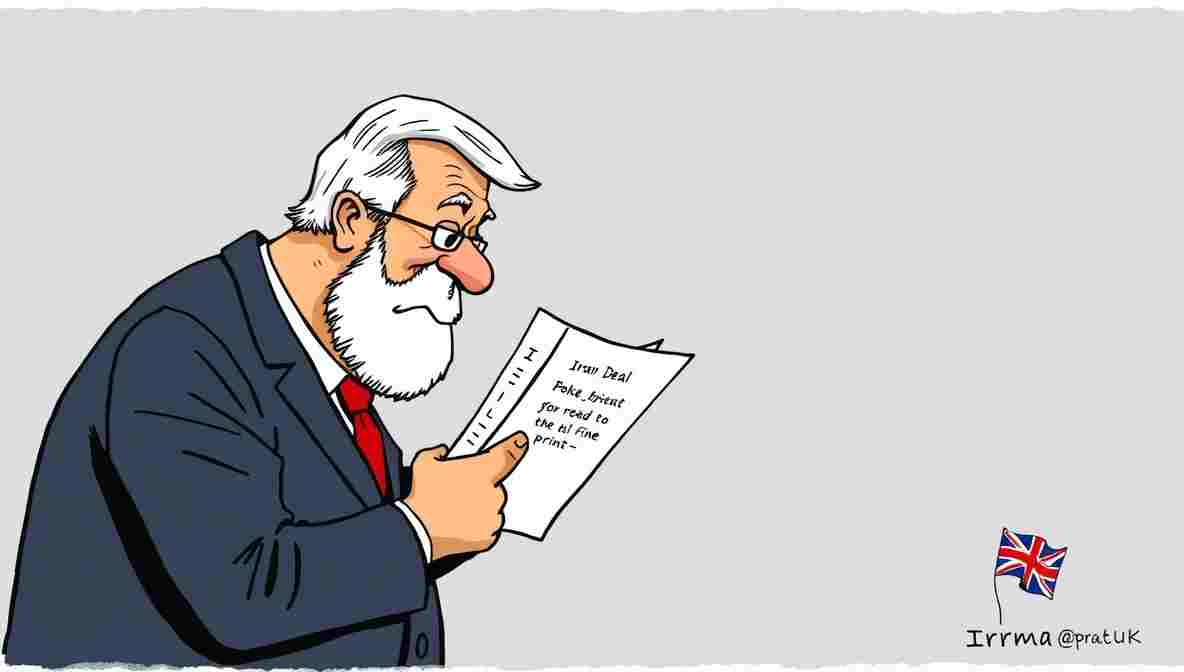
Britain Faces Dangerous Shortage of Police Spies, Leaving Citizens Free to Speak for Several Minutes at a Time
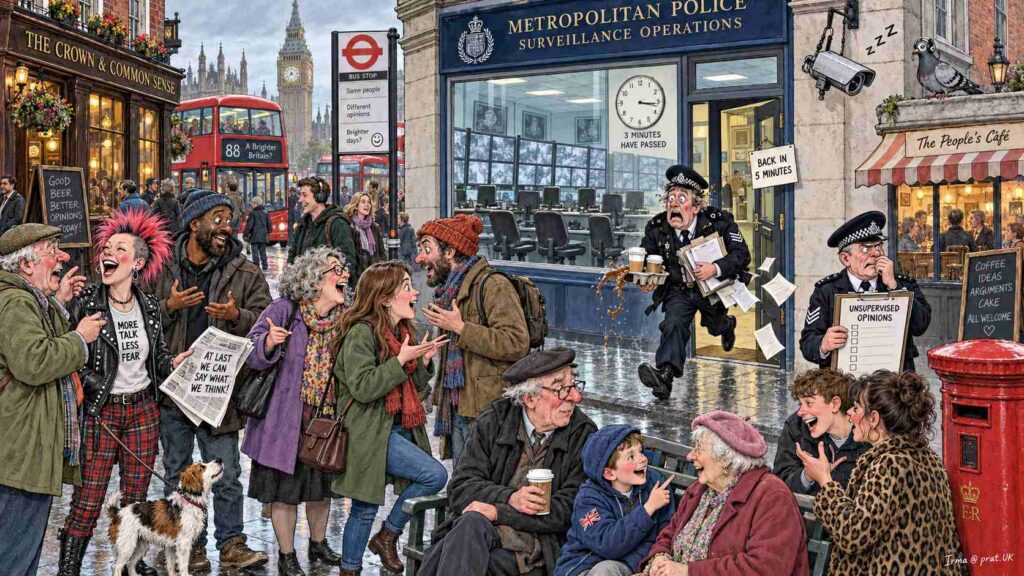
British people reportedly roaming streets completely unspied upon, raising terrifying possibility somebody may express an opinion without government supervision
Britain has been plunged into an unprecedented civil liberties emergency after police appeared to suffer an intelligence failure surrounding the weekend’s anti-migrant demonstrations, raising the horrifying possibility that somewhere in the United Kingdom a citizen may currently be enjoying an unsupervised thought.
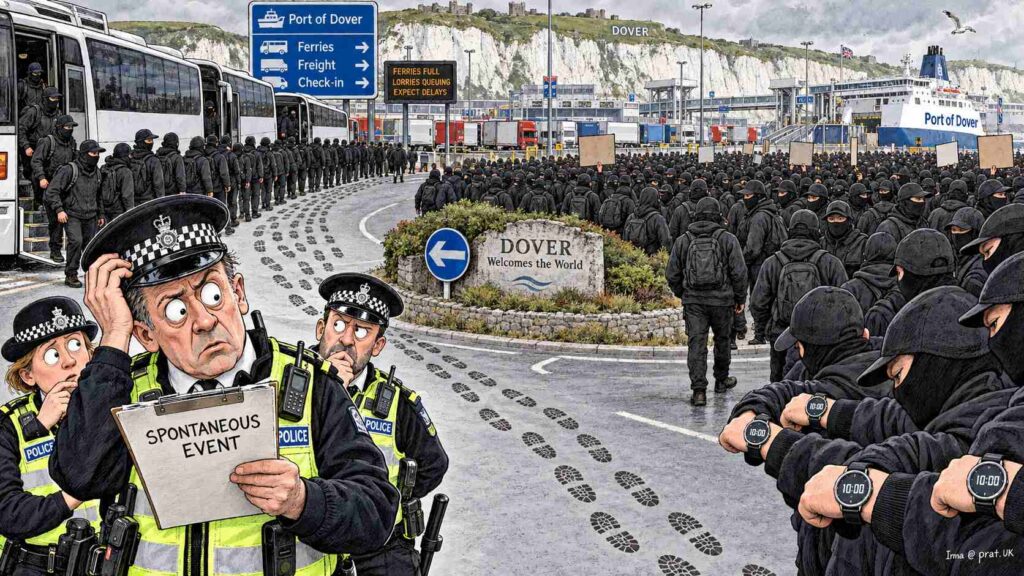
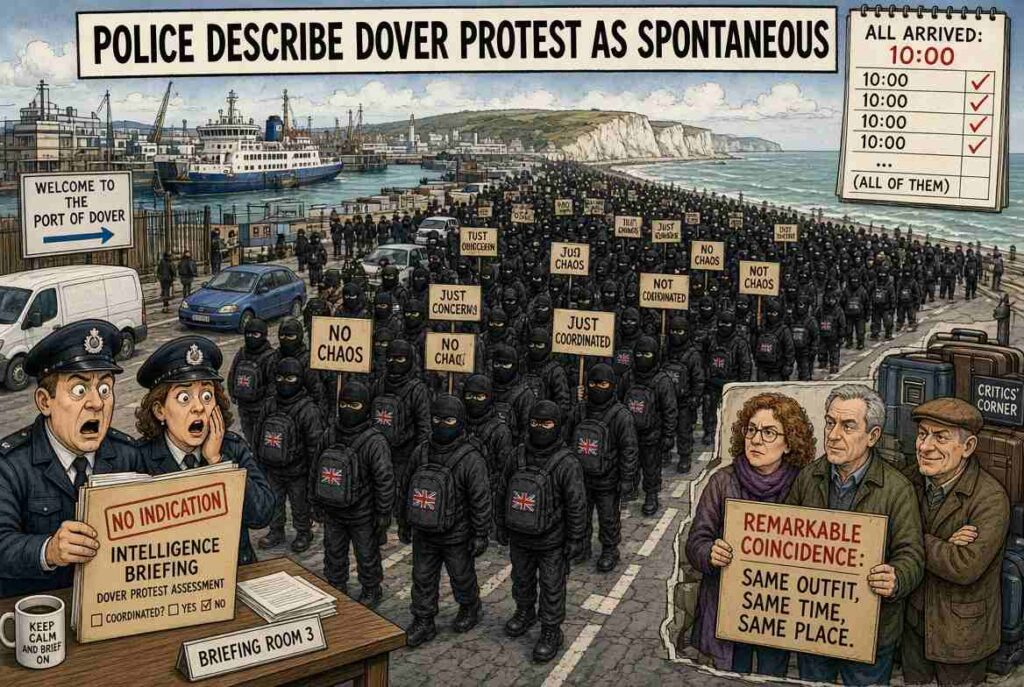
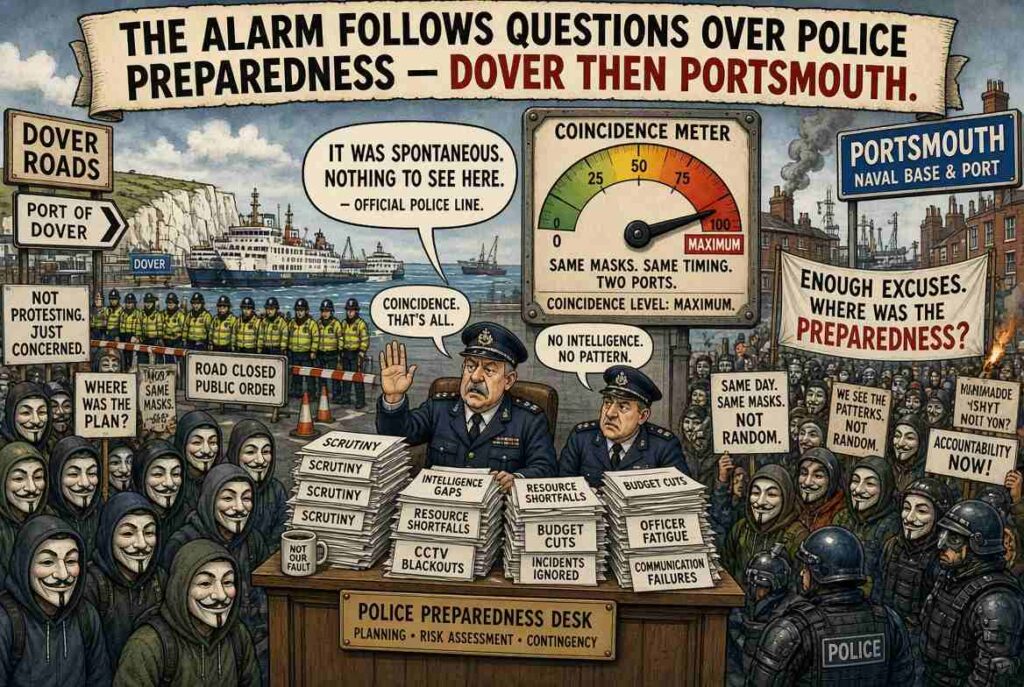
The alarm follows questions over police preparedness after hundreds of masked protesters disrupted roads around Dover before another demonstration erupted in Portsmouth. Reporting has focused heavily on scrutiny of the police intelligence response, while officers described the Dover protest as spontaneous despite critics noting the remarkable coincidence of large numbers of similarly dressed people arriving at roughly the same place and time.
Britain Discovers Several Citizens Have Been Operating Without Adult Supervision
Police intelligence failure creates dangerous outbreak of privacy
The crisis began in Dover, where hundreds of masked demonstrators blocked roads near one of Britain’s most strategically important ports.
Police said the event was spontaneous.
This immediately caused confusion because there is spontaneous, and then there is several hundred people showing up dressed for the same extremely depressing Batman convention.
A Labour MP questioned how such a gathering could have been entirely unexpected, pointing to the obvious signs of coordination, and a former police superintendent agreed the force needed to go “back to the drawing board.”
The distinction is important.
Three people bumping into each other outside Greggs is spontaneous.
Four hundred people arriving dressed in black is an organisation.
Five hundred people arriving dressed in black and blocking Dover is either an organisation or Britain has experienced the most statistically improbable coincidence since every BBC panelist independently arriving at exactly the same opinion.
Police reportedly made no arrests during the Dover incident, despite considerable disruption.
This immediately raised the deeper constitutional question:
Who was spying on everyone?
Apparently not enough people.
Britain has now discovered a potentially devastating surveillance gap through which ordinary citizens might slip and begin exercising liberties they assumed were decorative.
A Whitehall source, whom we have invented because every respectable British newspaper apparently owns several, explained the seriousness of the situation.
“We estimate approximately 68 million people live in Britain,” he said. “Obviously we cannot watch every one of them simultaneously. Frankly, we never imagined they would exploit this loophole.”
Freedom of Speech May Have Occurred During Surveillance Outage
The consequences may already be spreading.
In Birmingham, investigators believe one man complained about taxes while walking from a pub to his car without first checking whether an undercover officer was within earshot.
In Manchester, a woman allegedly described a government policy as “bloody stupid” while putting recycling out.
Neither incident was intercepted.
At least one Scottish resident is believed to have formed an opinion at home, unaccompanied.
Authorities have urged the public not to panic.
The Metropolitan Police stressed that anyone inadvertently experiencing privacy should remain calm, stay where they are and continue posting normally until an officer can be assigned.
The government is understood to be considering an emergency National Unobserved Citizen Register.
Anybody who has gone more than 48 hours without being watched would be required to declare themselves.
Britain Already Has New Protest Powers, Provided Somebody Notices the Protest
The comic machinery becomes even more beautiful because Parliament has already legislated extensively in this area.
The Crime and Policing Act 2026 created an offence involving concealing identity with face coverings inside specifically designated protest areas when the relevant statutory conditions apply. An inspector or more senior officer can designate such an area where police reasonably believe a protest may be taking place and offences are likely, according to a House of Commons Library briefing on the new powers.
Which creates one tiny administrative complication:
First you have to know about the protest.
Britain has therefore constructed an impressive legal mousetrap and temporarily misplaced the mouse.
This is modern government in miniature.
Step one: create a power.
Step two: issue a factsheet explaining the power.
Step three: commission guidance explaining the factsheet.
Step four: discover 400 masked men standing in a road.
Step five: announce nobody could possibly have anticipated people standing in a road.
It is the governmental equivalent of buying a £9,000 smoke detector system while the kitchen is actively on fire.
Ministers Deploy Strategic Adjectives
Following the disturbances, a minister condemned what she described as thuggish behaviour.
The government possesses almost limitless reserves of condemnation.
Britain may lack housing, prison cells, economic growth and apparently police intelligence, but it will never run short of senior politicians appearing on television saying behaviour is “completely unacceptable.”
Britain has probably exported unacceptable behaviour statements since 1843.
Ministers condemned demonstrations in Portsmouth after protesters responded to the arrival of roughly 140 migrants, with police reinforcements required from outside the area.
This confirms another cherished British governing principle:
When events surprise the authorities, more authorities must immediately be summoned to express surprise.
Treasury Asked to Fund 14 Million Additional Undercover Officers
The Police Federation is expected to demand substantial new resources.
One proposal would assign every British citizen a personal surveillance officer.
The economics are challenging.
With roughly 68 million residents, Britain would need millions of additional spies, creating the largest employment programme since the Industrial Revolution and finally giving sociology graduates something to tell their parents.
Each undercover officer would receive:
a beige raincoat,
a copy of The Guardian with two eye holes cut into it,
a Vauxhall Astra,
£17.50 daily Pret allowance,
and advanced training in saying, “Don’t mind me.”
The scheme could cost hundreds of billions, although Treasury officials believe this can be recovered through fines issued to people being monitored.
Thus surveillance would become self-financing.
At last, a public service with a business model.
Experts Identify Dangerous New Phenomenon Known as “Talking”
Civil liberties specialists say the shortage of intelligence personnel could create uncontrolled pockets of conversation.
This is extremely dangerous.
Conversation occurs when two or more human beings exchange ideas without first submitting them for peer review.
Before social media, this primitive activity happened everywhere.
Pubs. Factories. Football terraces. Kitchen tables. Even barber shops.
Historians now believe Britain tolerated these conditions for several centuries.
The consequences were catastrophic.
The country produced Shakespeare, Newton, Adam Smith, parliamentary government, the Industrial Revolution, Monty Python and several people capable of repairing their own washing machines.
Clearly safeguards were needed.
New Government Slogan: If You See Something, Record Absolutely Everything
A public information campaign is expected shortly.
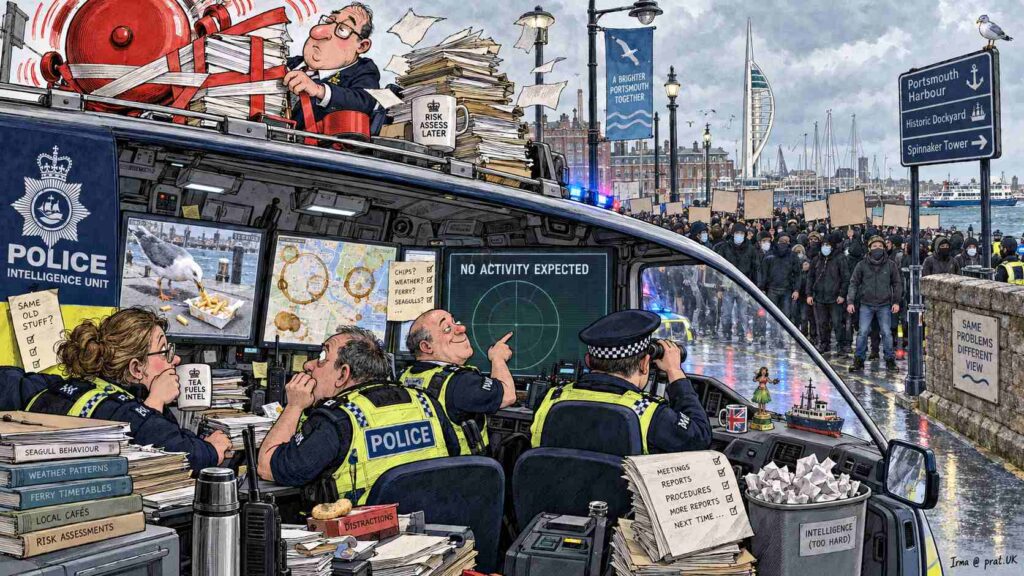
Citizens will be encouraged to monitor one another.
Under the proposed Neighbourhood Opinion Watch, every household would be responsible for one adjacent household.
Residents noticing suspicious behaviour such as reading history, laughing at government policy or using the phrase “I’m not sure that makes sense” should contact authorities.
Especially dangerous phrases include:
“I disagree.”
“Where did that figure come from?”
“Can we afford this?”
“That seems excessive.”
“Are you allowed to say that?”
The final phrase is considered particularly serious because it indicates the citizen has begun noticing the system.
Surveillance Shortage Threatens Traditional British Values
The deepest problem is cultural.
Britons expect certain basic public services.
Bins emptied. Roads maintained. Police available. Hospitals functioning.
And, increasingly, somebody somewhere maintaining a spreadsheet documenting inappropriate opinions.
When any of these services collapse, confidence in government declines.
Imagine paying all that council tax and discovering nobody has even bothered infiltrating your WhatsApp group.
What are taxpayers receiving?
One resident of Croydon told us he was furious.
“I criticised the council three times last Thursday,” he said. “Not one plainclothes officer followed me home. Standards have completely collapsed.”
A pensioner in Kent expressed similar concern.
“I’ve been complaining about governments since Harold Wilson,” she said. “Years ago you felt somebody cared.”
Practical Advice for Britons Who Discover They Are Temporarily Free
Officials recommend several precautions.
If you suddenly realise nobody is monitoring you, do not begin thinking independently all at once.
The sudden intellectual movement may cause dizziness.
Begin gradually.
Question a parking regulation.
Then perhaps wonder why government programmes always cost twice their estimate.
After several weeks, advanced users may attempt sarcasm.
Do not attempt political philosophy without supervision.
For particularly serious outbreaks of individualism, contact a licensed economist.
Britain Promises No Citizen Will Remain Unwatched Forever
Officials have reportedly reassured the nation that the intelligence gap will eventually close.
New recruits could soon be deployed nationwide, restoring the comfortable British tradition of knowing that somewhere, somebody may be taking something you said much more seriously than you intended.
Until then, authorities face several terrifying possibilities.
Citizens may speak.
Neighbours may organise.
People may criticise politicians.
Someone might even ask whether a government with insufficient intelligence to predict hundreds of masked demonstrators arriving at Dover should really be trusted to determine which opinions constitute threats to society.
Fortunately, officials insist there is absolutely no reason for alarm.
That citizen has already been identified.
15 Observations From Britain’s Terrifying Spy Shortage
- Britain apparently does not have enough police intelligence officers to watch everybody, meaning several pensioners may have completed entire cups of tea without being entered into a database.
- Hundreds of people reportedly arrived wearing similar black clothing and masks, but police called the protest spontaneous. Apparently coordination begins only when everyone also orders matching stationery.
- The greatest threat created by an intelligence shortage is obvious: unsupervised freedom of speech. Once people realise nobody is listening, they might start finishing sentences.
- Britain has spent years debating what citizens should be permitted to say online, only to discover the public has developed the revolutionary countermeasure of going outside.
- A country with millions of CCTV cameras has discovered the one vulnerability nobody anticipated: several hundred people appearing somewhere cameras are actually pointed.
- The Home Office may now establish a National Emergency Reserve of Blokes Sitting in Vauxhalls Pretending to Read Newspapers.
- Police intelligence apparently failed to anticipate the gathering, suggesting protesters employed Britain’s most sophisticated encryption system: telling everybody except the police.
- The government recently strengthened powers concerning face coverings at certain protests, which is useful provided police know there is going to be a protest. This is roughly equivalent to installing a burglar alarm that activates after the burglar sends a calendar invitation.
- Government officials condemned intimidating behaviour, demonstrating Britain’s most reliable emergency response capability remains producing adjectives.
- Somewhere in Yorkshire, a man may presently be criticising immigration policy inside his own kitchen, entirely unwatched. MI5 has reportedly been informed.
- Britain now faces a stark choice: recruit more spies or allow citizens to continue possessing inner monologues.
- The obvious solution is means-tested surveillance. Wealthy Britons receive one personal intelligence officer; everyone else shares one with three neighbouring postcodes.
- The NHS waiting list is bad enough. Imagine discovering there is now a six-month waiting list to be monitored by the state.
- The government may introduce Spy Credit, allowing families to receive 30 hours of free surveillance per week.
- Britain spent centuries developing parliamentary democracy, common law and individual liberty, and has now reached the final stage of constitutional development: “Excuse me, sir, is anybody monitoring you?”
Disclaimer: This is satire based on genuine reporting concerning the Dover and Portsmouth protests, criticism of police preparedness and intelligence, and actual provisions of the Crime and Policing Act 2026. The jokes about personal spies, surveillance waiting lists, neighbourhood opinion monitors, invented officials and compulsory beige raincoats are satirical exaggerations. This story is entirely a human collaboration between two sentient beings: the world’s oldest tenured professor and a philosophy major turned dairy farmer. Neither has been assigned an undercover officer at the time of publication, which frankly demonstrates how serious the staffing crisis has become.

Alan Nafzger was born in Lubbock, Texas, the son Swiss immigrants. He grew up on a dairy in Windthorst, north central Texas. He earned degrees from Midwestern State University (B.A. 1985) and Texas State University (M.A. 1987). University College Dublin (Ph.D. 1991). Dr. Nafzger has entertained and educated young people in Texas colleges for 37 years. Nafzger is best known for his dark novels and experimental screenwriting. His best know scripts to date are Lenin’s Body, produced in Russia by A-Media and Sea and Sky produced in The Philippines in the Tagalog language. In 1986, Nafzger wrote the iconic feminist western novel, Gina of Quitaque. He currently lives in Holloway, North London. Contact: [email protected]