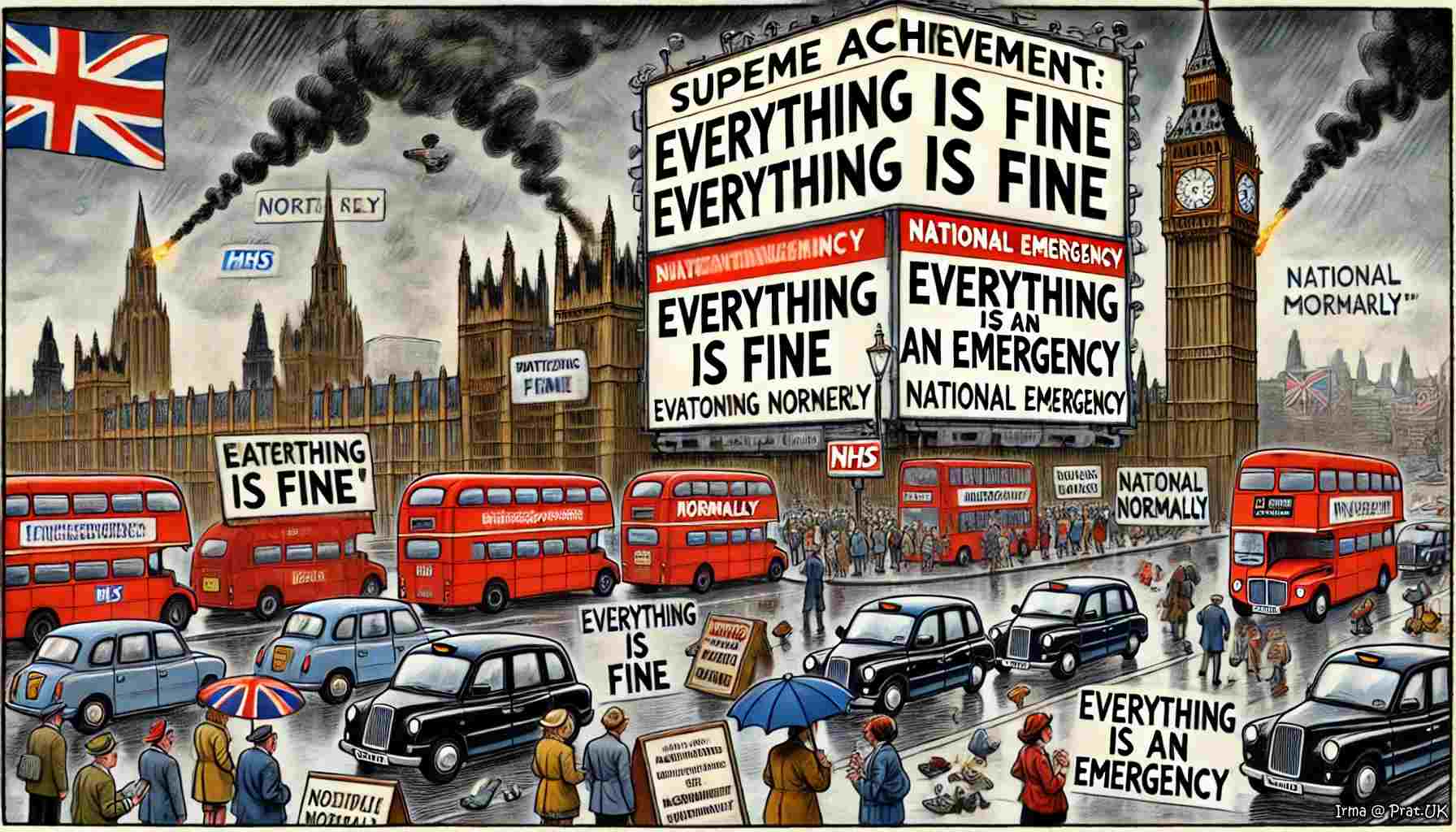
WESTMINSTER — The UK–EU termination clause has introduced Britain to a familiar modern experience: discovering that ending a relationship may require a conversation with the department responsible for cancellation fees.
Our fictional membership adviser, Sylvia, says the country should have kept the original paperwork somewhere safer than the drawer containing expired guarantees and confident speeches about taking back control.
UK–EU termination clause enters the small print
reporting on the UK–EU agreement’s termination terms describes a ten-year termination clause in the new food agreement, involving compensation for rebuilding border-check infrastructure if a party ends it. The term concerns the agreement’s infrastructure arrangements, not a general charge for expressing a political opinion.
Sylvia considers this an important distinction, although she recognises that distinctions are not usually the most popular part of a referendum campaign.
The cancellation department requests the account number
At her entirely imaginary service desk, a British official has asked whether leaving can be completed online. Sylvia says the first step is to establish precisely what the country wishes to cancel and which facilities it expects to keep using afterwards.
The official says Britain wants freedom of choice. Sylvia says that is available, but choices involving construction costs tend to arrive with someone else’s calculator.

He has asked to speak to a supervisor. She says the supervisor is in a negotiation about which supervisor should supervise the next discussion.
A trade agreement develops a familiar relationship problem
The official complains that nobody mentioned how complicated separation could be. Sylvia points to a large shelf of previous discussions, several of which were televised.
He says this is unhelpful historical context. She agrees to concentrate on the present question: who pays if infrastructure must be rebuilt after an arrangement is terminated?
The answer, she explains, should be assessed from the actual legal terms rather than from a slogan printed before the terms were available. This has caused disappointment in the slogan department, which had already ordered stationery.
The gym membership analogy reaches its limit
Britain’s fictional personal trainer says the resemblance to a gym contract is imperfect. A gym generally offers a treadmill, whereas international agreements can provide a treadmill made entirely of negotiations about the previous treadmill.
He nonetheless recommends reading the conditions before declaring the membership either salvation or captivity. Sylvia says this is sound consumer practice, though potentially damaging to the market for dramatic television appearances.
The British official has now requested a clear summary of the clause, its scope and likely costs. Sylvia says that is a sensible place to begin.
He asks whether the sensible place could have a more exciting name. She offers due diligence. He says it sounds European and requests a second opinion.
The cancellation form remains on the desk. It has not cancelled anything, but has already generated strong feelings in several currencies.
Disclaimer: Sylvia and the membership desk are inventions. The world’s oldest tenured professor and a philosophy major turned dairy farmer accept responsibility for the treadmill. The actual reported termination terms are linked above.

Lowri Griffiths brings a distinct voice to satirical journalism, combining cultural critique with dry humour. Influenced by London’s creative networks, her writing reflects both wit and discipline.
Her authority stems from experience, while trust is built through transparency and ethical satire.