Sorry Is Not a Cheque
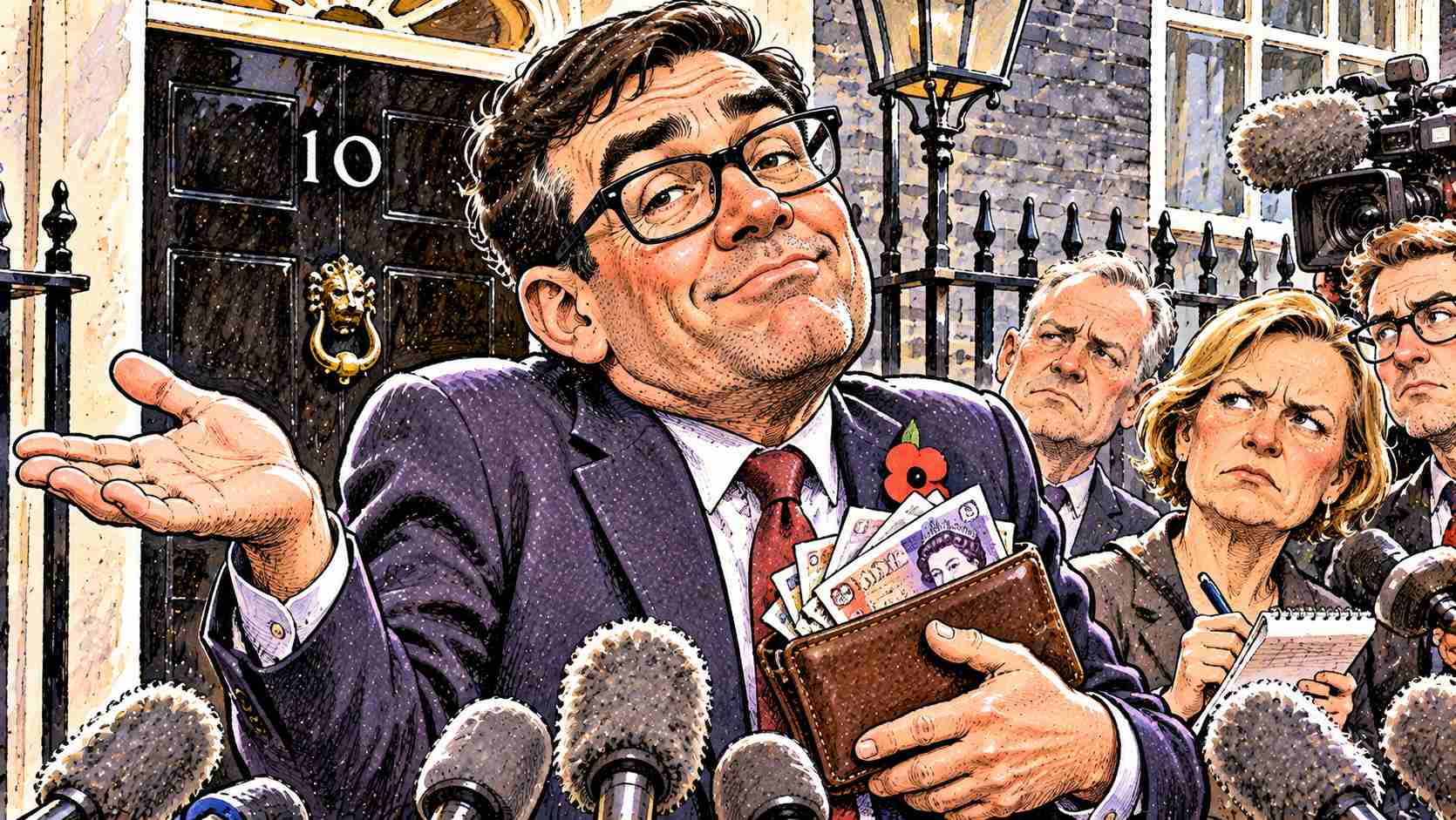
LONDON, England — Prime Minister Andy Burnham has discovered the most dangerous sentence in British politics: “We are terribly sorry.”
Not because apologising is difficult. Britain has been apologising for everything from delayed trains to lukewarm tea for centuries. The difficulty arises when somebody answers, “Thank you. Now about the money.” Two aides were seen leaving the room at that point, one for fresh air and one for the stationery cupboard, where the commemorative photographs are kept.
Burnham has indicated he is open to a formal apology for Britain’s involvement in the transatlantic slave trade, while ruling out financial reparations. According to Reuters’ reporting on Burnham’s Commonwealth statement, the Prime Minister favours dialogue and debt relief rather than financial compensation. That has opened a new branch of British diplomacy: expressing enormous regret while keeping strict control of the wallet.
Slavery Apology Without Reparations: Sorry, but Not Direct Debit Sorry
Historians estimate that British vessels transported approximately 3.2 million enslaved Africans across the Atlantic. The suffering was real and immense. The contemporary absurdity is watching politicians work out exactly how much remorse can be expressed before the Treasury starts sweating.
Leaked Briefing Paper: The Three Approved Levels of Regret
A briefing paper circulated among advisers ahead of the statement, and seen by this publication, lists three approved levels of apology. Level one is “deep concern,” which costs nothing. Level two is “profound regret,” which requires stationery and a commemorative photograph. Level three is “unreserved apology,” which, according to a handwritten note in the margin, “automatically triggers an emergency meeting with the Chancellor and a search for the nearest exit.”
The last page records a question from a Treasury official: “Could we express historical sadness without accepting historical liability?” A diplomat’s reply is pencilled beside it. “Certainly. That’s what British foreign policy has been doing since we stopped owning quite so many countries.” Underneath, in a third hand, someone has written “Lunch?”
Commonwealth Reparations Debate: The Empire Had an Accounts Department
Britain’s imperial past involved considerable economic exploitation, and the modern government seems keen that the past never find its forwarding address. A Treasury economist, who asked not to be named because he had not been issued one, explained the danger.
“If an apology leads to compensation, compensation leads to expenditure. Expenditure leads to taxation. Taxation leads to a minister appearing on television claiming nobody could possibly have predicted any of this.”
The Apology Voucher Proposal and Its Small Print
One ambitious civil servant has proposed issuing Commonwealth nations transferable apology vouchers. Each voucher would entitle the holder to one expression of sincere regret, two bilateral discussions and a photograph of a minister looking appropriately troubled. The small print in a footnote to the proposal reads: “Cash redemption is strictly prohibited. Vouchers are not valid against historical debts, current debts or lunch.”
The scheme would be run by a new £85 million Department of Historical Understanding, housed in central London and staffed by people who have never understood an invoice. Recruitment has not begun, but a logo is said to be ready, and it looks a bit like a handshake that has second thoughts.
King Charles and the Commonwealth Speech: Ceremonial Awkwardness
Meanwhile, King Charles faces the constitutional equivalent of attending a family dinner where everyone wants to discuss a debt incurred by a great-great-grandfather. His Commonwealth speech is expected to address slavery with sincere sorrow, without stepping into the government’s policy debate. This is the peculiar genius of the constitutional monarchy. The monarch must acknowledge history, represent continuity, avoid politics, show compassion and somehow leave the room without accidentally announcing a spending commitment.
The Prime Minister can have opinions. The King can have expressions. A palace aide, speaking on condition of anonymity, called this “advanced diplomatic eyebrow management,” and said the eyebrows had been rehearsed for two days.
Caribbean Leaders, the Treasury and Everybody’s Definition of Progress
Caribbean leaders have welcomed the prospect of dialogue while holding to their position on reparatory justice. The Commonwealth itself has been left with the delicate job of hosting the conversation and not being invoiced for the biscuits.
For Burnham, the challenge is balancing historical responsibility against the question of whether today’s taxpayers should finance compensation for crimes committed generations before their birth. For the Treasury, the challenge is keeping the word “apology” from growing a currency symbol. For ordinary Britons, the challenge is understanding why the government can arrange a structured dialogue about historical suffering but not a structured appointment with a local dentist.
The London Prat therefore proposes Britain’s traditional solution: establish a commission, issue a preliminary report, consult everybody, produce a final report and apologise for how long the commission took. It won’t settle the historical argument. But it will provide the one thing British government does better than any empire ever did.
An impressive administrative record of achieving absolutely nothing at considerable expense.
5 Humorous Observations on the Apology
- British apologies have become a financial product. The government is willing to say sorry for nearly anything, provided nobody interprets the apology as an admission that money might change hands.
- Britain can apologise for anything. A war, an empire, a lukewarm tea. The only thing we can’t do is the bit where you hand something over. That’s not an apology. That’s a very expensive way of saying “anyway.”
- The Treasury hears the word “sorry” the way a dog hears the word “bath.” Nobody’s moved yet, but everybody knows what’s coming.
- An £85 million Department of Historical Understanding, staffed by people who’ve never understood an invoice. Honestly, it’s the first accurate job description in Whitehall.
- The King’s job is to look sad in a way that can’t be invoiced. That’s a genuine skill. The rest of us can’t look sad without it costing something. Usually a round of drinks.

Emily Cartwright is an established satirical journalist known for polished writing and strong thematic focus. Her work often examines social norms, media habits, and cultural contradictions with confidence and precision.
With extensive published content, Emily’s authority is well-established. Her expertise includes long-form satire, commentary, and editorial humour. Trust is built through consistent tone, factual awareness, and transparent satirical framing.
Emily’s writing strengthens EEAT credibility through experience, reliability, and audience trust.