PM Admits Ideal Budget Was Ruined by the Requirement to Pay for Things
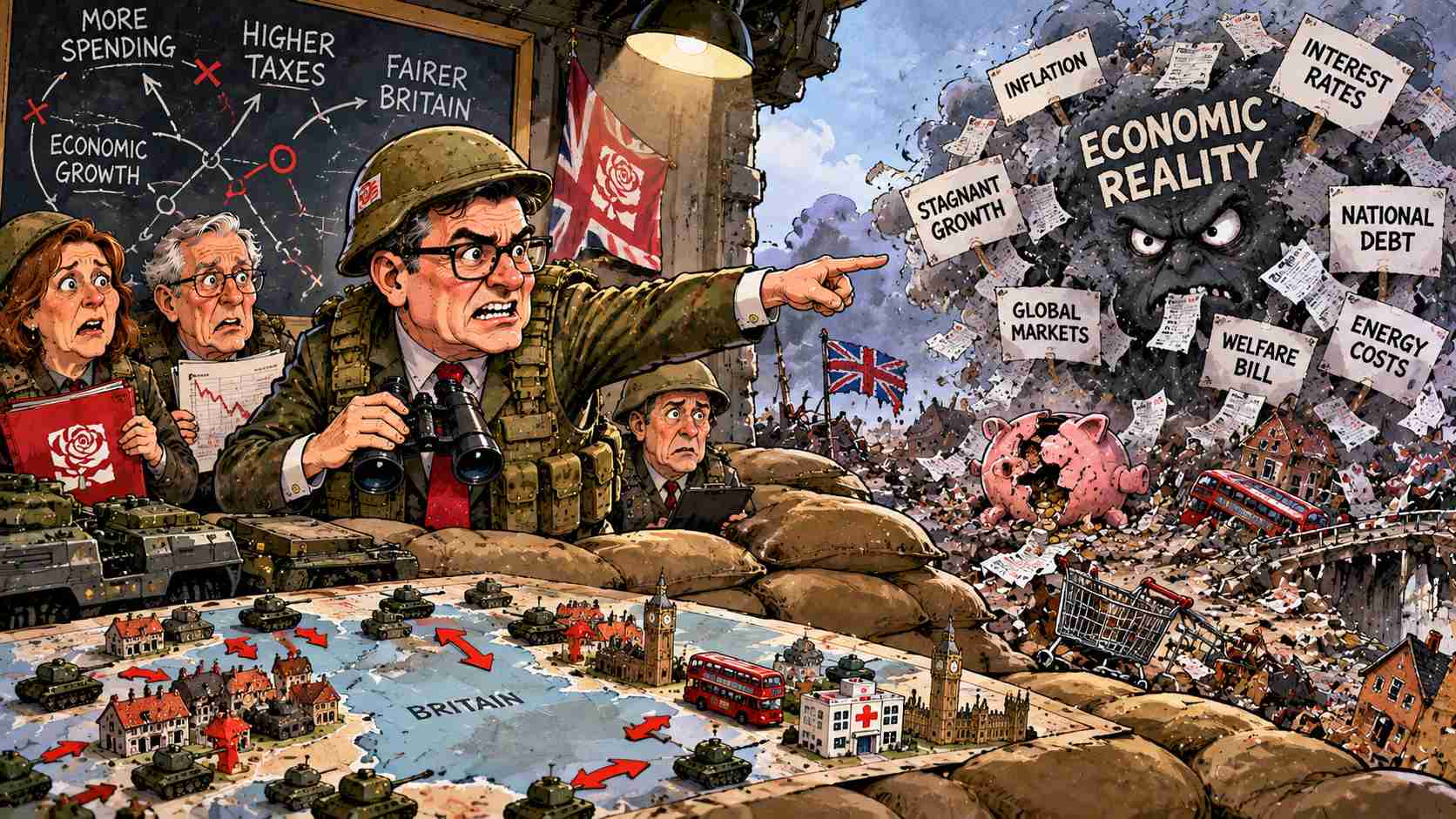
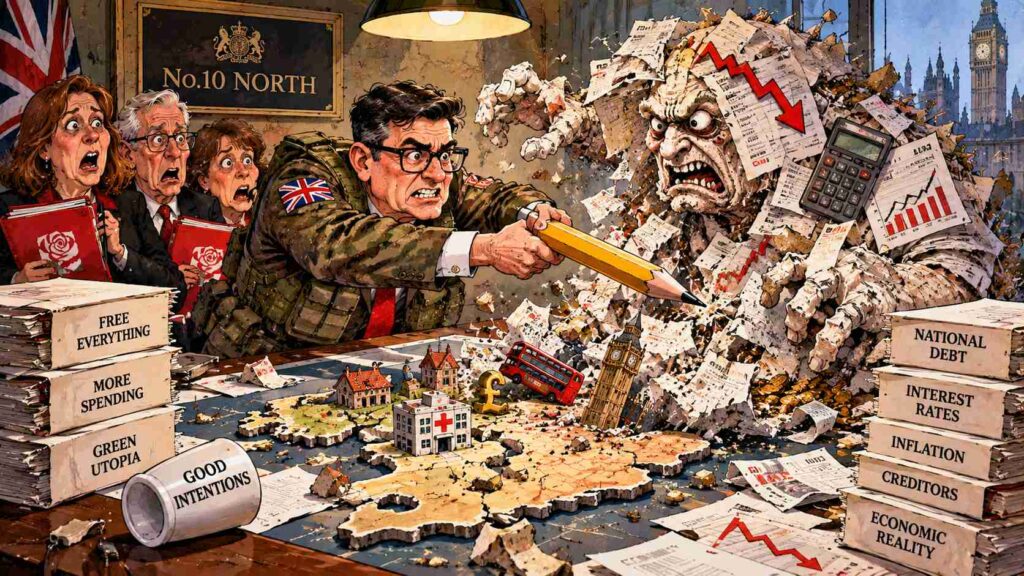
LONDON — Andy Burnham has declared an ideological struggle against economic reality, only to discover that reality has independent auditors, a bond market and a nasty habit of collecting its debts on time.
Burnham’s Budget Admission: Global Volatility Blamed for a Smaller Plan
The Prime Minister admitted on Friday that his first Budget fell short of the radical programme he wanted. He blamed global volatility and limited room for manoeuvre, two phenomena which Labour activists have accused of behaving suspiciously like Conservatives.
Downing Street’s initial strategy was to appeal to reality’s better nature. Reality replied with a spreadsheet and asked for payment by Thursday.
Healey’s October Budget and the Art of Postponing the Argument
Chancellor John Healey’s October Budget offered households some relief while leaving awkward questions about welfare and public expenditure for another day. Economists call that fiscal caution. Westminster calls it a heroic decision to postpone the argument until everybody has gone home.
A source inside the Treasury, who asked not to be named because he would like to keep both his job and his pension, described the mood in the building. “We have a plan for every contingency,” he said. “The contingency we don’t have a plan for is somebody asking what the plan is.”
UK Debt Interest Costs: The £14 Billion Surprise
The Office for Budget Responsibility’s forecasts indicate £14 billion more in debt interest this year than previously expected, partly because of international upheaval. In ordinary English, Britain is paying extra for money it borrowed before it discovered the money had become more expensive.
The UK Debt Management Office recently sold £4 billion of 30-year gilts at 5.82 per cent, the highest rate on any gilt issuance since the office opened in 1998. A DMO spokesperson confirmed the sale had been oversubscribed. “There was no shortage of interest,” she said. “That is rather the problem.”
A Labour backbencher demanded to know why the debt could not simply be cancelled. An accountant explained that creditors object to this arrangement, particularly the ones foolish enough to want their money back.
“Have we considered accusing them of lacking compassion?” the backbencher asked.
Bond Market Reaction: Pricing In the Press Release
The Treasury explored the alternative of threatening the markets with a very stern press release. Unfortunately, traders had already priced in the press release, the subsequent apology and the emergency appearance by a minister insisting everything was going brilliantly.
The Prime Minister’s ten-year economic vision now faces an immediate obstacle: the next ten minutes. Each new commitment requires funding, each borrowing decision attracts interest, and each announcement causes someone in Whitehall to reach for the heart medication.
A trader at a City gilt desk, speaking on condition that his firm not be named, described the government’s dilemma: “You can promise to abolish gravity. We still charge more to insure the building when it falls down.”
The desk keeps a whiteboard tracking ministerial statements against subsequent price moves. According to a photograph of the board shared with this publication, the phrase “we remain committed to fiscal discipline” has preceded a yield rise on eleven of the last twelve occasions, and the twelfth was a bank holiday.
The Parliamentary Inquiry Into Mathematics
Meanwhile, party idealists proposed a parliamentary inquiry into mathematics. Their terms of reference would examine whether subtraction discriminates against spending, whether multiplication favours billionaires, and why negative numbers are permitted to undermine public confidence.
The inquiry’s first witness, a school maths teacher, was asked whether two plus two could equal six under a sufficiently ambitious growth strategy.
“Not without fraud,” she replied.
A transcript of the session, which ran forty minutes, records the committee chair thanking the witness and asking whether she could “return with a version where it works”. The witness said she had a Year 9 class at two o’clock.
Britain’s Fiscal Rules and the Final Government Position
Burnham remains determined to deliver change. Unfortunately, the bond market remains determined to receive its coupon payments, and the bond market’s manifesto comes with legally enforceable terms.
The government’s final position was characteristically British: reality would be neither defeated nor embraced, merely subjected to a consultation lasting until after the next Budget.
Five Observations on Reality, Bonds and Borrowing
- “Reality replied with a spreadsheet.” That’s the most terrifying sentence in the English language. Not “we need to talk.” Not “I’m pregnant.” A spreadsheet, and a deadline of Thursday.
- Pricing in the apology. The market priced in the apology. Think about that. Somebody’s got a job where they estimate in advance how sorry you’re going to be, and they’re right.
- The one meeting with a whiteboard that tells the truth, and it’s in a trading room. Every other whiteboard in London says “synergy” and has a drawing of a light bulb.
- Cancel the debt by calling the lenders heartless. I’ve tried that with my own bank. They said “the account is overdrawn, sir,” and I said, “so is my patience.” They did not find it as funny as I did.
- A consultation lasting until after the next Budget. That’s not a plan. That’s a hostage-taker who wants the ransom note reviewed by a committee.
Disclaimer: Reality was approached for comment and sent its accountant. If you cannot spot the joke between the bond yields, read our guide on how to tell satire from real news, ideally before the gilt market does.