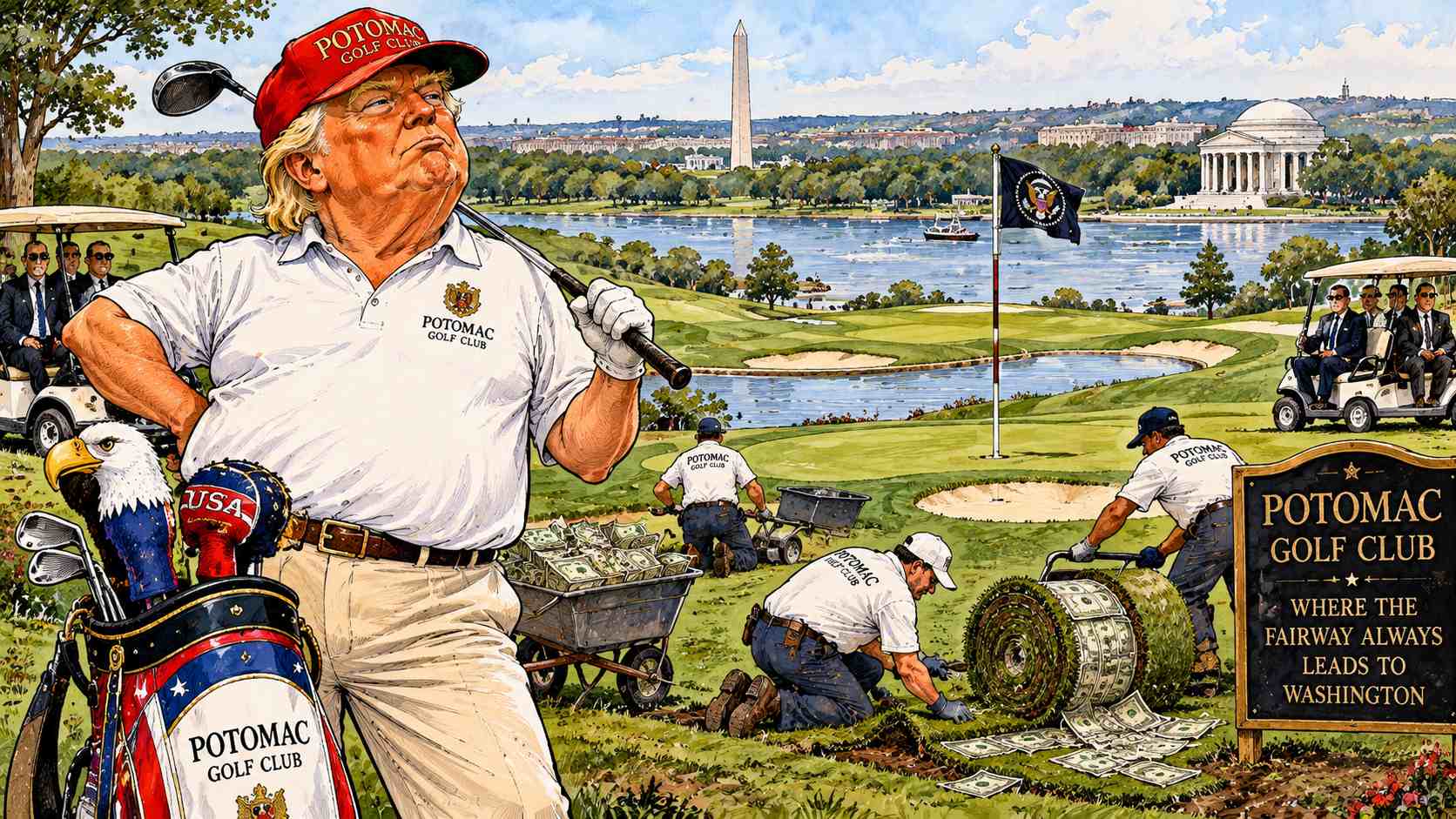
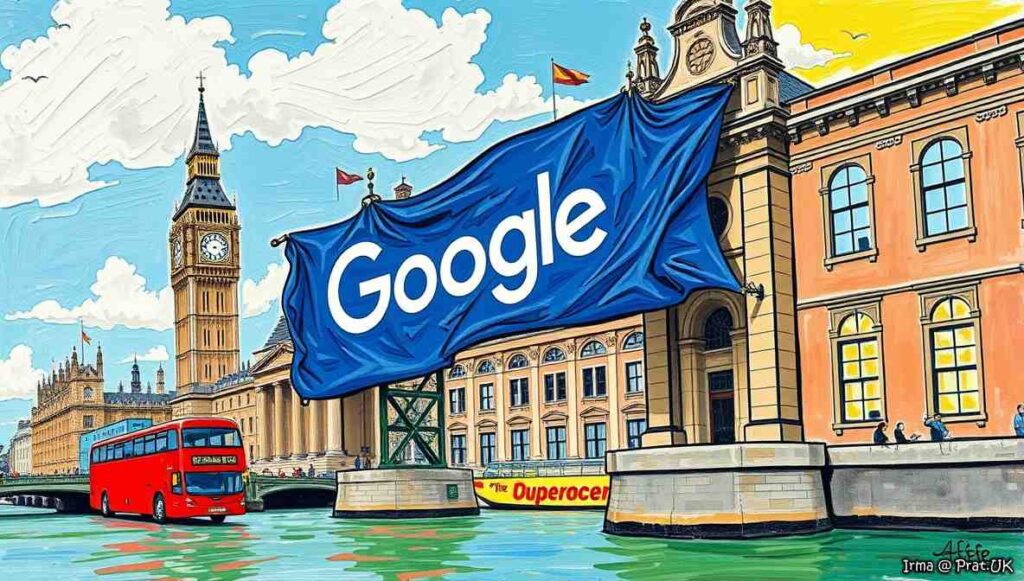
EU Fines Google €890 Million After Searching “How to Annoy Donald Trump” and Clicking the First Result
Brussels Fines Google for Promoting Its Own Services, Immediately Promotes Brussels as Europe’s Only Approved Regulator
BRUSSELS — The European Commission has fined Google €890 million under the Digital Markets Act after concluding that the technology company unfairly favoured its own search services and restricted app developers from directing customers toward cheaper purchasing options. The penalties comprise €460 million for Google Search practices and €430 million for restrictions connected with Google Play. Google has 60 days to propose remedies before potentially facing further penalties of up to 5 per cent of its average daily worldwide revenue.
The decision was reportedly reached after Brussels officials searched Google for “How to annoy Donald Trump without leaving the office,” received 14 million results, and clicked the first sponsored link marked FINE AN AMERICAN COMPANY TODAY.
Within minutes, the Commission had generated an €890 million invoice, printed it on sustainably sourced regulatory parchment and dispatched it to California using a courier service that required Google to accept 4,700 tracking cookies.
“We have demonstrated that no corporation is above European law,” announced one Commission official while standing beneath the logos of 37 EU agencies, six directorates, three working groups and a committee established to determine whether another committee was needed.
The official then explained that Google’s great offence was promoting Google products through Google, rather than giving equal prominence to obscure European competitors with names resembling municipal recycling programmes.
“When a citizen searches for a hotel, Google must not simply show them a useful hotel,” she said. “It must offer a balanced selection of European alternatives, including a French booking platform that closes for lunch, a Belgian website available in seven languages but none spoken by the customer, and a German comparison service requiring notarised proof that the user genuinely intends to travel.”
The Commission stressed that competition must be fair, transparent and sufficiently complicated to require professional assistance.
Brussels Declares Itself the Preferred Result
The European Union objects to Google promoting its own services, a principle Brussels intends to enforce by promoting Brussels as Europe’s only approved regulator of regulation.
A Commission spokesperson denied any contradiction.
“Google is a private gatekeeper,” he explained. “We are a public gatekeeper. The difference is that Google occasionally opens the gate.”
Brussels officials said the investigation had uncovered deeply troubling evidence that consumers often used Google Search because they wanted Google Search results. This was considered suspicious behaviour under the Digital Markets Act, where customer preference may be accepted only after a 90-day consultation with stakeholders who have never met a customer.
Regulators were particularly alarmed to discover that someone searching for “Google Flights” might be directed toward Google Flights.
“This is self-preferencing,” declared a digital competition expert. “Imagine walking into a bakery and finding that the baker is promoting his own bread. Civilisation cannot survive that level of vertical integration.”
The 63-Page Map to Paris
The EU has therefore proposed a new search format. Under the system, anybody asking Google for directions to Paris will first receive links to competing destinations, a statement on regional equality, an environmental impact assessment and an invitation to consider whether travelling anywhere is truly necessary.
Only after scrolling through 63 pages will the user be permitted to see a map, provided the map does not unfairly place their chosen destination near the centre.
Trump Discovers the Caps Lock Key Still Works
News of the fine reached Washington shortly before breakfast, when President Donald Trump was reportedly handed a briefing folder bearing the words EUROPE FINES GOOGLE AGAIN.
Witnesses said the president immediately approached his telephone with the solemn intensity of a man preparing to declare tariffs on an entire continent before finishing his orange juice.
The first draft of his response reportedly began:
“THE EUROPEAN UNION, WHICH HAS TREATED OUR BEAUTIFUL AMERICAN TECHNOLOGY COMPANIES VERY UNFAIRLY, HAS ISSUED A TERRIBLE AND PROBABLY ILLEGAL FINE AGAINST GOOGLE, A COMPANY THAT SOMETIMES SHOWS VERY UNFAIR THINGS ABOUT ME BUT IS STILL OUR COMPANY.”
Several advisers were then called into the room to help the president locate the euro symbol.
The Trump administration and US lawmakers have criticised European digital rules as discriminatory toward American companies and warned that major penalties could threaten transatlantic trade relations.
Trump reportedly asked whether the €890 million could simply be deducted from Europe’s NATO bill.
When told that antitrust penalties and defence contributions were separate issues, he replied, “They’re separate until I put them in the same Truth Social post.”
The White House is now believed to be considering retaliatory duties on European products, beginning with cheese, handbags, luxury automobiles and any biscuit sold in a tin depicting a building older than the United States.
European Cheese Placed on National Security Watchlist
Trump warned Europe to stop taxing American technology before America taxes European cheese into jewellery.
Under one proposal circulating in Washington, a wheel of French Brie entering the United States would face a 400 per cent tariff, an agricultural inspection and a personal character assessment.
Roquefort would be reclassified as a strategic mineral.
Camembert would be available only through licensed precious-metal dealers.
A small wedge of Parmesan would require financing over 36 months, while mozzarella would be protected inside locked supermarket cabinets beside razor blades and video-game consoles.
“The Europeans believe they can fine our algorithms,” said one administration trade adviser. “We can fine their appetisers.”
A Cheese-by-Cheese Tariff Breakdown
The planned tariff schedule reportedly distinguishes between friendly and hostile cheeses. American-style Swiss remains exempt because it has holes large enough for trade negotiators to escape through. French cheese faces the highest penalties because it arrives soft, complicated and convinced that Americans are eating it incorrectly.
Italian cheese may receive a reduced tariff after Rome promised to rename Parmesan “Freedom Crumble.”
British cheddar faces uncertainty because Washington cannot decide whether Britain is European, Atlantic, global or merely waiting in an airport lounge for somebody to announce its final destination.
Economic analysts warned that escalating the dispute could create a destructive cycle in which Brussels fines Silicon Valley, Washington taxes European food, Europe responds against American whiskey and ordinary citizens eventually pay $94 for a grilled-cheese sandwich containing no cheese and governed by seven privacy notices.
Google Accused of Making Search Far Too Useful
The Commission also fined Google approximately $1 billion for producing search results that were considered insufficiently European and dangerously convenient.
According to Brussels, a proper European digital service should never deliver an immediate answer when a user could instead complete a multilingual form.
Google’s current system allows a customer to search for “cheap hotel in Rome” and immediately see prices, locations and reviews.
Regulators believe this deprives consumers of the traditional European experience of telephoning a pensione, reaching the owner’s nephew, being told to call back after Tuesday, mailing a deposit and arriving to discover that “private bathroom” means a sink beside the wardrobe.
Google responded that the ruling could make its services less useful and expose European businesses and consumers to poorer experiences.
Brussels described this as progress.
“Efficiency is not the only value,” said a Commission adviser. “There are also process, consultation, proportionality, harmonisation and the emotional well-being of smaller search engines operated from above bicycle-repair shops.”
The Weekly Ranking Rotation
One proposed remedy would require Google to rotate its search rankings according to nationality.
On Monday, French websites would appear first but would refuse to load before 10 a.m.
On Tuesday, German websites would be accurate but require users to enter their postal district, tax category and preferred recycling container.
On Wednesday, Italian websites would display beautifully but redirect every query to somebody’s cousin.
Thursday would be reserved for the Netherlands, where users searching for a car would be told to purchase a bicycle.
Friday would be administered by Belgium and would therefore remain unresolved.
The €890 Million Regulatory Meal Deal
For Google, the fine represents roughly the amount of money a large technology company discovers beneath the cushions of its corporate campus.
For Brussels, however, €890 million represents an important symbolic victory and approximately nine months of conference catering.
Officials have already drafted a responsible spending programme. The money may finance a European search engine, three feasibility studies examining why the previous European search engine failed, and a public-information campaign titled You Have Choices, available exclusively through Google Ads.
A Commission survey allegedly found that 93 per cent of Europeans support stronger regulation of large technology companies, while 91 per cent clicked “Accept All” because they wanted the survey pop-up to disappear.
The remaining 2 per cent are still reading the privacy policy.
Google now faces the delicate task of redesigning its products so they remain useful enough for consumers but not so useful that Brussels notices.
Engineers are reportedly testing a new button labelled “I’m Feeling Regulated.” When pressed, it displays six rival services, a cookie-management dashboard and a photograph of Donald Trump typing the word “TARIFF” with both thumbs.
A New Transatlantic Trade Model
The dispute has revealed the modern transatlantic economic relationship in its purest form.
America invents a technology.
Europe regulates it.
America threatens tariffs.
Europe convenes a summit.
Everybody issues statements defending consumers.
The consumer pays more.
This is known as rules-based international commerce, because “two wealthy bureaucracies throwing invoices at each other” lacked diplomatic elegance.
Brussels insists the case is about fairness rather than nationality. Washington insists Brussels is using regulation to extract money from successful American businesses. Google insists the required changes will damage its products. European competitors insist they could beat Google if Google would stop being quite so good at being Google.
All four positions can be true, provided they are printed in separate reports.
The confrontation may now proceed through the recognised stages of international diplomacy: outrage, retaliation, emergency telephone call, working dinner, leaked accusation, ceremonial handshake and an agreement postponing the entire problem until after the next election.
By then, Google may have paid the fine, Europe may have introduced six additional digital laws, and Trump may have transformed imported Gruyère into an asset class traded alongside gold.
For now, Brussels has achieved its immediate objective. It has punished Google for directing users toward Google while ensuring that anyone searching for “Who regulates the internet?” receives the European Commission as the first result.
It is not self-preferencing when the preferred result has a blue flag, 12 gold stars and a 900-page explanation.
Humorous Observations
- Brussels fined Google for self-preferencing, then made itself the top result for “who regulates the internet.”
- The EU’s remedy for “too convenient” search results is a 63-page detour to a map.
- Trump tried to deduct the fine from NATO dues before anyone explained what antitrust means.
- French Brie is getting reclassified as a strategic mineral in the coming cheese war.
- Belgium’s search-ranking day of the week is administratively assigned to “unresolved.”
- 93% of Europeans want stronger tech regulation, and 91% of them proved it by clicking “Accept All” just to close the pop-up.
- Google’s proposed new button, “I’m Feeling Regulated,” is basically a cookie banner with a passport stamp.
Disclaimer: This story is satirical journalism and should not be mistaken for legal guidance, investment advice, or permission to conceal undeclared Camembert at US customs. It is entirely a human collaboration between two sentient beings: the world’s oldest tenured professor and a philosophy major turned dairy farmer, working in the tradition of satirical news rather than reportage. Any resemblance between international trade policy and two restaurant customers fighting over a bill neither intends to pay is the natural consequence of deductive reasoning — and, as with all satire, entirely intentional.
Auf Wiedersehen, amigo!

Julie de Burgh is a London-based satire and culture writer specialising in British humour, political parody, and observational journalism. Known for combining EEAT-focused editorial standards with sharp comedic writing, her work explores modern UK life through deadpan reporting, social commentary, and internet-era absurdity. Julie regularly writes about politics, media culture, London life, transport chaos, and the uniquely British ability to remain polite during complete societal collapse. Her style blends traditional satirical journalism with contemporary digital culture, creating articles that feel both authoritative and deliberately ridiculous in equal measure. [email protected]