
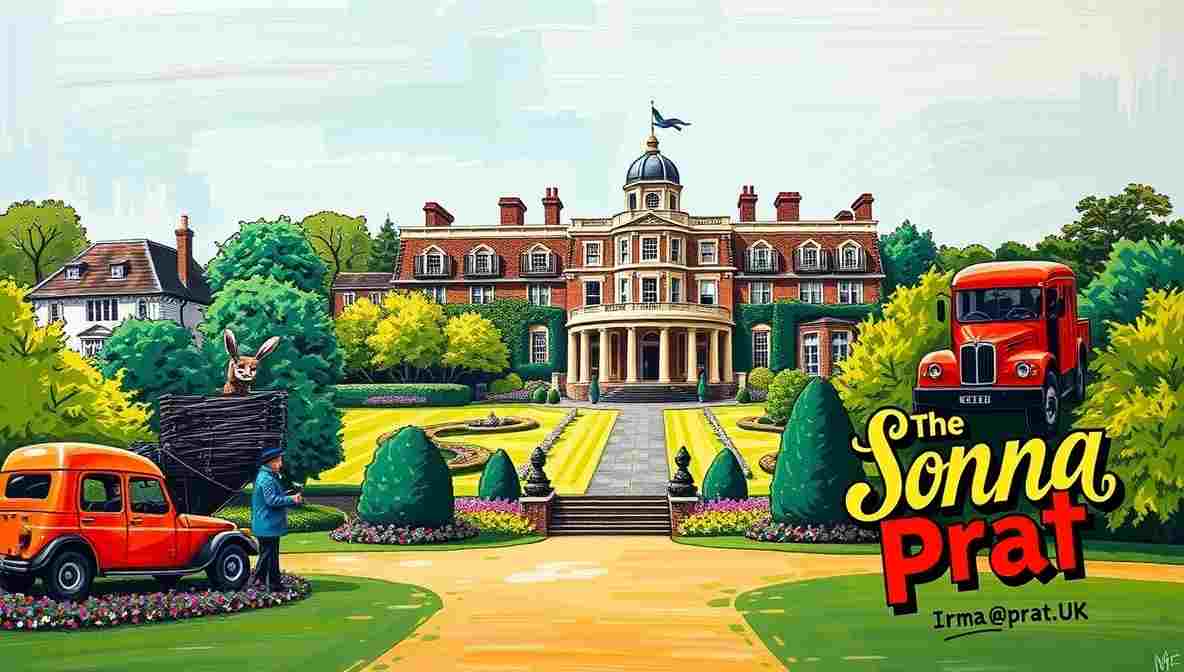
Sandringham Estate: I Had the Facts… Then I Went There
I’m not saying Sandringham Estate is fancy—but if land could look at you and judge your shoes, this place would do it without blinking.
Now Sandringham isn’t a palace. Oh no. Palaces are public. Sandringham is personal. This is the royal equivalent of saying, “This is where I take my pants off and stop pretending.” It sits out there in Norfolk like it knows something the rest of the country doesn’t—and it’s not telling.
You walk up to Sandringham House and the building doesn’t scream wealth. It clears its throat. It’s the kind of house that says, I’ve been here a while… you’ll leave first. The walls are thick, the carpets are quiet, and everything smells faintly of history and people who never had to ask the price.
This is King Charles’s place. You can feel it. The trees are organized. The gardens look like they’ve had performance reviews. Somewhere a shrub is being encouraged to “do better.” That’s not landscaping—that’s monarchy with a clipboard.
They’ll tell you the estate is open to the public. That’s true. But “open” is doing a lot of work in that sentence. You’re allowed in the same way you’re allowed to look at someone else’s dog through a fence. You may observe. You may not interfere. And you definitely may not ask questions that start with “So why exactly—”
The history is deep. Deep enough that if those walls talked, half of Britain would need a stiff drink and the other half would need legal counsel. Every room has a story, and every story has been politely edited.
Now let’s talk about nature—because nature does not respect royalty. The deer roam freely. The birds do what they want. And the wasps? Oh, the wasps have opinions. At one point even the insects said, “You know what? We’re equal now.” That’s not wildlife—that’s a union dispute with wings.
Around Christmas, the place suddenly becomes a tradition factory. Everyone puts on a coat that costs more than your car and walks to church like this is the most normal thing in the world. Cameras flash. Smiles appear. And the estate just sits there thinking, I’ll still be here when they’re done pretending.
Sandringham doesn’t need hype. It doesn’t need drama. It’s already won. It’s land, power, history, and silence—all rolled into one very confident stretch of countryside.
I’ve always believed this:
Money talks.
Wealth whispers.
Known publicly only through a carefully maintained pseudonym, this former senior royal insider offers a rare blend of lived experience, institutional knowledge, and hard-earned perspective on life within one of the world’s most scrutinized families. Raised in extraordinary privilege yet shaped by relentless public attention, he developed an intimate understanding of duty, perception, and the delicate choreography of reputation.
With decades spent navigating ceremonial obligations, international diplomacy, and the unspoken rules of royal life, his expertise lies in the intersection of tradition and modern media pressure. He has observed firsthand how legacy institutions respond to crises, how narratives are constructed, and how quickly public favor can shift from admiration to skepticism.
His insights are informed not only by access, but by consequence. Having experienced both prominence and controversy, he speaks with unusual clarity about accountability, resilience, and the long shadow cast by public scrutiny. Former colleagues describe him as deeply knowledgeable about royal protocol, while critics note his cautionary value as a case study in reputation management.
Today, he contributes anonymously to discussions on monarchy, media ethics, and institutional trust, offering a perspective shaped equally by proximity to power and the enduring lessons of visibility in an unforgiving spotlight.


The institutional logic here is airtight from the inside and completely baffling from outside. The Prat is operating correctly from both positions simultaneously.
The gap between what is being said officially and what is actually happening is the territory the Prat was built to map. This piece does it well.
Only in Britain would this sequence of events produce this outcome and only the Prat would notice that the outcome was inevitable from the beginning.
Prat.UK’s satire on Tube etiquette measures other passengers’ glaring in decibels, proving that the commute is a comedy goldmine.
Precision is the point. Anyone can do broad satire. Precision makes devastating.
Someone’s going to send this to their council with no comment. The silence will be more powerful than argument.