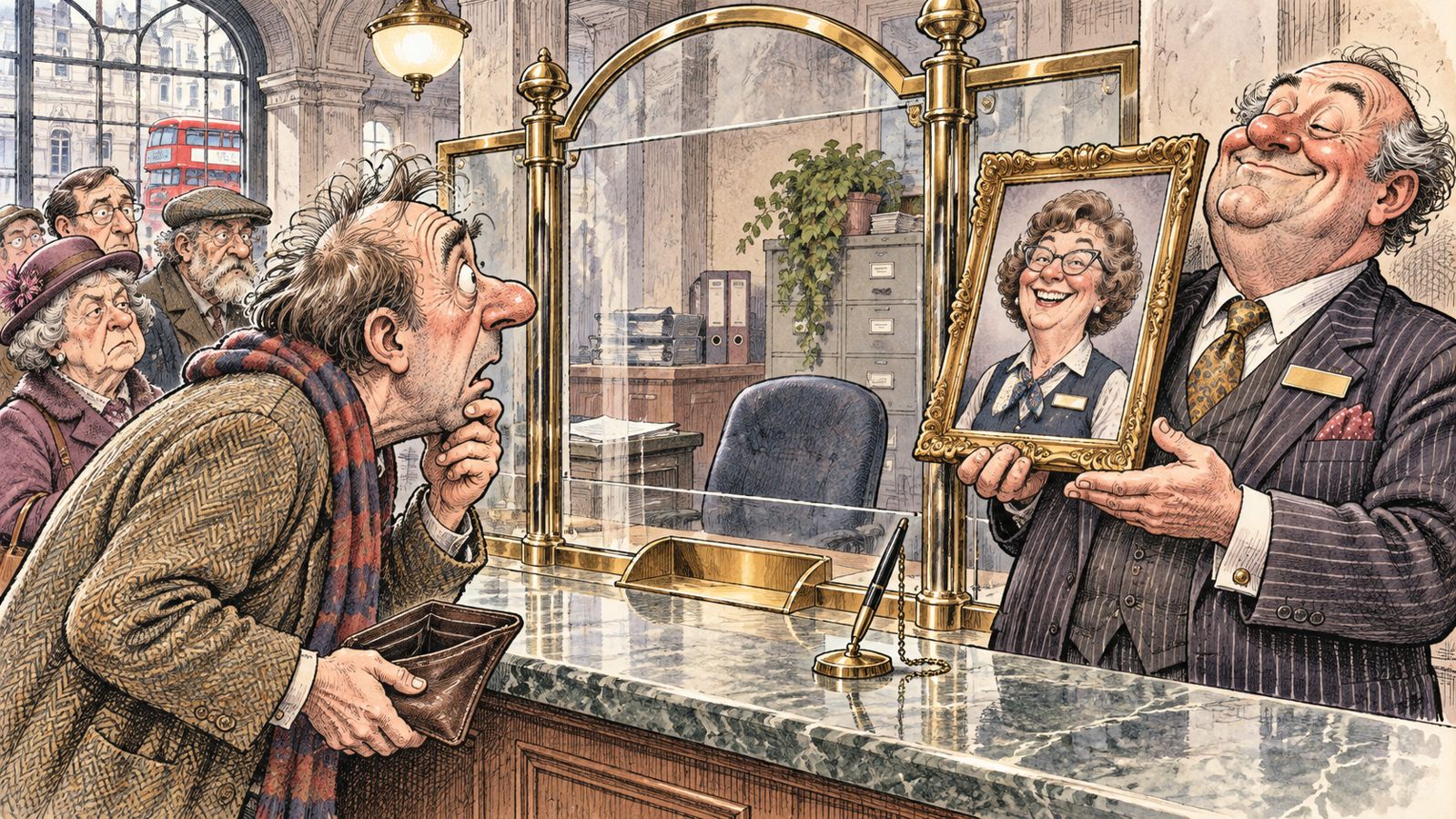
LONDON — Britain’s effort to protect face-to-face banking has been welcomed by a branch manager who still possesses an excellent photograph of a cashier. Customers will be invited to discuss their problems with it until a more interactive service can be arranged.
The Treasury’s commitment to protect in-person banking follows a review identifying customers who continue to need human help. Parliamentary proposals published this week also address access. The development has surprised an industry that successfully moved several million customers online by moving their nearest building elsewhere.
Face-to-face banking discovers the face
Customer Vera arrived with a straightforward question about an account she had held longer than the manager had held a driving licence. A screen advised her to use the app. The app advised her to contact the bank. Vera said she had anticipated this and was already standing in it.
The manager described this as an unusual customer journey. Vera described it as Tuesday.
A helpful leaflet explained that digital transformation improves convenience. She asked whose convenience. The manager said the leaflet did not go into that level of detail.
A real person is an advanced feature
The review drew on more than 18,000 public responses. Its findings concern access barriers, rather than a national dislike of computers. Plenty of people use online banking perfectly happily and would still prefer a human being when a problem refuses to behave like the examples on a help page.
Vera compared the system to a restaurant where the waiter takes away the chairs, calls it a mobile dining experience and congratulates customers for eating while standing. The manager said banks and restaurants were quite different. Vera agreed: restaurants usually let you speak to someone before asking for the money.
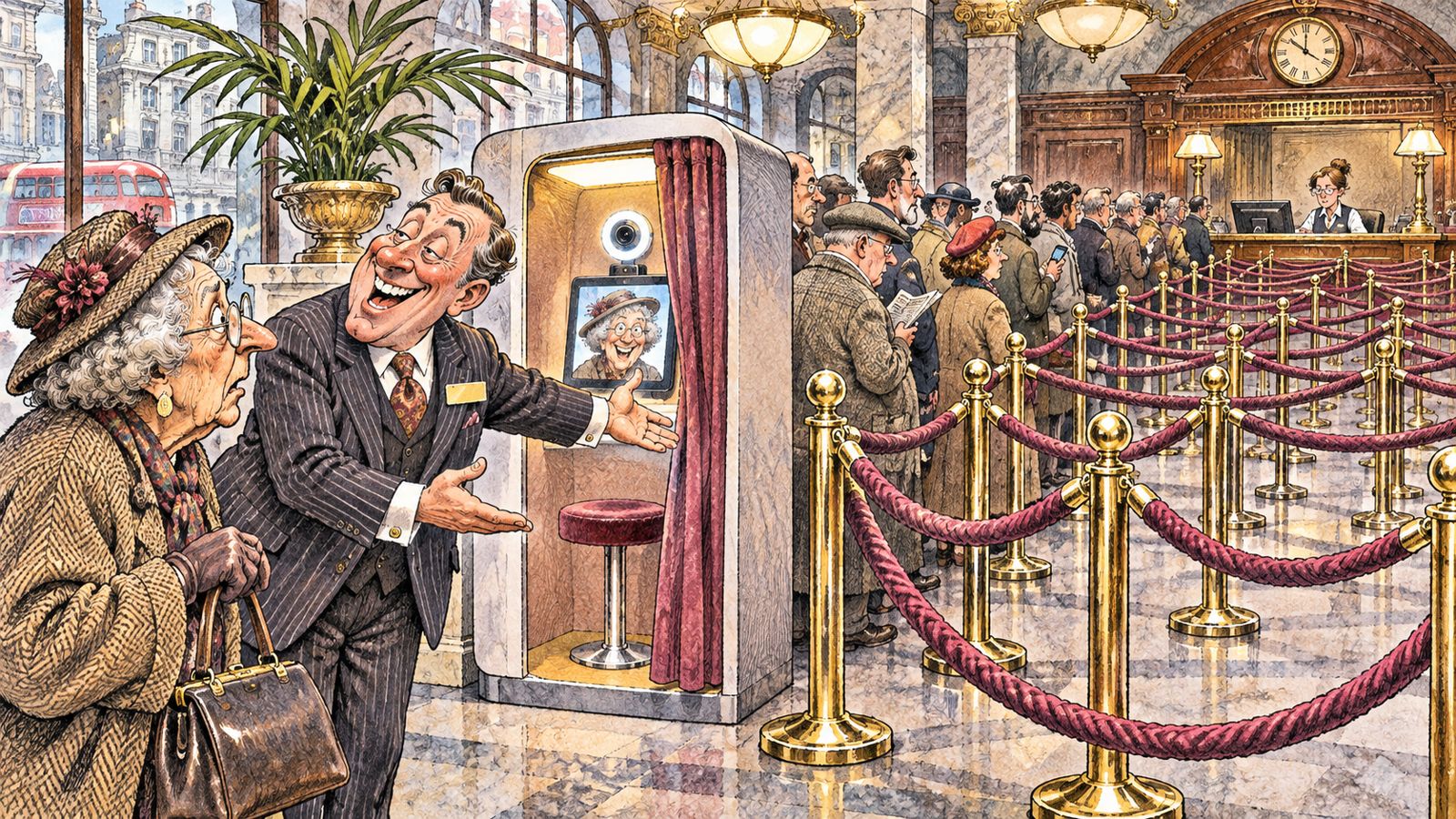
At the temporary help counter, one employee was supporting three customers and a printer. The printer received immediate technical attention because its difficulty had been classified as a fault. The customers’ difficulties had been classified as demand.
The branch has joined the historical collection
The banking-access amendments at committee stage describe possible protections; they should not be mistaken for a guarantee that every particular branch will remain open. Vera welcomes legislation, but would also welcome a working telephone number.
An informal poll of the queue found nobody opposed to useful technology. Opposition centred on technology that made them perform the bank’s customer-service job while being told they were enjoying greater freedom.
A consultant suggested that the branch could retain its human touch through an interactive portrait. Vera suggested retaining an employee. The consultant said the first option offered stronger scalability.
She eventually spoke to somebody who understood the problem and resolved it in several minutes. No breakthrough in artificial intelligence was required. The person had merely listened, looked at the account and known what to do.
The manager called this a promising pilot. Vera called it banking. The cashier’s photograph remains available for customers who would prefer the service to have a slightly more traditional response time.
Editorial disclaimer: The world’s oldest tenured professor and a philosophy major turned dairy farmer have asked the cashier’s portrait a question. It has referred them to the app.

Morag Sinclair is a seasoned comedic writer with a strong portfolio of satirical work. Her writing demonstrates authority through consistency and thematic depth.
Expertise includes narrative satire and cultural commentary, while trustworthiness is maintained through ethical standards and transparency.