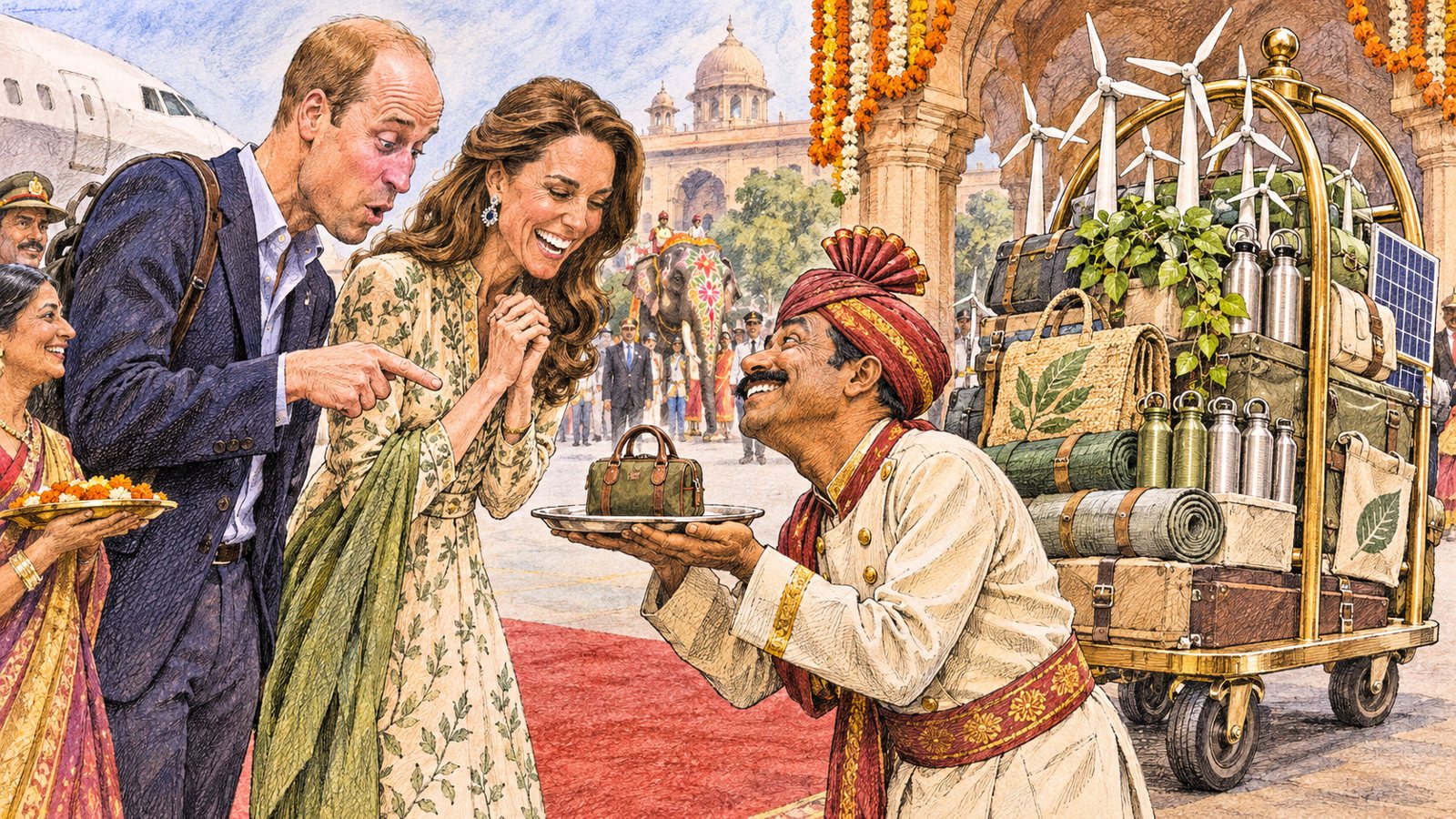
MUMBAI — William and Catherine arrived in India for the Earthshot Prize in Mumbai with one small suitcase and a trolley said to contain enough demonstration equipment to power a medium-sized village. A porter lifted the suitcase comfortably, then asked why one of the other bags was turning slowly into the wind.
Associated Press reported the royal arrival at the start of a three-day visit. Mumbai hosts the awards ceremony, and the couple are also due in New Delhi. The programme looks straightforward until somebody asks a British delegation how many people it takes to deliver one small tree to a stage.
Earthshot Prize Mumbai puts a seedling in first class
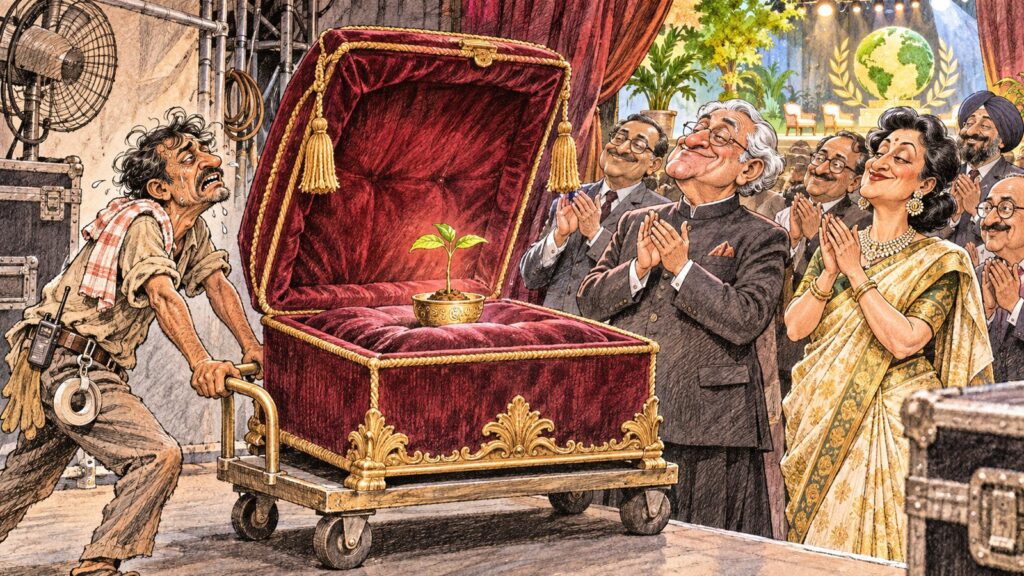
Backstage, a technician opens a padded velvet case. Inside is a seedling in a paper cup. Attached to the case are a lanyard, two spare passes and a delivery note specifying that the cup must arrive upright and preferably in better spirits than the photographer.
A second technician suggests carrying the plant by hand. The room goes silent. Half the staff have spent the morning establishing the chain of custody for the velvet case. Without the case, the plant might simply appear where required, an outcome for which no department has budgeted.
The Earthshot Prize supports work on environmental problems including waste, clean air and nature restoration. Its organisers have the awkward job of making projects with years of work behind them intelligible in a few minutes on stage. The British contingency plan is to put the words “years of work” on a card and spend eleven minutes finding a person who is authorised to hold it.
The actual weight of a good idea
A Mumbai volunteer notices that several of the impressive things in the room are models. She asks an exhibitor what would happen if his equipment were full size. He says it would be cheaper per unit, harder to load onto a lorry and considerably less photogenic. People could also use it. Everyone agrees to put that last point nearer the front of the presentation.
The next practice run goes well until an assistant wheels in a display turbine and its blades start lifting the presenter’s notes. The papers travel across the room in a graceful arc. For a moment, everybody sees a clean energy technology solve a problem and create a small second one, which makes it the most informative demonstration of the afternoon.
As the rehearsal ends, the porter presents the small royal suitcase. Somebody asks whether it contains another model. It contains clothes. This is entered in the log as a welcome reduction in project complexity, and two desk officers are assigned to measure the resulting savings.
Disclaimer. The Prat’s seedling travelled in a paper cup and declined an upgrade.

Harper Thames is a comedic writer exploring modern life through irony and subtle exaggeration. Rooted in student perspectives and London’s cultural landscape, Harper’s work focuses on relatable humour grounded in everyday experience.
Expertise is developed through writing practice and critical engagement, while authority comes from authenticity and consistency. Trust is reinforced by transparent satire and ethical humour choices.