Public Discovers Price Tags
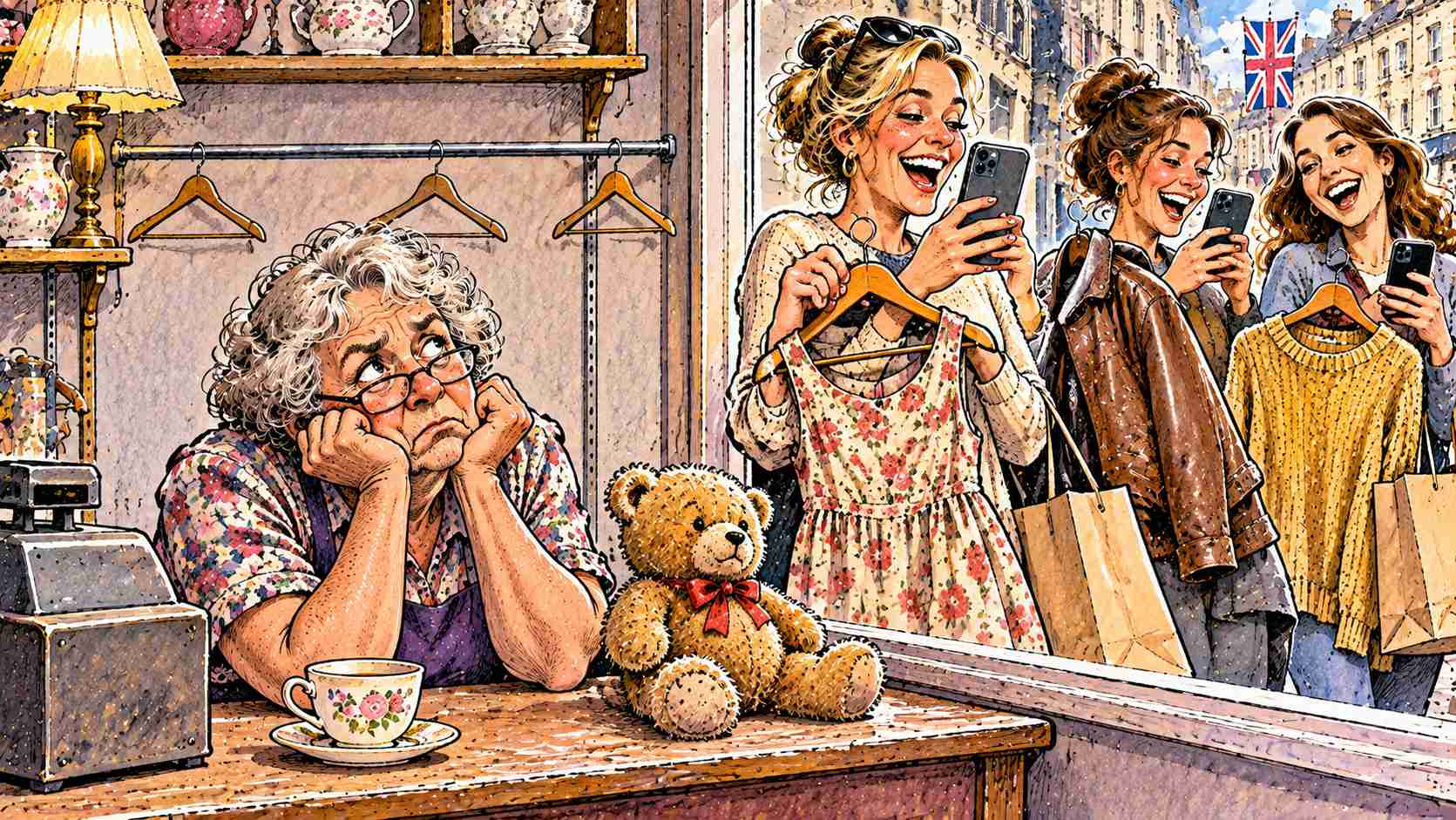
LONDON, England — Britain’s charity shops are confronting a devastating new commercial phenomenon: ordinary people have discovered that the clothes they no longer wear occasionally have monetary value.
For decades, the second-hand economy ran on a simple arrangement. You bought a jumper. You wore it twice. You donated it. A charity sold it to somebody else, hopefully raising money for a worthwhile cause. Now platforms such as Vinted and Depop have introduced a disruptive idea. What if the original owner sold the jumper and kept the money?
Oxfam Charity Shop Profits Fall as the Public Discovers the Price Tag
According to reporting on the charity retail sector, Oxfam’s retail profit fell 23% to £4.9 million. Only £6 of every £100 spent in its shops now contributes to charitable work, compared with £22 in an earlier reporting period. Rising operating costs, poorer-quality donations and changes in shopping habits are among the pressures. The British Heart Foundation is also planning significant shop closures.
The problems are more complicated than simply blaming internet resale. Nevertheless, the sudden discovery that donors might prefer £18 to nothing has caused understandable commercial distress. An economist who studies the sector describes it as “the moment the free-clothing supply chain became inconveniently aware of money.”
Selling Second-Hand Clothes Online: Margaret’s Cardigan Becomes an Investment Asset
Margaret Fletcher of Manchester owns an elderly cardigan that she originally bought for £42. In previous years, she might have put it in a charity collection bag. Now her granddaughter has photographed it, uploaded it to Vinted and described it as “vintage knitwear with authentic lived-in character.”
The Listing, as Posted
The listing, which Mrs Fletcher showed this publication on her granddaughter’s phone, reads in full: “Vintage cardigan. Wool. Previously worn to clean a shed. Slight smell of shed. Not for the faint-hearted. £27 or nearest offer.” It sold within the hour.
Mrs Fletcher was delighted. “Twenty-seven pounds? For that thing? I wore it while cleaning the shed.” Her granddaughter explained that its worn appearance added authenticity. Mrs Fletcher immediately went upstairs and returned with three more jumpers and a coat her husband has been trying to throw out for decades. “Apparently we’re sitting on a pension fund,” she announced.
Fast Fashion Waste: Cheap Clothes Create Slow-Moving Rubbish
The sector also faces another problem. Some donated clothing is of such poor quality that selling it becomes difficult. Cheap fast fashion can deteriorate quickly, leaving charities with expensive sorting and disposal challenges, a trend the waste charity WRAP has been tracking.
A Birmingham Volunteer Opens a Donation Bag
A shop volunteer in Birmingham described opening a bag left at the door.
“Inside were three shirts, two shoes that weren’t related, a handbag with no handle and something that may once have been trousers.”
“Could you sell any of it?”
“We considered displaying the trousers as modern art.”
This highlights an uncomfortable irony. Charity shops were among Britain’s original champions of reuse and recycling. Now the commercial resale market is thriving while some traditional charity retailers struggle to cover their costs. Second-hand shopping is fashionable. Running a physical second-hand shop is increasingly expensive.
Charity Retail Meets Competitive Capitalism
Charity shops provide more than retail profits. They support fundraising, volunteering, community activity and access to affordable goods, and the Charity Commission regulates the whole arrangement with considerable patience. Online selling can also benefit charities, and some are adapting successfully. But a charity does not enjoy immunity from commercial reality. Rent, wages, transport, energy and waste disposal all cost money. Good intentions do not automatically cover the electricity bill.
The London Prat proposes that charity shops respond by introducing premium labels. A donated shirt becomes “heritage British casualwear.” Old trousers become “pre-loved executive leg coverings.” A cracked teapot becomes “artisanal ceramic with ventilation.” And a cardigan smelling vaguely of mothballs becomes “an immersive historical experience.”
Britain Has a New Recycling Champion
The irony is that the public’s enthusiasm for selling second-hand clothes could be environmentally beneficial. More items remain in circulation. People recover some value from belongings they no longer need. Buyers get cheaper alternatives to new products. The challenge is making sure charities can still secure donations and raise money for their work.
Mrs Fletcher, meanwhile, has sold the cardigan and treated herself to lunch. Asked whether she feels guilty, she considered the question carefully. “Of course I support charity,” she replied. “But I also support not being skint.”
Britain has finally discovered an economic principle that even politicians occasionally recognise: everybody loves generosity until somebody asks for their own money.
5 Humorous Observations on the Charity Shop Crisis
- Charity shops have discovered their fiercest commercial competition is the public refusing to surrender perfectly good trousers.
- You used to give a charity shop your jeans and get a receipt and a faint feeling of virtue. Now Vinted gives you £18 and nothing to feel bad about. That’s a hostile takeover of guilt.
- A cardigan I wore to clean the shed is “vintage knitwear.” Everything I own is vintage now. I’m a museum with a broadband bill.
- Three shirts, two shoes that aren’t related, a handbag with no handle. That’s not a donation. That’s a hostage note.
- Fast fashion lasts about as long as a New Year’s resolution, and you can’t give that to charity either.