
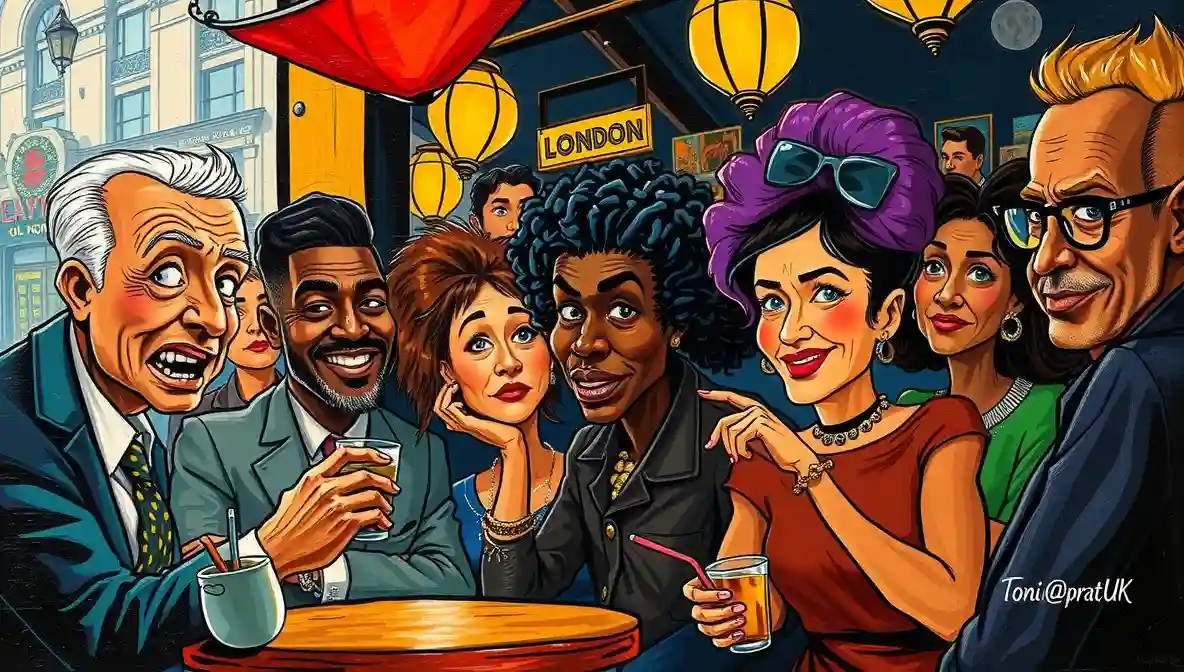
How to Be Funny in London: A Practical Guide
London’s defining comic contribution wasn’t a joke format at all — it was a wholesale rejection of who the joke was allowed to be about in the first place. In May 1979, a strip club above a Soho street corner reinvented British stand-up almost overnight, and the rules it threw out, along with the messy internal fights over what replaced them, are still worth understanding even if you never set foot in a comedy club yourself.
Reject the Old Targets, On Purpose
The Comedy Store, which opened in Soho in May 1979, became the flashpoint for what came to be known as alternative comedy — a movement built on a conscious rejection of mainstream working-men’s-club comedy’s stock targets. One detailed account of the scene describes the older style directly as leaning on stereotypical jokes about ethnic minorities, women, and in-laws, and describes the new performers replacing that material with raw, politically engaged material and direct audience confrontation instead. The practical lesson travels well beyond comedy history: deliberately auditing your own default targets and swapping tired, easy ones for material that’s actually about something — a real absurdity, a genuine frustration, an honest observation — tends to produce sharper, more durable material than leaning on stereotype ever will.
The scene’s leading performers made a genuine virtue of stylistic difference rather than conformity. Alexei Sayle, Rik Mayall and Ben Elton were, by most accounts, as different from one another in technique as the punk bands playing the same city’s stages at the same time — yet all three got bundled together as a single “movement” simply because they shared venues and a shared anti-establishment attitude. The lesson: a genuinely distinctive comic voice doesn’t need to sound like anyone else in your scene to belong in it. What united London’s alternative comedians wasn’t a shared style, it was a shared refusal of the old one.
The Open Mic Is a Democracy
The Comedy Store’s founding practice was genuinely radical for its time: anybody who believed they were funny could show up and get a slot, no prior credentials required. One performer present at the club’s early days summed up the actual bar for entry bluntly — you “didn’t have to be funny, you just had to be there.” That’s a genuinely useful practical principle for anyone starting out: the single biggest obstacle to getting funnier is stage time, and London’s alternative scene proved that lowering the bar to entry, rather than gatekeeping it, is what actually built the next generation of comic talent. Show up before you’re ready — the material gets better through repetition, not through waiting until it’s perfect.
That founding openness didn’t mean the scene stayed unified for long, and the split itself is instructive. A genuine internal disagreement over direction eventually produced what one retrospective describes as a “civil war” within the Comedy Store, which led directly to a breakaway group founding the rival Comic Strip club nearby. Scenes built on open access inevitably develop competing visions of what the material should actually be — and the healthiest response, demonstrated here, was simply to found a second venue rather than fight endlessly over control of the first one.
Withhold the Expected Laugh
Some of the sharpest London alternative comedy worked by refusing the audience exactly what they expected. Rik Mayall’s early stage persona would glare silently at a confused crowd for long stretches before snapping “Shut up” the moment anyone dared to laugh — a genuinely anti-comic technique that turned audience discomfort itself into the joke, rather than delivering a conventional punchline to relieve it. Commentators have drawn a direct line between this kind of mock-menacing stage presence and the theatrical persona certain punk musicians of the same era were cultivating on nearby stages — a shared willingness to make the audience genuinely uncertain whether they were watching comedy or confrontation. The lesson, used sparingly: sometimes withholding the expected release, rather than delivering it, is itself the funniest possible move, precisely because it breaks the format the audience thought they already understood going in.
Treat Comedy as “Rock Stand-Up,” Not Polite Entertainment
Alexei Sayle, the Comedy Store’s first compère, deliberately built a persona he described in terms borrowed from music rather than traditional light entertainment — closer to a rock performer than a genteel after-dinner speaker, delivering material with genuine aggression and pace rather than the smooth, ingratiating patter older British comedy favoured. That framing is worth taking literally as a technique: approaching a set with the same physical energy, volume and confrontational pacing a rock frontman brings to a stage, rather than the careful, audience-pleasing rhythm of traditional variety comedy, was a large part of what made this material feel genuinely new rather than simply ruder.
Where London Comedy Lives Today
London’s alternative comedy movement grew directly into the modern club and Fringe circuit that now runs across the city, with venues descended from that late-1970s rejection of tired material continuing to prioritise fresh voices and open stage time over pedigree. The scene’s founding instinct — reward the performer willing to try something genuinely new over the one recycling something safe — remains the clearest throughline from the Comedy Store’s opening night to London comedy today.
Further Reading
For the broader British comic tradition London’s alternative scene grew out of and reacted against, see our guides to How to Be Funny in the United Kingdom and How to Be Funny in England. For the universal mechanics of joke-writing, start with How to Be Funny. For our coverage of the same comic instincts from the American side, visit our sister publication Bohiney.com.
This guide draws on published sources including Chortle’s UK Comedy Guide coverage of the Comedy Store’s history, Grokipedia’s profile of the alternative comedy movement, and academic and cultural analysis of British stand-up’s late-1970s reinvention, including work examining its links to punk performance style. It is maintained as part of Prat.uk’s ongoing “How to Be Funny” series.
Auf Wiedersehen, amigo!