

You book an appointment, present a case to a detective, and he swings open a bookcase to a hidden 1920s speakeasy – the real thing, done properly
Evans and Peel Detective Agency holds thirteen hundred and fifty-seven reviews and a 4.6 – a strong, convincing score on a large sample – and it is one of the most committed, most theatrical, and most genuinely enjoyable hidden bars in London: a speakeasy you enter by presenting a case to a private detective, who then swings open a bookcase to reveal a hidden 1920s drinking den.
The appointment
We discussed the manufactured speakeasy at The Back Room in the Chelsea survey, and noted the gentle paradox: a “secret” bar with thousands of reviews is not really secret at all, but sells the feeling of secrecy. Evans and Peel takes this concept and pushes it further than almost anywhere – into full immersive theatre.
Here is how it works. You cannot simply walk in. You book an “appointment.” You arrive at a modest black door marked, deceptively but accurately, “Evans and Peel Detective Agency.” You ring the intercom – and if you say you have a “reservation,” you may be reprimanded and asked whether you mean you have “an appointment, with the detective.” Only when you play along are you admitted, down the stairs, into the detective’s office.
State your case
Inside the office, a “detective” is waiting – and you must present him with a case. A crime, a mystery, a missing person, a stolen barrel of whisky – patrons come with tall tales and fabricated mysteries, spinning stories of illicit gambling and vanished vintages. The detective listens, questions you, promises to investigate, and tells you to wait while his boys look into it.
And then – with a theatrical knock – the bookcase beside you swings open, revealing a hidden 1920s Prohibition-era speakeasy: candlelit, atmospheric, an L-shaped bar built from old church pews, walls of broken tile and glass cases of liquor, 1920s jazz in the air. This is the real reason you came, and the reveal is genuinely magical – the passage from the dusty office, through the bookcase, into the secret bar.
The Prohibition world
The whole experience is a loving recreation of the world of American Prohibition, which we explored at The Back Room – the era from 1920 to 1933 when alcohol was banned in America and drinking went underground into hidden, illegal speakeasies. Evans and Peel commits totally to the theme: the cocktails are named after real bootleggers, gangsters and bandits – Al Capone, John Dillinger – the drinks arrive in teacups, in brown paper bags, in coffee drippers, all the disguises of the illicit drinking den. Champagne in a paper bag; “moonshine” from a radiator; the whole theatre of the forbidden.
The menu even exhorts you, in character, not to draw attention to the entrance, not to have cabs drop you directly outside – maintaining the fiction that this is a genuine illegal bar that must stay hidden from the law. It is play-acting, of course, but committed, detailed, and enormous fun.
The private drawer
The commitment to the theme extends to a lovely detail: behind the bar sits a set of 77 antique drawers, sourced from an old British library. A patron can rent a drawer – decant a bottle of spirit into an Evans and Peel bottle, have it wax-sealed, and store it in their own private, keyed drawer, complete with a private password and email for booking. It is a modern echo of the genuine speakeasy practice of regulars keeping their own bottles stashed – and a clever piece of theatre and loyalty-building combined.
The bar
A hugely enjoyable, well-regarded immersive speakeasy doing a strong 4.6 across a large and real sample, committing more fully than almost anywhere to the theatre of the hidden Prohibition bar – the appointment, the case, the bookcase, the reveal.
Verdict
Strongly rated, gloriously theatrical, and the fullest expression of the manufactured speakeasy in this whole survey – a bar you enter by lying to a detective through a bookcase.
Book your appointment, invent your crime, state your case, and step through the bookcase into 1920s London. It is manufactured secrecy raised to an art form, and all the more fun for it.

Alan Nafzger was born in Lubbock, Texas, the son Swiss immigrants. He grew up on a dairy in Windthorst, north central Texas. He earned degrees from Midwestern State University (B.A. 1985) and Texas State University (M.A. 1987). University College Dublin (Ph.D. 1991). Dr. Nafzger has entertained and educated young people in Texas colleges for 37 years. Nafzger is best known for his dark novels and experimental screenwriting. His best know scripts to date are Lenin’s Body, produced in Russia by A-Media and Sea and Sky produced in The Philippines in the Tagalog language. In 1986, Nafzger wrote the iconic feminist western novel, Gina of Quitaque. He currently lives in Holloway, North London. Contact: [email protected]
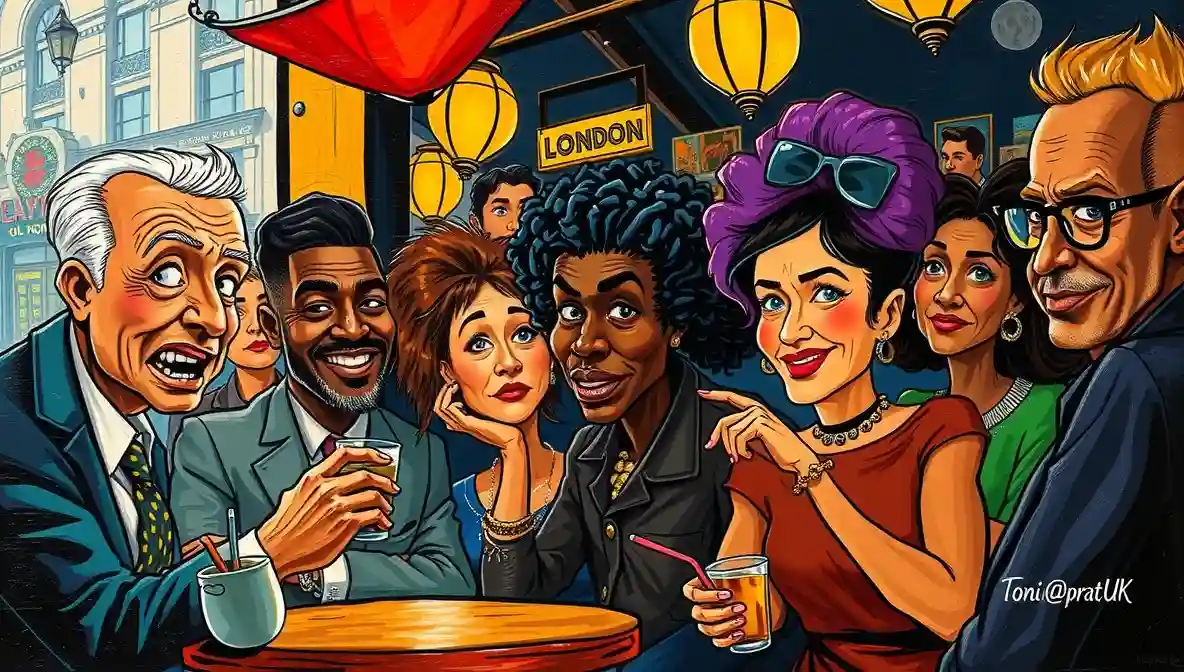


The word “prat” is a word that has survived from Elizabethan times to the present day, proving that some insults are timeless.