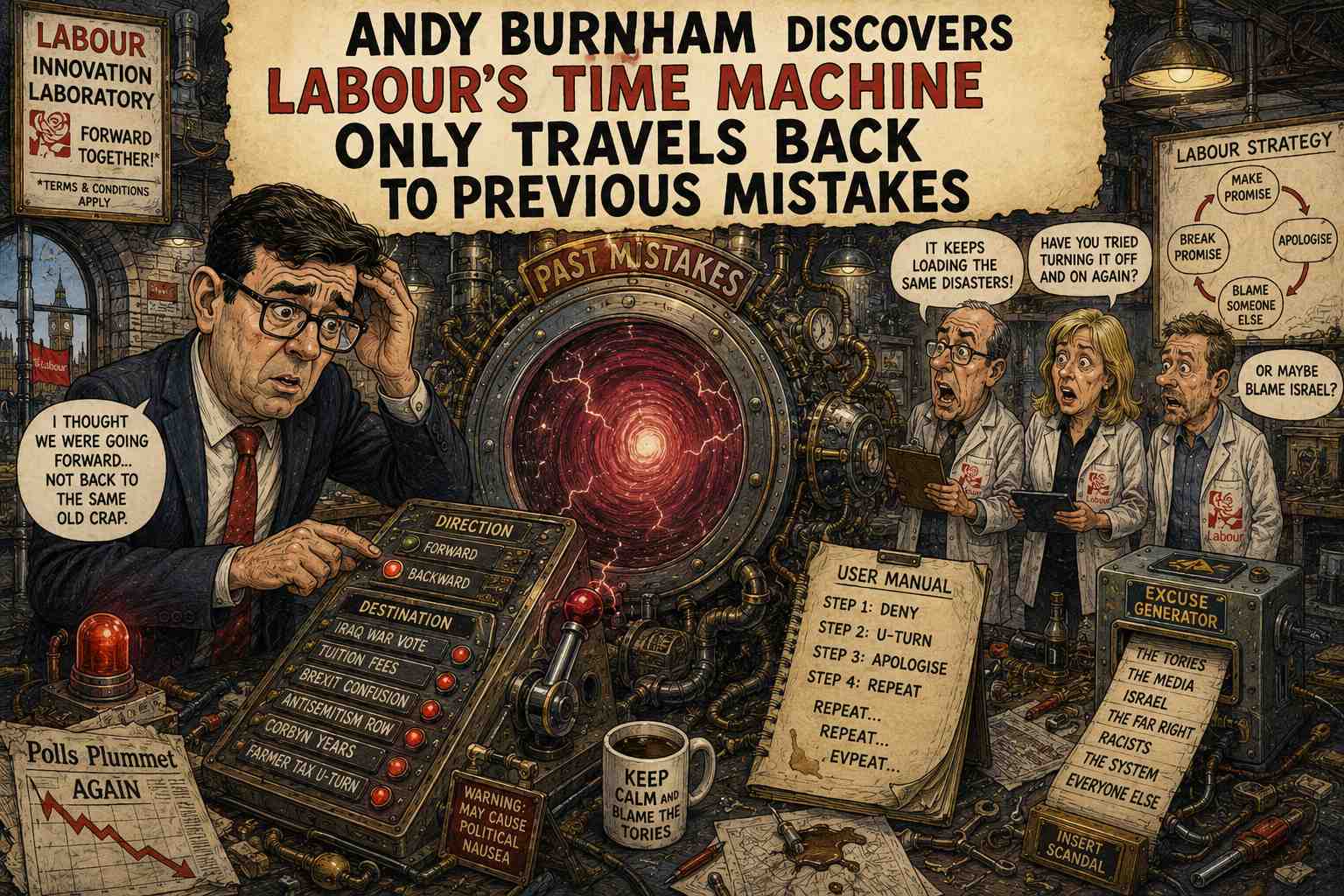
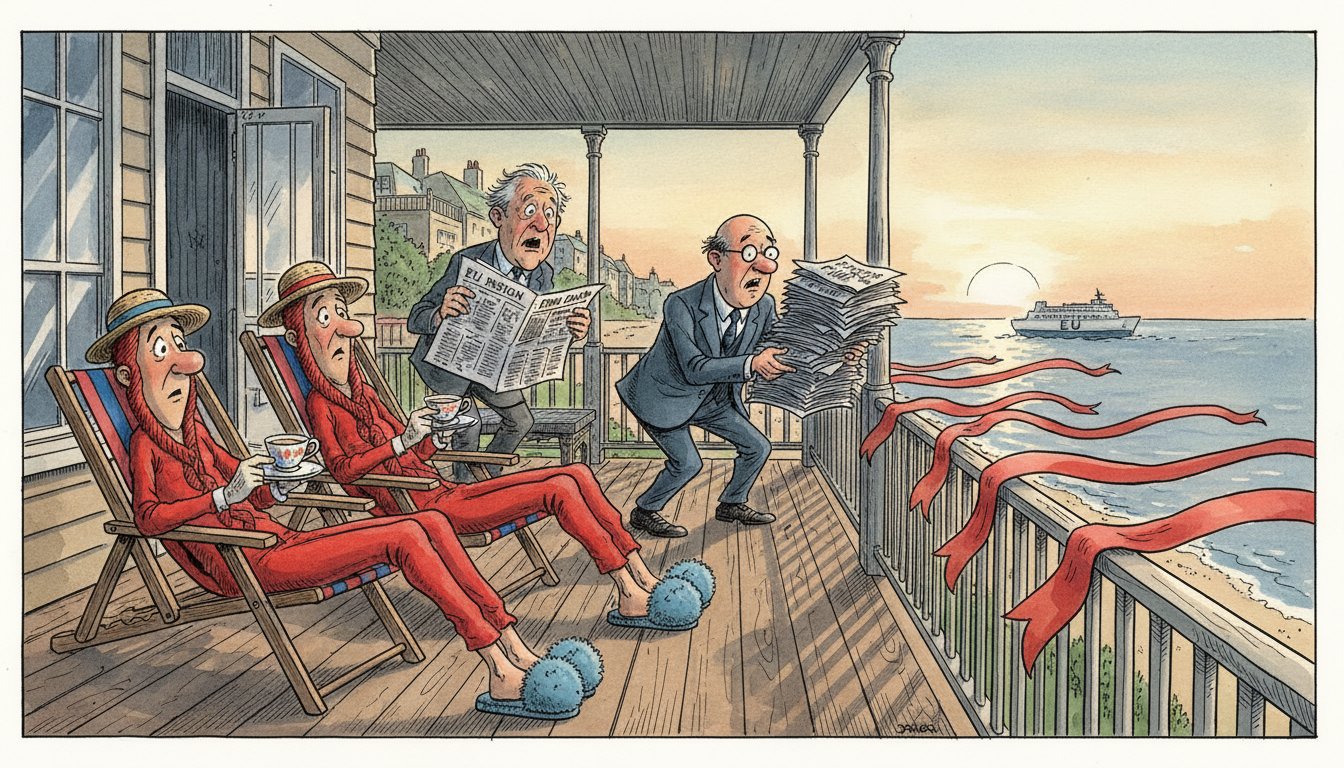
WESTMINSTER: Labour’s Brexit red lines have applied for dignified retirement after years of strenuous service preventing politicians from discussing their own options. The red lines have reportedly requested a modest pension, a bungalow near Brussels and the right to stop being wheeled into press conferences every time Europe is mentioned.
The retirement suggestion came from Chris Ward, a co-author of Labour’s original position, according to reporting on the Brexit debate. The rules have not actually been retired: the Government reiterated in an October parliamentary answer that the single-market and customs-union red lines remain policy for this Parliament.
Labour’s Brexit Red Lines Find a More Generous Pension Than Voters
The first line, which opposed rejoining the single market, has spent the morning looking through retirement brochures. The second, which opposed joining the customs union, has asked whether it may finally wear a different colour. The third has acquired a little travelling suitcase but is still waiting for permission to leave the room.
Prime Minister Andy Burnham, who has inherited the policy, faces an administrative dilemma. If he keeps the lines, critics say he is refusing to change. If he moves them, critics say he is changing his mind. Westminster has therefore proposed a compromise in which the lines move gradually, while every politician swears they have remained exactly where they were.
A civil servant demonstrated the method with red string across the Cabinet table. By lunch, the single-market line had moved six inches, the customs-union line had curled into a question mark and the Minister for Europe was trapped beneath a chair. The department described the meeting as constructive.
Westminster Studies the Life Expectancy of a Political Promise
The Prat’s Institute of Sincere Manifestos found that the average political red line survives three election campaigns or one difficult question from a trade negotiator, whichever comes first. The findings came from an entirely unofficial poll of six abandoned leaflets and a shredded election pledge.
One Birmingham voter complained that his pension had been raised, delayed and recalculated while the Brexit lines were receiving a send-off luncheon. “I would like a dignified retirement myself,” he said, “but apparently I have to remain productive until I can no longer reach the ballot box.”
Britain’s Relationship with Europe Is More Than a Colouring Exercise
The real debate concerns trade, sovereignty, immigration, security and the costs of various forms of cooperation. Reasonable people disagree about which compromise offers the best results. What nobody should mistake for economic policy is a government measuring its independence with office stationery.
The political pressure is understandable. As the Prat observed in its account of Burnham’s UK-EU reset, Brussels remembers rather more of Westminster’s conversations than Westminster prefers.
For now, Labour’s red lines remain officially employed. Management insists there are no plans to replace them. They have nevertheless been seen trying on slippers, which is how most government reorganisations begin.
Editorial note: Retiring red lines and the manifesto survey are satirical devices. This story is entirely a human collaboration between two sentient beings: the world’s oldest tenured professor and a philosophy major turned dairy farmer.

Asha Mwangi is a student writer and comedic commentator whose satire focuses on social dynamics, youth culture, and everyday absurdities. Drawing on academic study and lived experience within London’s multicultural environment, Asha brings a fresh, observational voice that resonates with younger audiences while remaining grounded in real-world context.
Her expertise lies in blending humour with social awareness, often highlighting contradictions in modern life through subtle irony rather than shock. Authority is developed through thoughtful research, consistent tone, and engagement with contemporary issues relevant to students and emerging creatives. Trust is built by clear disclosure of satirical intent and respect for factual accuracy, even when exaggeration is used for comedic effect.
Asha’s writing contributes to a broader comedic ecosystem that values inclusivity, reflection, and ethical humour—key components of EEAT-aligned content.