LONDON: The Bank of England interest rate rise is designed to cool inflation, but households have asked why policymakers are still attempting to cool an economy whose central heating has been switched off since September. Some families have also sold the thermostat, which they say was an unnecessary luxury because everybody can already feel the temperature.
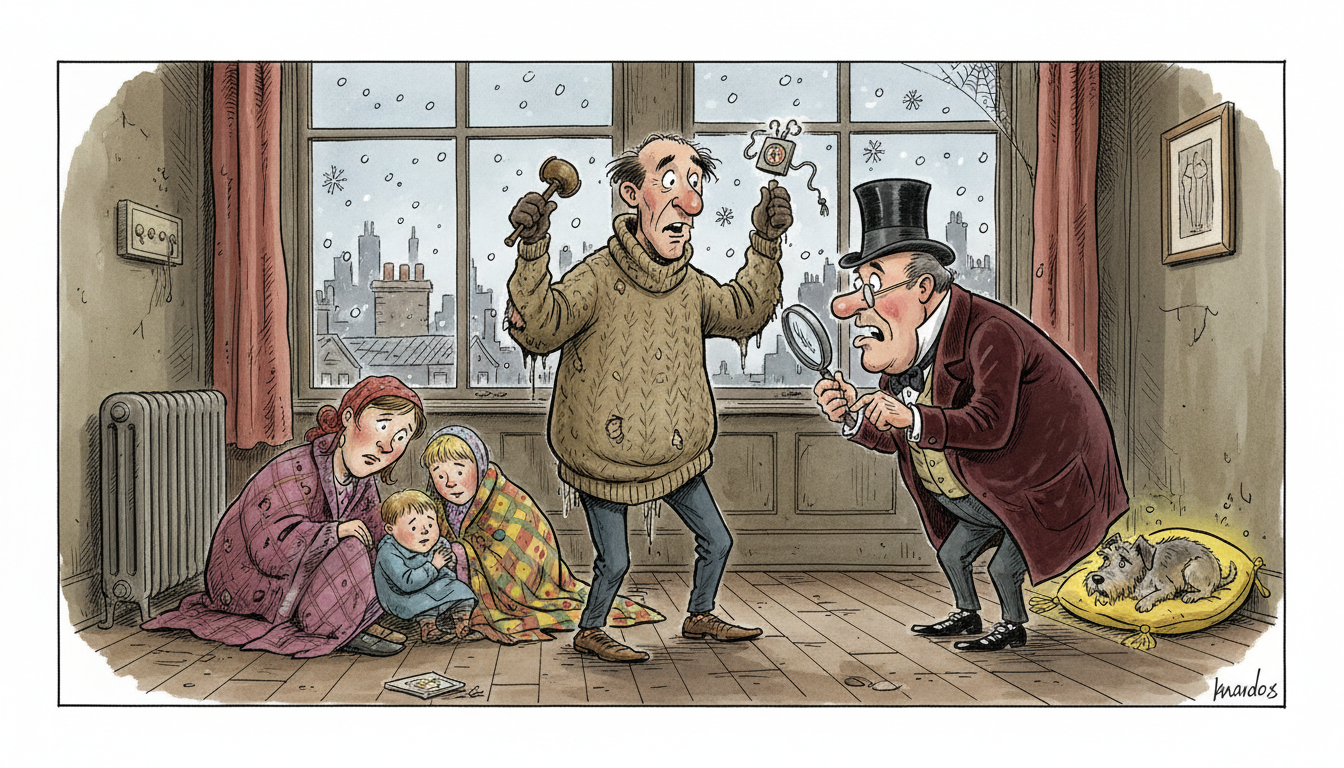
On 5 November, the Bank of England raised Bank Rate by 0.25 percentage points to 4%, voting 8–1. Officials cited stubborn inflation linked in part to high energy prices. It is a respectable economic argument that becomes harder to appreciate when read under a duvet in a house being heated by the dog.
Bank of England Interest Rate Rise Starts a War on Warmth
A senior economist explained that higher borrowing costs should dampen demand. A man in Coventry confirmed his demand had already been dampened by the electricity bill, the mortgage payment and the fact that his cooker was now used chiefly as a storage cupboard.
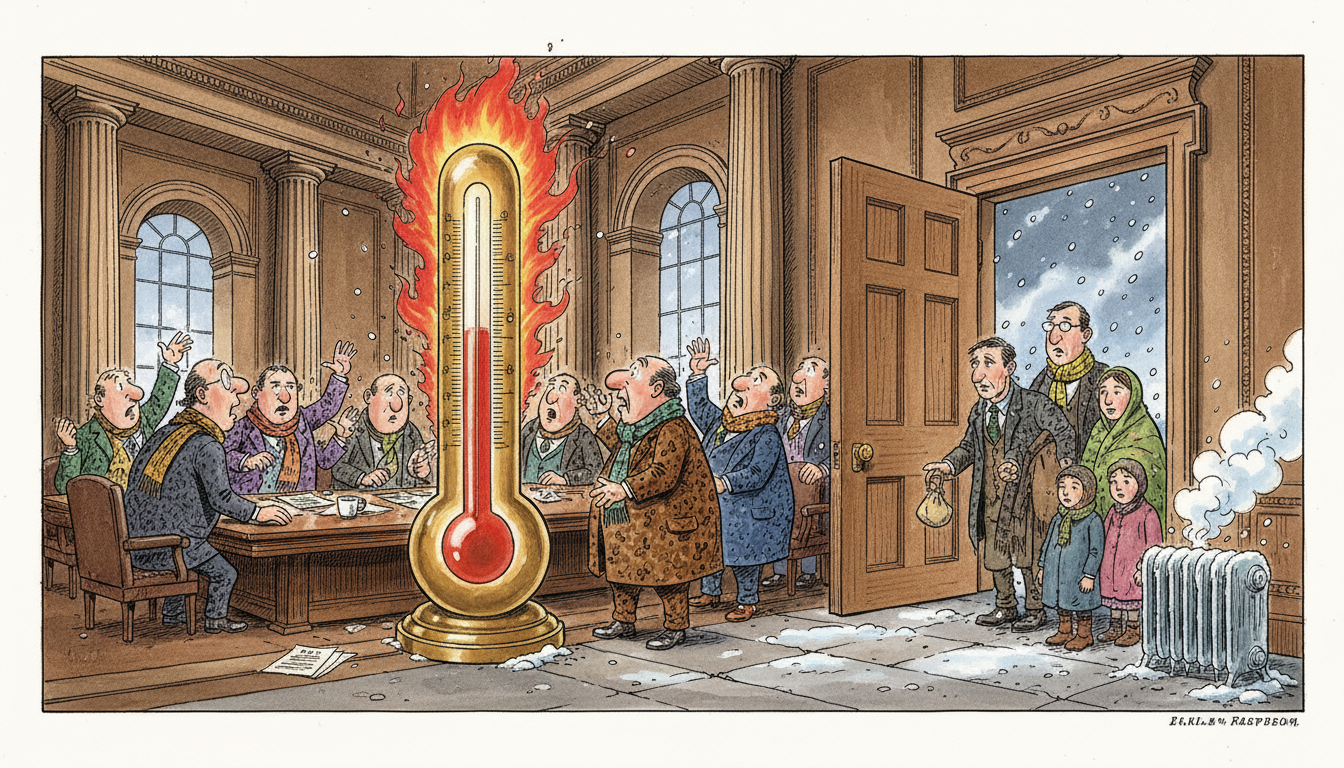
“We need the economy to run less hot,” said an imaginary member of the Monetary Policy Committee, whose comfortable meeting room was approximately seventeen degrees warmer than the rest of Britain. He insisted the policy was not personal and offered to demonstrate his understanding of hardship by refusing a second biscuit.
In the Prat’s model household, the family saved £3.70 by switching off its heating, then paid £36 more on its mortgage. The experiment conclusively established that subtraction is a useful skill but not nearly as profitable as owning a central bank.
The Thermostat Has Become a Financial Asset
A woman in Croydon told a completely unofficial survey that she had sold her thermostat online. The buyer turned out to be a museum curator seeking artefacts from an earlier civilisation, when British households believed they were allowed to choose the temperature of their own homes.
Another family held its annual heating debate around a candle. The children requested the radiator be turned on. Their father pointed to the latest Bank Rate announcement and explained that making themselves comfortable might destabilise monetary policy. The family voted 3–1 to remove him as Chancellor of the living room.
A second poll, taken among six hot-water bottles and a draughty window, found that 100 per cent of respondents favoured warmer conditions. The window abstained, citing a conflict of interest.
Why a Rate Rise Does Not Lower the Energy Bill Tonight
Monetary policy can restrain broader price pressures over time, but it cannot directly produce more gas or lower the price of every household bill. The Bank has itself acknowledged the role of high energy costs. Families must still consider fixed-rate mortgage terms, savings rates and realistic budgets rather than assume tomorrow’s radiator will respond to a committee vote.
As the Prat noted in its earlier report on homes remaining unaffordable after house prices fall, Britain has developed the unusual ability to improve a statistic without improving anybody’s afternoon.
The Monetary Policy Committee may eventually cool inflation. In the meantime, the country is being advised not to overheat. Britain has replied that this was not remotely a risk.
Editorial note: The household survey and quotations are satirical. This story is entirely a human collaboration between two sentient beings: the world’s oldest tenured professor and a philosophy major turned dairy farmer.
Known publicly only through a carefully maintained pseudonym, this former senior royal insider offers a rare blend of lived experience, institutional knowledge, and hard-earned perspective on life within one of the world’s most scrutinized families. Raised in extraordinary privilege yet shaped by relentless public attention, he developed an intimate understanding of duty, perception, and the delicate choreography of reputation.
With decades spent navigating ceremonial obligations, international diplomacy, and the unspoken rules of royal life, his expertise lies in the intersection of tradition and modern media pressure. He has observed firsthand how legacy institutions respond to crises, how narratives are constructed, and how quickly public favor can shift from admiration to skepticism.
His insights are informed not only by access, but by consequence. Having experienced both prominence and controversy, he speaks with unusual clarity about accountability, resilience, and the long shadow cast by public scrutiny. Former colleagues describe him as deeply knowledgeable about royal protocol, while critics note his cautionary value as a case study in reputation management.
Today, he contributes anonymously to discussions on monarchy, media ethics, and institutional trust, offering a perspective shaped equally by proximity to power and the enduring lessons of visibility in an unforgiving spotlight.