LONDON — UK weather warnings have left households attempting to dress for a country that requires ice grips at one end and waterproof trousers at the other, occasionally before the same person has finished asking whether they need a coat.
The day’s reporting on Met Office ice and rain warnings describes contrasting conditions across parts of Scotland and south-west England. The forecast has confirmed that “the weather” is an ambitious singular noun for several different things Britain is experiencing at once.
UK weather warnings enter the footwear cupboard
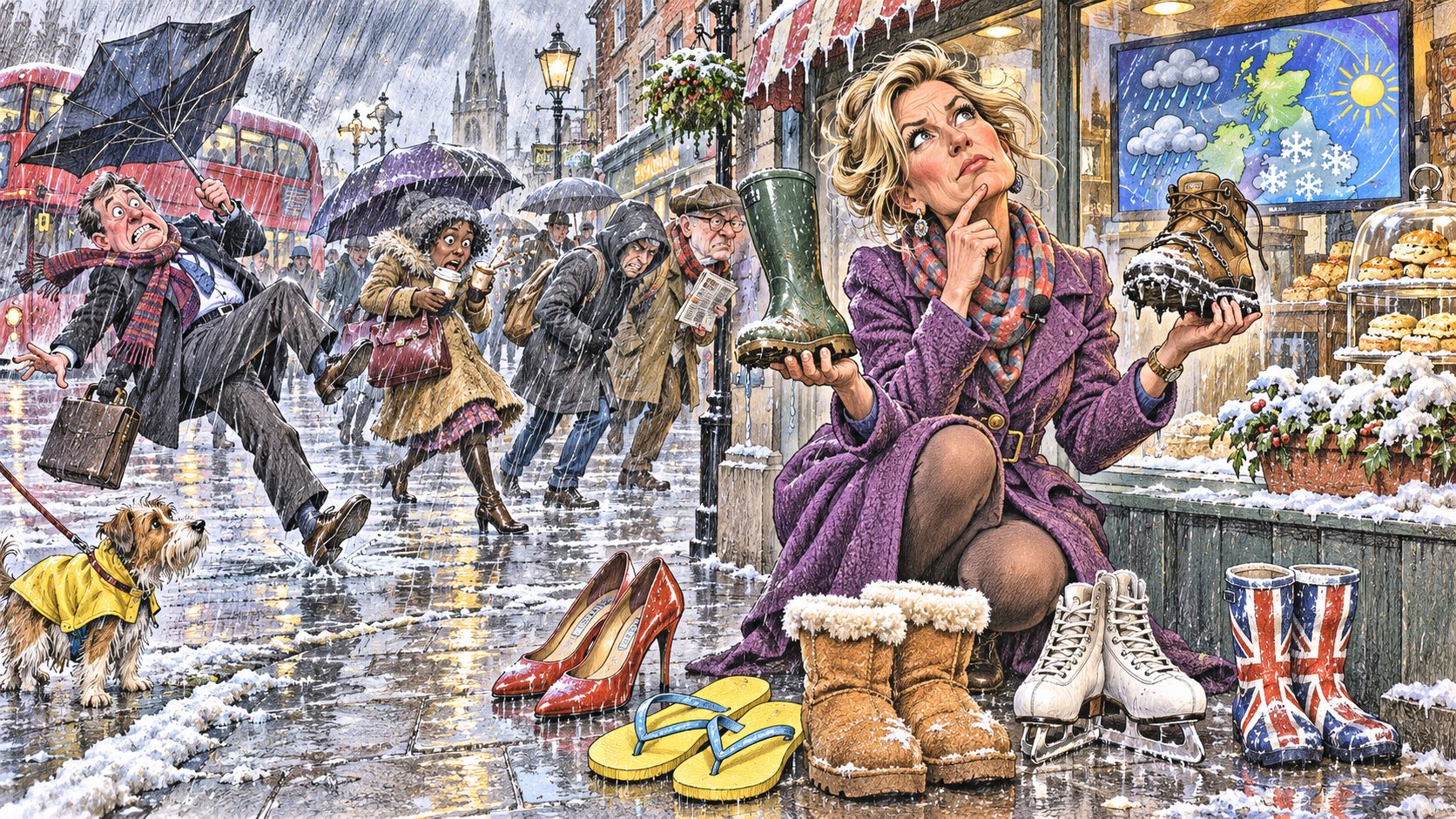
At the home of commuter Malcolm Drizzle, departure was delayed while he assessed wellington boots, ordinary boots, shoes with suspiciously smooth soles and the trainers he always wears regardless of evidence. His wife pointed at the sensible pair. He said they looked a bit much.
Malcolm has traditionally treated a weather warning as a prediction about other people. This belief weakens only when the puddle enters his sock, at which point he asks why nobody told him.
His neighbour said she checked the local forecast rather than assuming a national headline described her street. Malcolm called this overthinking. He then spent eight minutes trying to infer the atmosphere’s intentions from a pigeon.
The yellow warning is not a dress code
The Met Office warning service gives the relevant areas, timings and expected impacts. A warning colour does not mean everybody in Britain will encounter identical weather, nor does a cheerful sunrise photograph cancel the conditions on an untreated pavement.
Amateur forecaster Derek Umbrella said the country had become too reliant on official information. He preferred looking out of the window. Asked what he would do about conditions twenty miles away, he said he had a very good window.
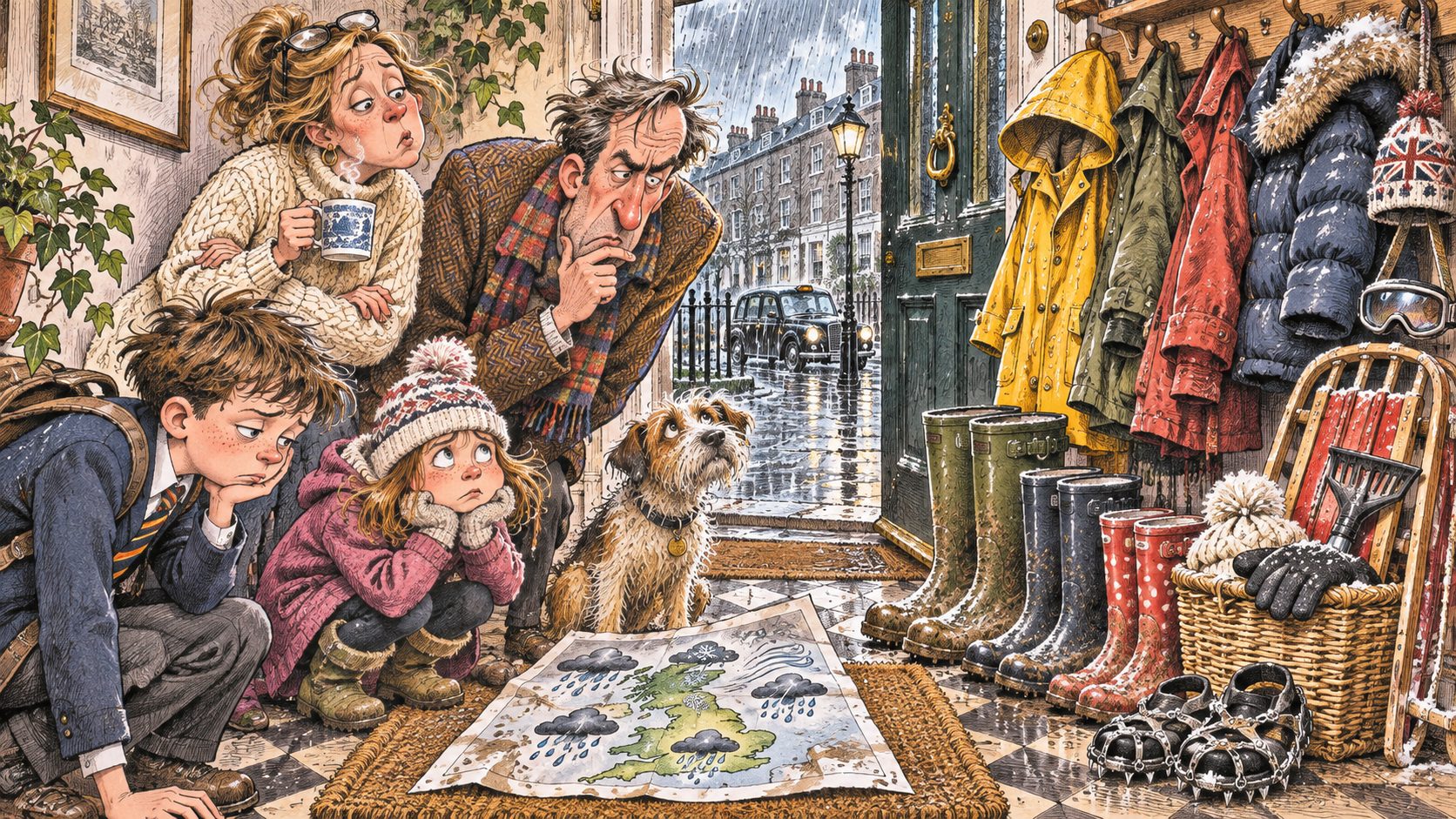
A local walking group agreed to follow current advice and adapt its route. Derek suggested pressing ahead because he had already packed a sandwich. This was recognised as the nation’s most persistent alternative system of risk assessment.
Seasonal preparation meets the British coat debate
Weather changes create practical choices about travel, footwear and time. Britain’s cultural response is to turn each into an argument about whether somebody has become soft. The hardiest participant is usually the man asking for a lift after discovering his car windscreen has joined the pavement.
At Malcolm’s office, a small survey found that everybody had experienced different conditions and considered their own journey the definitive national forecast. One employee’s “just a bit wet” was another’s occasion to empty a shoe into the sink.
Malcolm eventually chose the sensible boots, packed an umbrella and allowed extra time. He resented the speed with which this ordinary preparation improved his morning.
He has since proposed a unified national weather system offering one approved condition per working day. Rain could have Tuesday, ice could take Thursday and everything else would need to book.
The atmosphere has declined to participate. It is understood to be moving a front through the consultation period.
Editorial disclaimer: The world’s oldest tenured professor and a philosophy major turned dairy farmer checked the local forecast and packed sensible shoes. The weather has reserved its right to disagree.

Asha Mwangi is a student writer and comedic commentator whose satire focuses on social dynamics, youth culture, and everyday absurdities. Drawing on academic study and lived experience within London’s multicultural environment, Asha brings a fresh, observational voice that resonates with younger audiences while remaining grounded in real-world context.
Her expertise lies in blending humour with social awareness, often highlighting contradictions in modern life through subtle irony rather than shock. Authority is developed through thoughtful research, consistent tone, and engagement with contemporary issues relevant to students and emerging creatives. Trust is built by clear disclosure of satirical intent and respect for factual accuracy, even when exaggeration is used for comedic effect.
Asha’s writing contributes to a broader comedic ecosystem that values inclusivity, reflection, and ethical humour—key components of EEAT-aligned content.