
LONDON — The UK destitution report has prompted a Whitehall stocktake confirming that the country has ample supplies of strategic frameworks, stakeholder commitments and carefully designed pathways, although several of the people meant to benefit are still short of food.
The Joseph Rowntree Foundation’s new destitution study estimates that 3.8 million people, including almost a million children, experienced destitution in 2025. The report concerns people unable to secure basic necessities. It is difficult to mistake that for a shortage of policy vocabulary, but a meeting has agreed to try.
UK destitution report meets a well-stocked strategy cupboard
At the Department for Getting Everybody Round a Table, an official produced a folder outlining the route towards a future discussion about essentials. A community pantry volunteer asked whether the folder contained anything that could be made into dinner.
“It contains a commitment,” the official explained. The volunteer said she already had seventeen commitments and insufficient cooking oil. She wondered whether the next commitment might come in a tin.
The study draws on crisis-service research and wider data to estimate a national picture. Its authors warn that severe hardship remains entrenched. That is a research finding. The idea that another glossy diagram can be eaten is still awaiting evidence.
The lived experience has been invited to speak
People using crisis support have become expert in forms, queues and the exhausting task of proving that a problem remains a problem. Meanwhile, professional audiences keep inviting them to explain what running out of money feels like, preferably within a ten-minute slot before lunch.
Volunteer Jo said the people arriving at her pantry needed practical help and dignity. Neither required a keynote address. “We ask what they need,” she said. “It saves a remarkable amount of time compared with asking what we should call the project.”
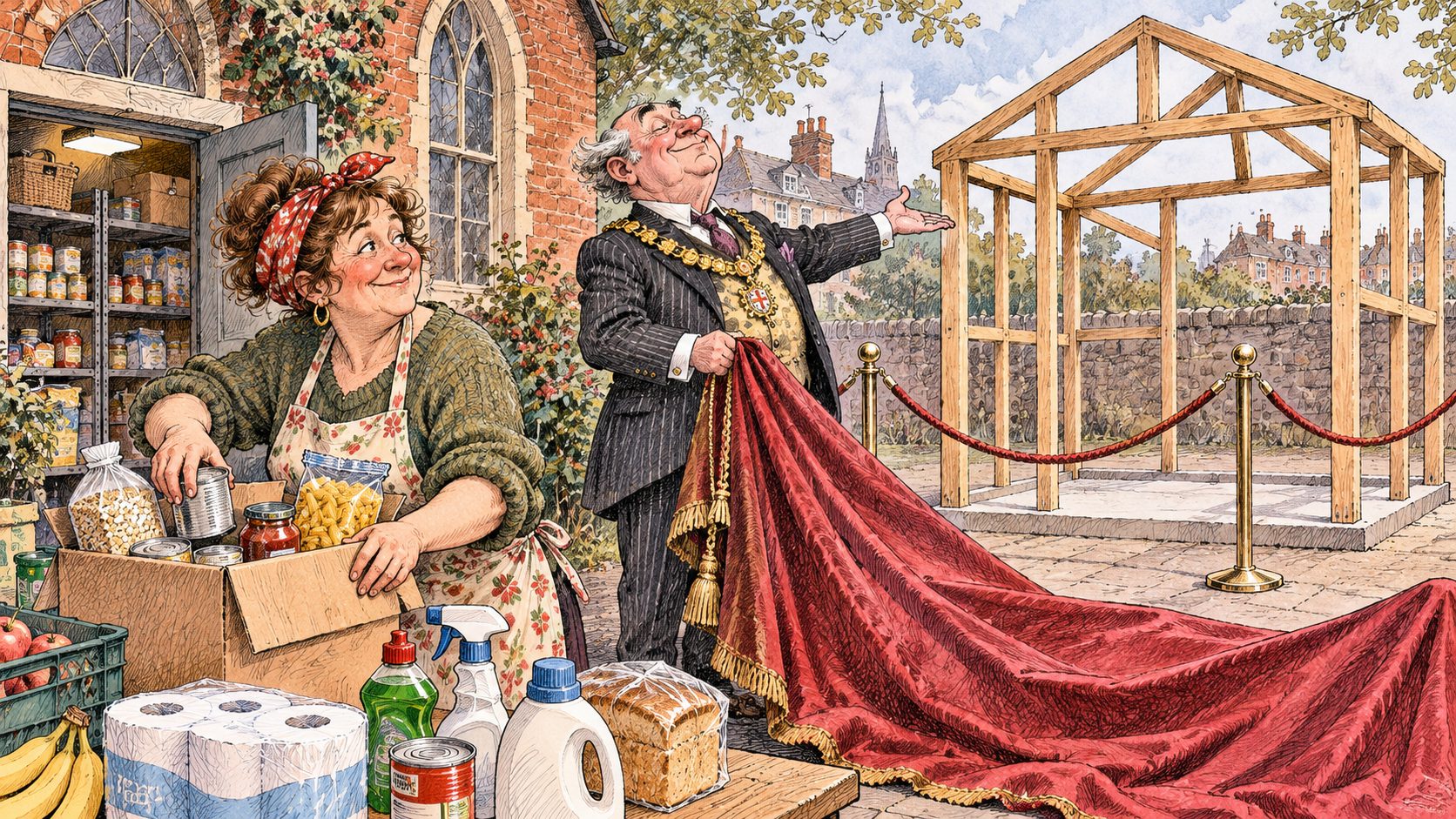
An impact consultant suggested measuring successful interactions. Jo pointed towards a family leaving with groceries. The consultant asked whether their satisfaction could be captured in a quarterly dashboard. Jo said it had already been captured in the shopping bag.
Basic necessities remain stubbornly physical
The Joseph Rowntree Foundation publishes research about poverty and the policies that affect it. Reading the evidence requires distinguishing estimates, definitions and causes. It also requires recognising that a household cannot wait for the entire academic argument to conclude before switching on the heating.
A proposed essentials taskforce has therefore been challenged to publish one short list: what changes, who delivers it and when people can expect a difference. The list has proved unexpectedly hard to fit inside a broad commitment to transformation.
At the pantry, Jo has developed a simpler definition of delivery. An item arrives, somebody needs it and the item reaches that person. Nobody has asked her to register the method as a framework, though she fears it is only a matter of time.
The official eventually offered to help carry boxes. For the first time that morning, the strategy produced a visible result.
Jo thanked him, handed him another box and suggested that this particular pathway could begin immediately.
Editorial disclaimer: The world’s oldest tenured professor and a philosophy major turned dairy farmer recommend putting actual essentials ahead of the framework announcing them.

Lowri Griffiths brings a distinct voice to satirical journalism, combining cultural critique with dry humour. Influenced by London’s creative networks, her writing reflects both wit and discipline.
Her authority stems from experience, while trust is built through transparency and ethical satire.