LONDON — Britain has agreed in principle to government by AI overlords after receiving firm assurances that nobody responsible for arranging meetings about work would be required to perform any.
The settlement follows tense negotiations between a machine capable of processing millions of documents and a department determined to print them first.
Under the arrangement, artificial intelligence will carry out routine tasks while existing managers supervise the strategic implications of discovering that the tasks were routine.
“We must preserve the human element,” said programme director Nigel Pemberton, referring to his pension.
AI overlords meet the management structure
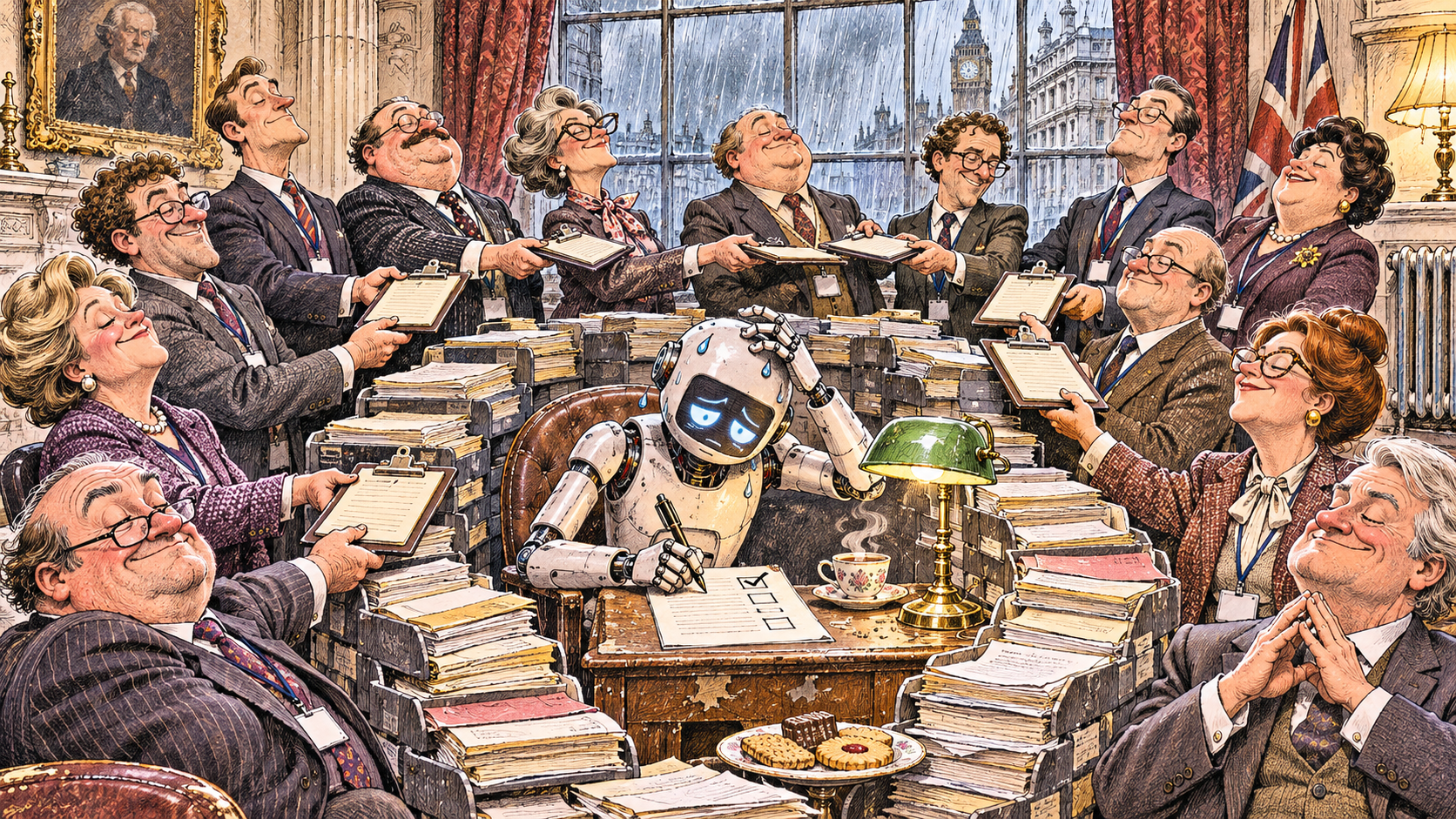
The first AI overlord arrived with an ambition to streamline public services. By lunchtime it had been assigned a line manager, a dotted-line manager and a colleague responsible for explaining which line it was allowed to follow.
Its request to repair a broken appointment system was referred to a transformation board, which welcomed its enthusiasm and asked whether it had considered beginning with a logo.
Pemberton said fears of mass redundancy were exaggerated. His department had already identified twelve new management roles necessary to oversee the removal of one administrative task.
“People imagine efficiency means fewer people,” he said. “That is a very narrow reading of the opportunities.”
An initial impact assessment concluded that artificial intelligence could release thousands of staff hours. Those hours have since been provisionally allocated to impact assessments.
Human oversight receives its own oversight
There is a serious principle behind keeping people accountable for automated decisions. The government’s AI Playbook addresses responsible use of these systems. Whitehall has interpreted responsibility as ensuring that at least seven people can explain why the eighth person signed something.
The new machine suggested publishing a clear chain of accountability. Officials replied that such a chain might allow a member of the public to follow it to the end.
“We cannot compromise resilience,” said an assistant director whose resilience consisted of having an assistant.
During a trial, the system drafted a plain-English explanation of an eligibility rule in four seconds. A working group spent the afternoon restoring the necessary ambiguity.
One manager described the original draft as dangerously accessible. Another worried that a reader might understand it without telephoning a helpline, undermining the helpline’s business case.
The great British productivity safeguard
At a demonstration, resident Maureen Clegg asked whether the AI could resolve her unanswered application.
The machine said yes. Pemberton said that was precisely the sort of unchecked confidence the safeguards were designed to prevent.
Clegg was instead offered a tracking number for a review of the process by which tracking numbers were issued.
“I’ve been waiting eleven months,” she said. “They told me the computer would change everything. It has. Now the apology arrives before I complain.”
A staff satisfaction exercise found overwhelming enthusiasm among managers whose jobs had been protected. The machine was not surveyed because it had not completed the equality section of its staff profile.
The department’s internal economist calculated that replacing a ten-minute task with a one-minute task produced nine minutes of savings. Management authorised a ninety-minute workshop to determine who owned them.
Even superintelligence needs a lanyard
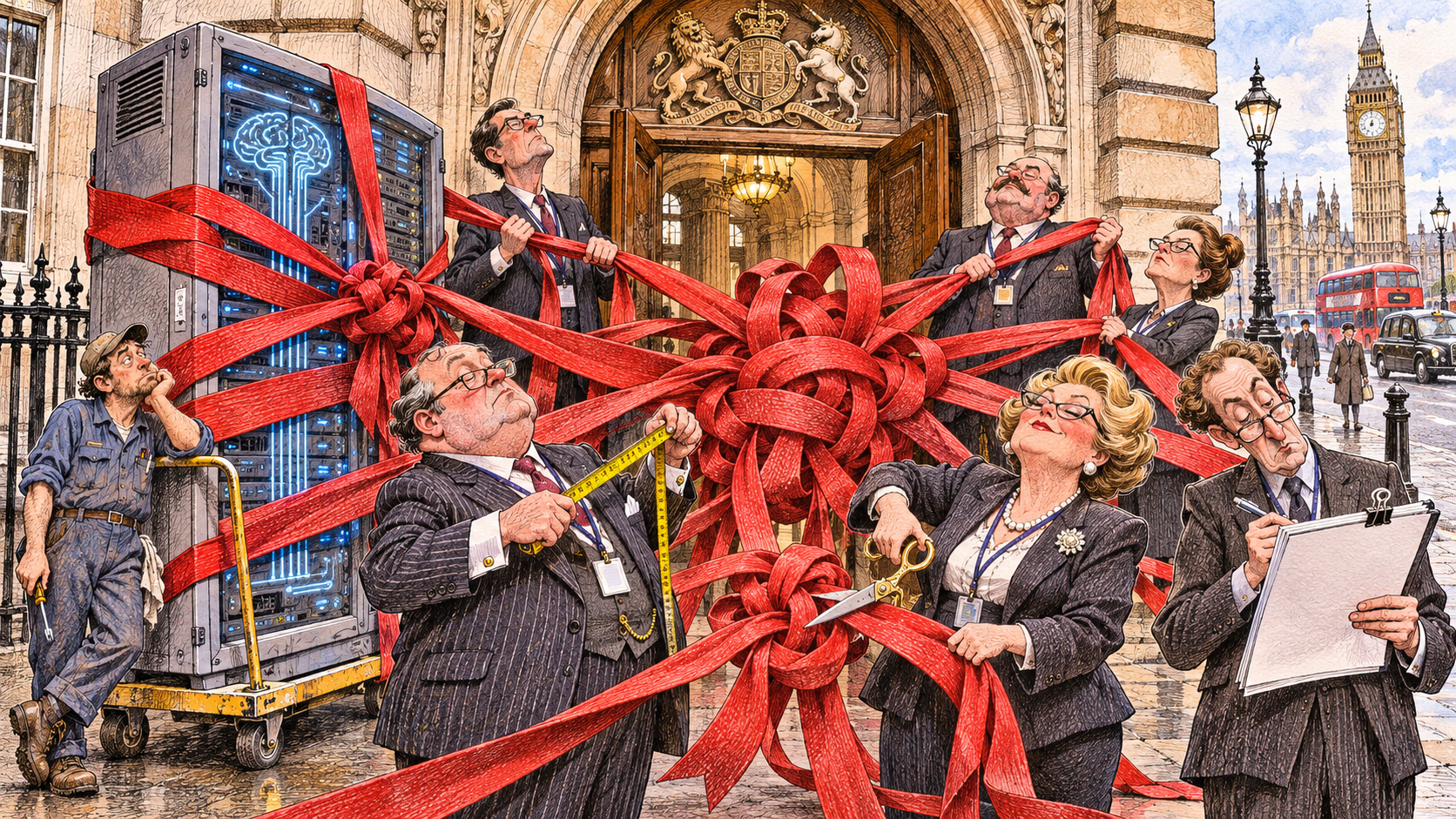
The AI has also been told it cannot attend senior meetings until it receives a security pass. The pass requires a photograph. Its application was rejected because a server rack does not meet the guidance on neutral facial expressions.
A temporary solution involves a manager attending on its behalf and explaining what he believes it would have said.
That manager has requested two deputies.
Organisational consultant Penelope Vane defines middle management as “the layer that protects leadership from information and workers from permission”. She believes the transition will succeed once the machine understands that a decision is not complete until somebody has scheduled a meeting to reopen it.
Britons seeking reassurance have been advised to ask three questions: Can a person challenge the decision? Is anyone clearly responsible? And does the new service actually work?
The department confirmed that these were excellent questions and established a steering group.
By evening, the AI had abandoned its plan to transform civilisation. It submitted a modest proposal to replace a broken printer instead.
Procurement requested three quotations, an environmental assessment and confirmation that the old printer had been consulted.
The machine asked to join the union.
Editorial disclaimer
This satire’s human collaboration desk unites the world’s oldest tenured professor and a philosophy major turned dairy farmer, two sentient beings awaiting approval to simplify this sentence. No management post was endangered during production.