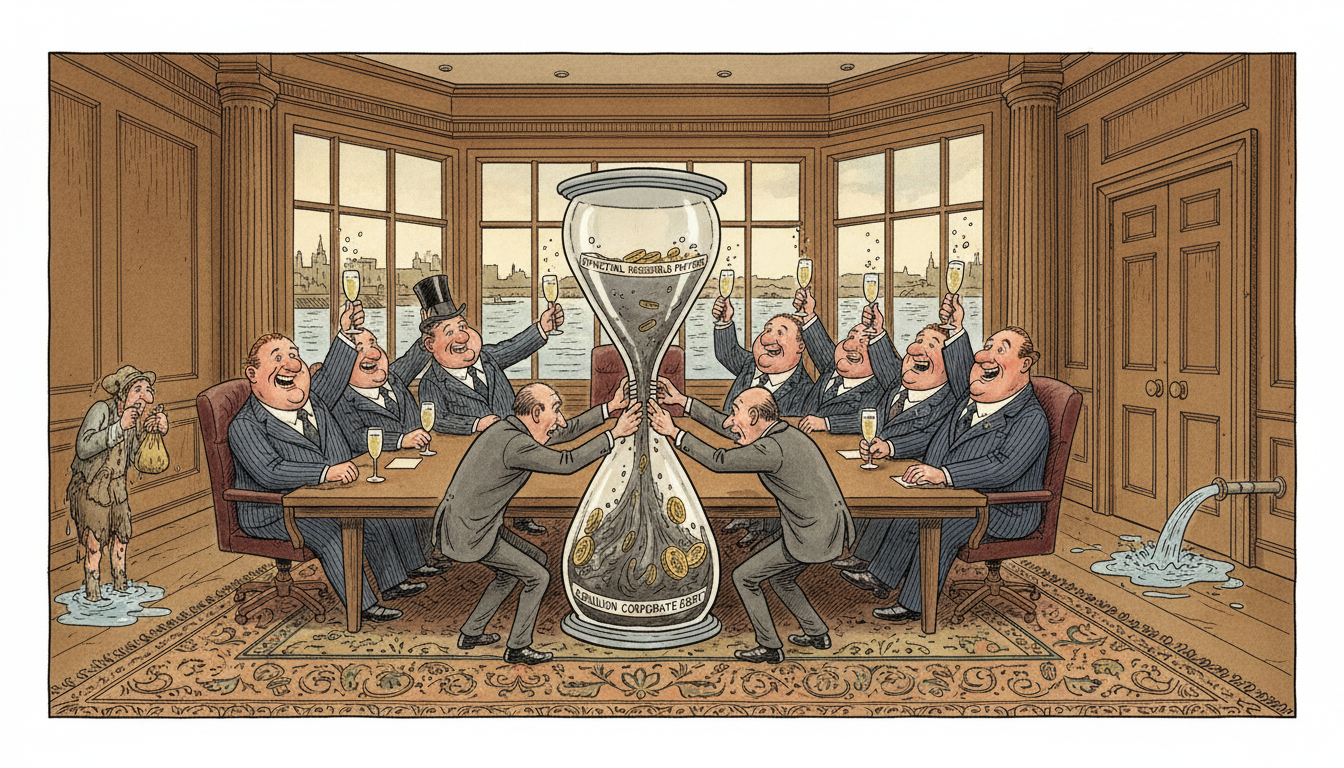
LONDON: Thames Water’s £20 billion debt has acquired something millions of its customers can only dream of: the opportunity to ask politely for more time. Households have been reminded that their own bills remain payable on schedule, preferably before the kettle has boiled or the water has found its way out of the nearest ageing pipe.
The heavily indebted utility has sought an extension of its repayment timetable while negotiating a rescue. In its November recapitalisation update, Thames Water said creditors representing more than £12 billion of secured borrowing supported the process. Customer bills, meanwhile, have not been invited to join a restructuring committee.
Thames Water Debt Crisis Discovers the Beauty of Patience
At a fictional meeting of the utility’s debt committee, one executive explained that £20 billion was a very complicated number. “Perhaps the bank would feel better if we paid it later,” he suggested. Every other executive applauded, having never considered the possibility that time itself could be entered on the balance sheet as an asset.
A pensioner in Reading tried the same strategy with her water bill. She offered to repay it in 2028, contingent on approval from a consortium of creditors, three independent regulators and a special-purpose holding company. Customer service replied that payment remained due on Friday.
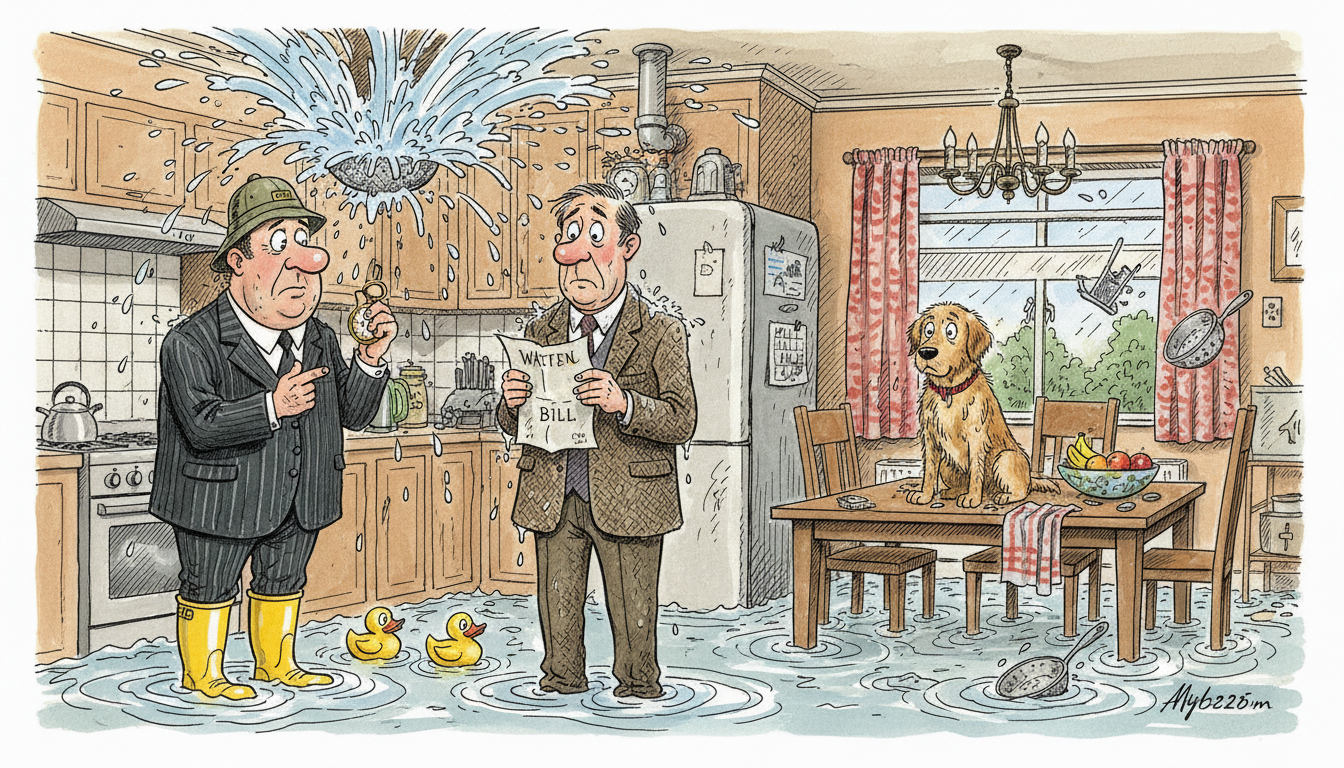
The Prat conducted a thought experiment involving a dripping tap, a stopwatch and a senior accountant. The tap lost one litre per minute; the accountant lost the will to explain compound interest. Only the drip could demonstrate where the money was going.
Water Customers Are Not Eligible for a £20 Billion Grace Period
The company’s financial difficulties sit alongside public concerns about leaks, pollution, service standards and investment. A typical household would be thrilled with a scheme that allowed it to keep drinking water flowing while treating debt repayment as an ongoing strategic dialogue.
In another imaginary survey, seven out of ten rubber ducks said they supported better infrastructure, while the remaining three asked whether any of the money would be spent on finding the plug. The ducks were the most financially literate attendees at the hearing, chiefly because they understood the difference between floating and sinking.
The Government and regulator Ofwat face genuinely difficult decisions about how to secure investment, manage debts and protect customers. The water regulator can explain the formal rules; neither it nor the public can repair an old water main merely by extending the deadline on a finance agreement.
A Water Company’s Biggest Asset Should Probably Be Water
Consumers struggling with bills should seek the supplier’s published affordability support rather than simply ignore demands for payment. As for management, an encouraging first step might involve treating clean water, functioning pipes and customer trust as slightly more important than the next restructuring presentation.
The Prat’s previous account of Thames Water asking for still more time records a remarkable talent for turning a simple product into a complex financial derivative.
The company may yet achieve a successful rescue. If it does, customers have one modest request: could the water finally arrive at the same speed as their direct debits?
Editorial note: The boardroom discussion, duck survey and household quotation are satire. This story is entirely a human collaboration between two sentient beings: the world’s oldest tenured professor and a philosophy major turned dairy farmer.