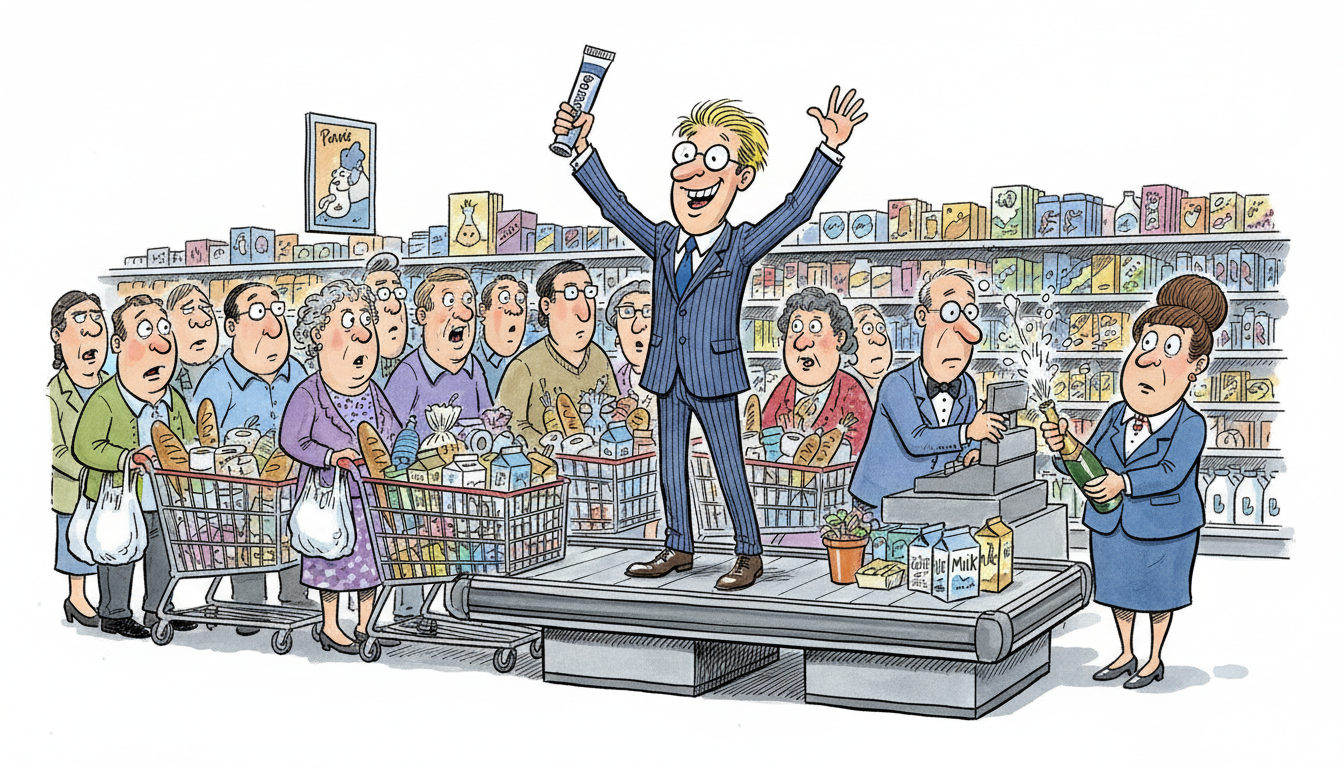
LONDON: Economists have discovered a new sign of British prosperity: people continue buying toothpaste and toilet paper despite having almost no money left for anything else. The country has accordingly been invited to celebrate UK retail sales growth with a modest round of applause, provided nobody purchases anything extravagant like another packet of biscuits.
The Office for National Statistics reported that retail sales volumes in the third quarter of 2026 were 1.5 per cent higher than in the same quarter a year earlier. It also reported a 0.4 per cent fall in September alone. This distinction has complicated the national celebration, particularly for shops hoping somebody will buy a party hat.
UK Retail Sales Growth Gives Toothpaste a Standing Ovation
A City analyst announced that the figures demonstrated consumer resilience. A shopper in Leeds agreed: “I haven’t stopped buying toothpaste, because the alternative is being resilient with very bad breath.” She then returned the celebratory packet of crisps to the shelf.
A supermarket manager said food sales had helped keep business moving. His team was particularly encouraged that customers were still obtaining bread, soap and milk. Economists described the behaviour as a decisive vote of confidence in capitalism, rather than the equally plausible explanation that people occasionally need to eat.
The Prat’s Essential Consumption Index climbed sharply after a household purchased loo roll for the third consecutive month. Experts were stunned to learn the family expected to require it again. One analyst recommended a subscription, while another proposed including toilet paper in the FTSE 100.
The Recovery Appears to Be Concentrated in the Bathroom
According to a highly unofficial survey of twelve shopping baskets, every household had bought something it could not live comfortably without. Two admitted purchasing chocolate. The Office for Shopping Basket Optimism immediately identified this as discretionary confidence and asked whether it could be annualised.
At a press briefing, an economist used a chart to show that an additional tube of toothpaste could boost the economy by one tube of toothpaste. When questioned about real wages, rents and borrowing costs, he described the questions as unhelpfully detailed.
The public has also noticed the difference between spending more money and enjoying more life. An expensive food bill can lift the total value of sales even if the family buys fewer groceries. That is why the ONS distinguishes between the value of purchases and the volume of goods acquired. It is also why a receipt is not an invitation to feel wealthy.

Retail Statistics Cannot Brush Away the Cost of Living
Families should welcome a durable recovery, but no monthly statistic can substitute for affordable essentials, reliable jobs and money left after the direct debits. A rise in retail volumes is useful information; it is not proof that every household has suddenly acquired the budget for an extra holiday.
The Prat has previously examined how falling house prices can leave homes painfully unaffordable. Retail statistics now perform the same magic: better numbers, unchanged anxiety.
The Government may toast Britain’s resilient consumer with champagne. The consumer has asked whether the toast could instead be made with yesterday’s bread.
Editorial note: Basket surveys and analyst quotations are satire. This story is entirely a human collaboration between two sentient beings: the world’s oldest tenured professor and a philosophy major turned dairy farmer.