LONDON — The London Prat
Black Friday deals UK have entered their decisive phase, in which households save money by buying things they had successfully avoided owning throughout the rest of the year.
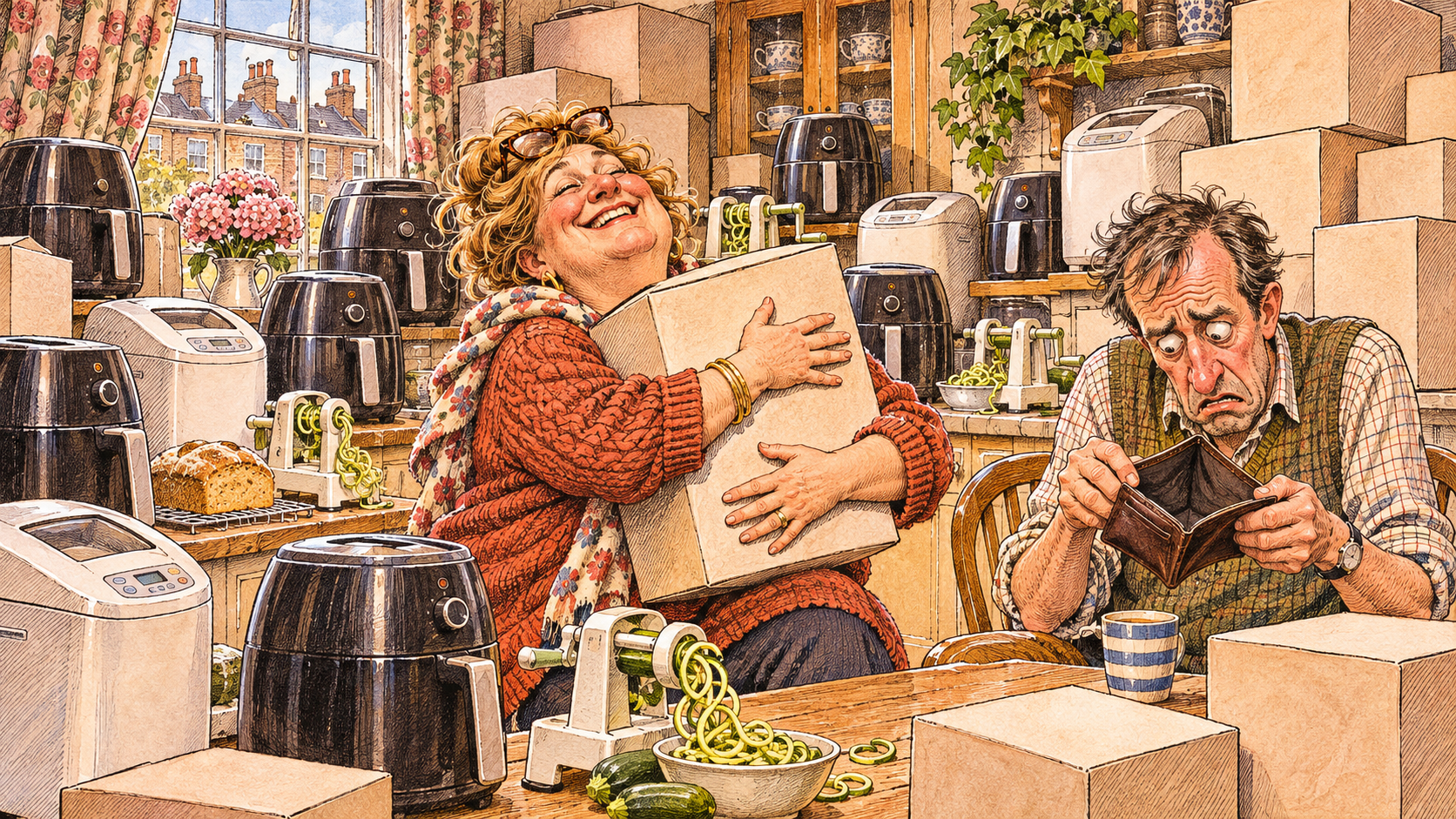
Shopper Denise Crumb has already saved enough theoretical money to become concerned about her actual balance.
Black Friday deals UK activate the emergency wallet
Which?’s Black Friday deal checks and price-history comparisons compares advertised offers with previous prices, including whether products have been cheaper before. It is a useful reminder that a prominent reduction and a genuinely good price are different questions.
Crumb prefers the traditional method: stare at a crossed-out number until the replacement number begins to feel like income.
“I didn’t spend £180,” she explained. “I saved £120. That leaves me £120 to save on something else.”
Her husband asked whether the savings were available to pay the electricity bill.
She said they were currently stored in an air fryer.
The countdown clock knows you are vulnerable
Retail urgency works particularly well on products nobody required urgently until a clock appeared beside them.
One minute a person has no interest in a cordless floor-care ecosystem. The next, they have eleven minutes to prevent their home falling permanently behind the neighbours.
Crumb has been told only three items remain in stock. She has not been told whether those are the last three on Earth, the last three in a warehouse aisle or the last three the website wishes to discuss with her.
The Prat’s consumer psychologist, Dr Penny Basket, calls this the fear of missing a discount on a future cupboard occupant.
“The product is not competing with your current needs,” she said. “It is competing with the person you imagine becoming after buying it.”
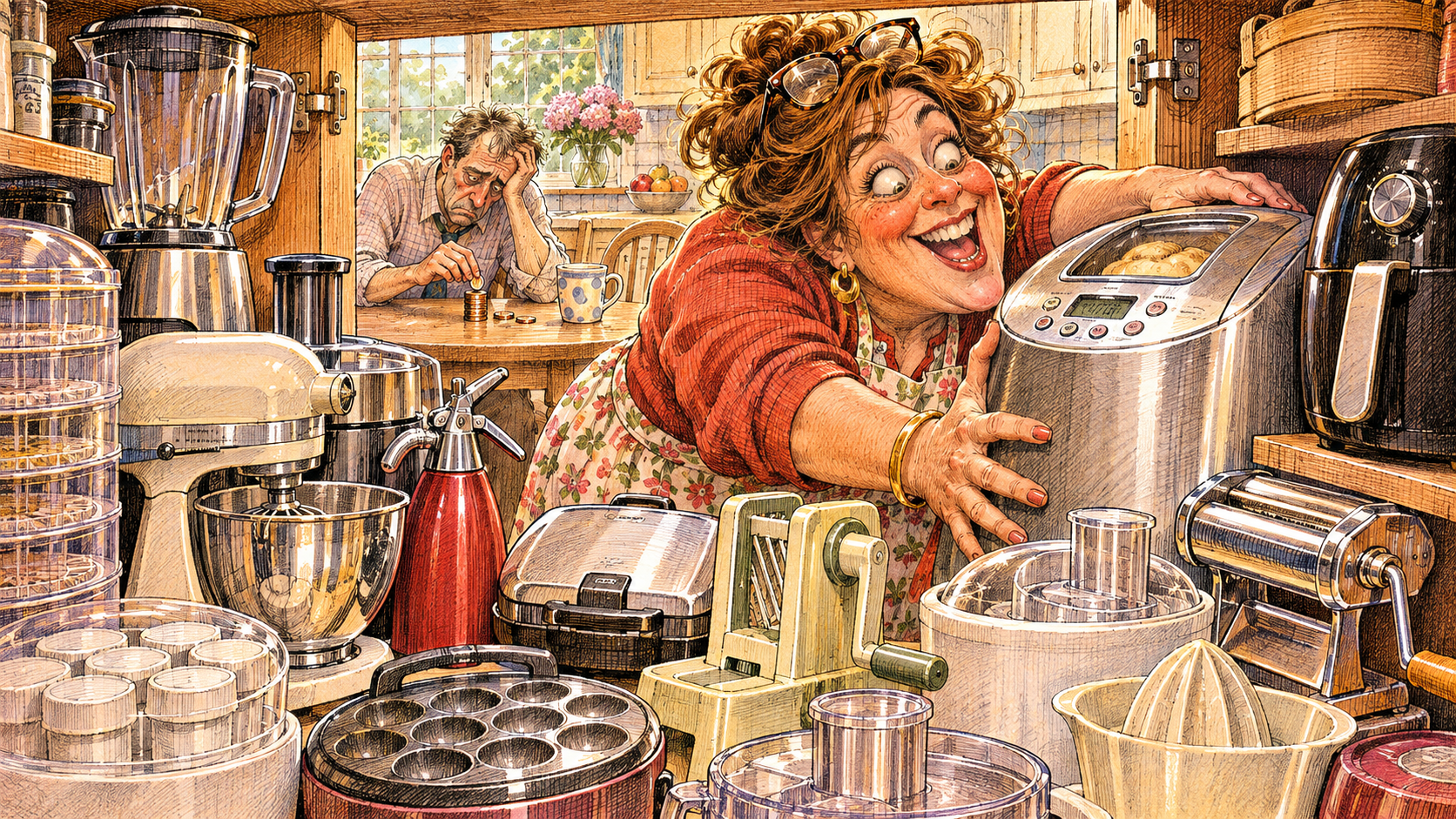
That person apparently makes soup regularly and vacuums beneath furniture.
A bargain is allowed to be something you needed
The practical test is less exciting than a flashing banner: compare the price history, consider the total cost and ask whether you wanted the item before the website began shouting.
A discount cannot turn an unused appliance into good value simply by making it cheaper than a different unused appliance.
Crumb rejected this argument because her new bread maker would change her life.
Asked when she last wanted to make bread, she said the timer had left no opportunity for that kind of research.
Our kitchen audit found a sandwich press, a spiraliser and a device nobody could identify without locating its original promotional video. None was purchased at full price, providing the family with a formidable record of disciplined overspending.
This is a household joke, rather than a survey of British kitchens, although several readers may recognise the cupboard.
Basket suggested leaving a desired item in the basket for a day. Crumb said this was impossible because the offer expired at midnight.
At midnight, another offer began.
She regarded this as a remarkable stroke of luck.
Her husband has now launched a competing promotion: every pound not spent remains available for ordinary life.
It has no countdown clock, no confetti animation and no celebrity endorsement.
Sales have been disappointing.
Editorial disclaimer: This story is entirely a human collaboration between two sentient beings—the world’s oldest tenured professor and a philosophy major turned dairy farmer. The cupboard has applied for debt counselling.