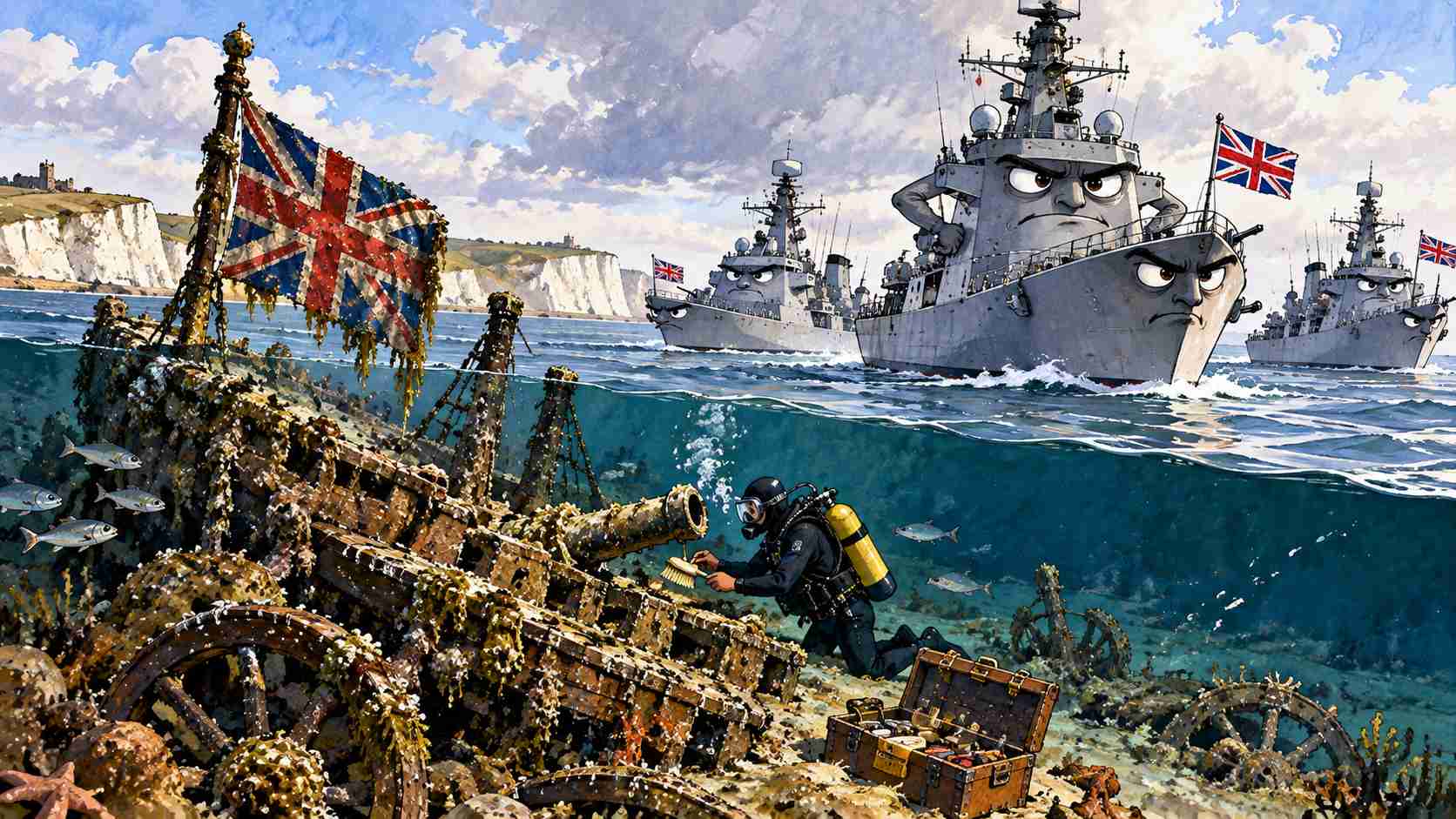
Ships Become Easier to Maintain Once Nobody May Touch Them
PORTSMOUTH: Parliament has advanced legislation strengthening protection for British military shipwrecks, ensuring that historic vessels and the resting places of sailors receive the respect they deserve.
The Armed Forces Bill cleared its Lords third reading on 27 October.
Armed Forces Bill Makes Every Sunken Military Vessel a Protected Place
The move is worthwhile, serious and overdue, which has not prevented the Ministry of Defence from providing the nation with its most promising new category of administrative paperwork: something called a protected place located underwater.
Under the proposed protections, sunken and stranded military vessels would receive automatic legal safeguards. As law firm HFW explains, the Bill overhauls the Protection of Military Remains Act 1986, automatically extending protection to vessels lost in military service and removing the time limits that currently apply. At present there are only 93 Protected Places and 13 Controlled Sites, Divernet reports.
Divers could observe protected wrecks but would face restrictions on entering or disturbing them.
This protects maritime heritage and the graves of service personnel, a responsibility no sensible person should dispute.
Can a Warship Become More Valuable by Sinking?
It does, however, raise a delightful Westminster question: can an object become more administratively valued by sinking?
A naval vessel at sea must contend with maintenance schedules, crew shortages, procurement delays and budget meetings. Sink it, and the government immediately recognises it as a precious historical asset.
Its legal status improves dramatically, even though its prospects of reaching Portsmouth by Friday have deteriorated.
Perhaps procurement officials have misunderstood the phrase “long-term fleet preservation”.
The Admiralty Efficiency Review has proposed extending protected status to warships that remain afloat. Under its recommendations, any vessel experiencing a delayed refit may declare itself a heritage monument, cancel its next committee hearing and enjoy thirty years without being asked to justify replacement parts.
Crew members are enthusiastic until they discover the scheme would also prohibit touching anything onboard.
Why Military Shipwreck Protection Matters
The history behind these protections matters.
Thousands of British sailors died at sea, and their resting places should not be treated as underwater souvenir shops. Shipwrecks also preserve evidence of naval engineering, sacrifice and national history. The Royal Navy’s announcement of the HMS Tiger wreck discovery came as the government moved to strengthen those protections, and the original Protection of Military Remains Act 1986 has long set the framework.
The point of the law is dignity, not theatre. If somebody wishes to go diving, Britain possesses enormous quantities of seabed that are not war graves.
The Procurement Paradox: Protecting Ships That Cannot Sail
But a little theatre has always accompanied the British military budget.
Departments can spend years examining whether a replacement vessel is affordable, then discover an unexpected expense associated with a design review that requires another review.
The Royal Navy is asked to defend international shipping, participate in alliances and maintain specialist capabilities, all while navigating a procurement process that seems to regard the passage of time as a strategic asset.
The Prat Maritime Accounting Institute has calculated that a vessel becomes 300 per cent easier to preserve once nobody is allowed to sail it. Its maintenance costs fall. Its deployment schedule becomes perfectly predictable. It never fails an inspection because the inspector would need scuba equipment.
This does not make it a successful navy, but it would look wonderful on a departmental dashboard.
The sensible conclusion is that Britain’s maritime heritage deserves protection and the modern fleet deserves competent investment. There is no contradiction between respecting those who served and ensuring that today’s sailors have vessels capable of serving.
The problem begins when a government becomes more adept at protecting ships that have sunk than procuring ships that can sail.
Parliament has taken a useful step for history. The Royal Navy may now request an equally ambitious measure for the future: protecting warships from spreadsheets before they reach the water.
Evidence From the Admiralty
Exhibit A: Notice to Divers, Fine Print
This wreck is a Protected Place. Look, but do not touch, enter, remove or take a souvenir. Items removed will be returned to the seabed at the earliest opportunity, following a review. Fish are not subject to this notice.
Exhibit B: Refit Timeline, Procurement Office Wall Chart
Day 1 — Refit proposed. Review commissioned.
Day 400 — Review of the review commissioned.
Day 1,100 — Design review discovers an unexpected expense.
Day 2,200 — Vessel sinks.
Day 2,201 — Vessel automatically protected.
Day 2,202 — First time anyone has agreed on anything about the vessel.
Exhibit C: One-Star Review of a Wreck Dive
★☆☆☆☆ “Booked a dive on a wreck. Told ‘look but don’t touch’. Looked. Didn’t touch. A fish touched everything. No action was taken against the fish.” — Steve, Plymouth
Exhibit D: Invoice for Admiralty Efficiency Review
| Item | Fee |
|---|---|
| Feasibility study: protecting ships that are still afloat | £30,000.00 |
| Scuba equipment for one inspector | £1,850.00 |
| Dashboard showing 100 per cent availability | £12,000.00 |
| Total | £43,850.00 |
Five Observations on Protecting Sunken Ships
- So the ship’s at the bottom of the sea, and now it’s protected. From what? Who’s going in there with a spanner? The fish are fine. They’ve been living in there for a century and nobody’s asked them for planning permission.
- Think about the poor ship that’s still floating. It’s got a leak and a bad paint job, and the Ministry’s going, “Good luck, mate.” Then it sinks and suddenly it’s a national treasure. That’s the most British career path I’ve ever heard.
- “Look but don’t touch.” That’s what my mum said about everything in a museum, and it’s what my wife says about me at parties.
- The money for a new warship has to go through forty committees. The money for a ship you can’t use takes one afternoon and a nice cup of tea. Priorities.
- If the government’s serious about protecting heritage, start with the pubs. Nobody’s protected The Rose and Crown from becoming flats, and that’s got more sailors’ ghosts in it than any wreck.
Further reading:HFW: Expanding protections for the UK’s military maritime heritage; Royal Navy: HMS Tiger wreck; Divernet: all military wrecks to be hands-off; Protection of Military Remains Act 1986.
Disclaimer: Divers are kindly asked not to touch this article, which has been designated a protected place under the Comedy Remains Act. Surface-level readers can find more funny news stories without a licence.

Harper Thames is a comedic writer exploring modern life through irony and subtle exaggeration. Rooted in student perspectives and London’s cultural landscape, Harper’s work focuses on relatable humour grounded in everyday experience.
Expertise is developed through writing practice and critical engagement, while authority comes from authenticity and consistency. Trust is reinforced by transparent satire and ethical humour choices.