Royal Family Introduces New Protocol: If You See Andrew, Scurry Indoors Immediately
A Calm, Dignified Response to an Extremely Specific Problem
Context: This satirical piece responds to recent events surrounding Andrew Mountbatten-Windsor’s eviction from Royal Lodge and his relocation to the Sandringham estate. After new Jeffrey Epstein-related documents emerged, King Charles stripped his brother of his royal titles in October 2025. The former prince recently moved from his Windsor residence under cover of darkness, with royal staffers reportedly refusing to serve him at his new home.
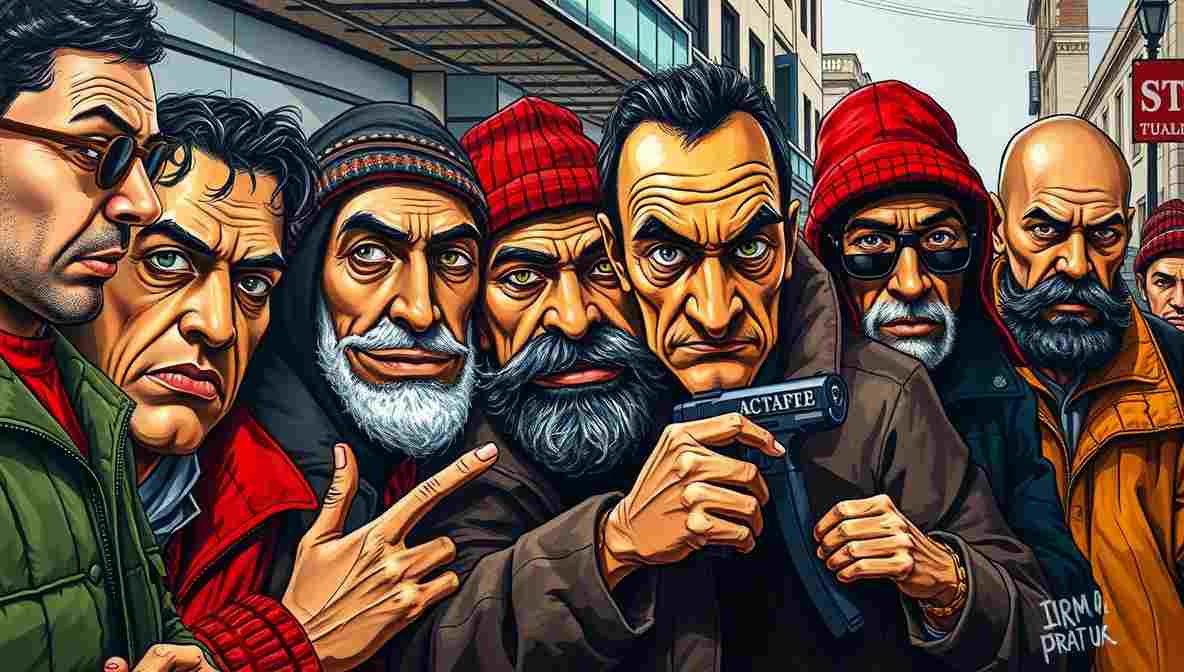
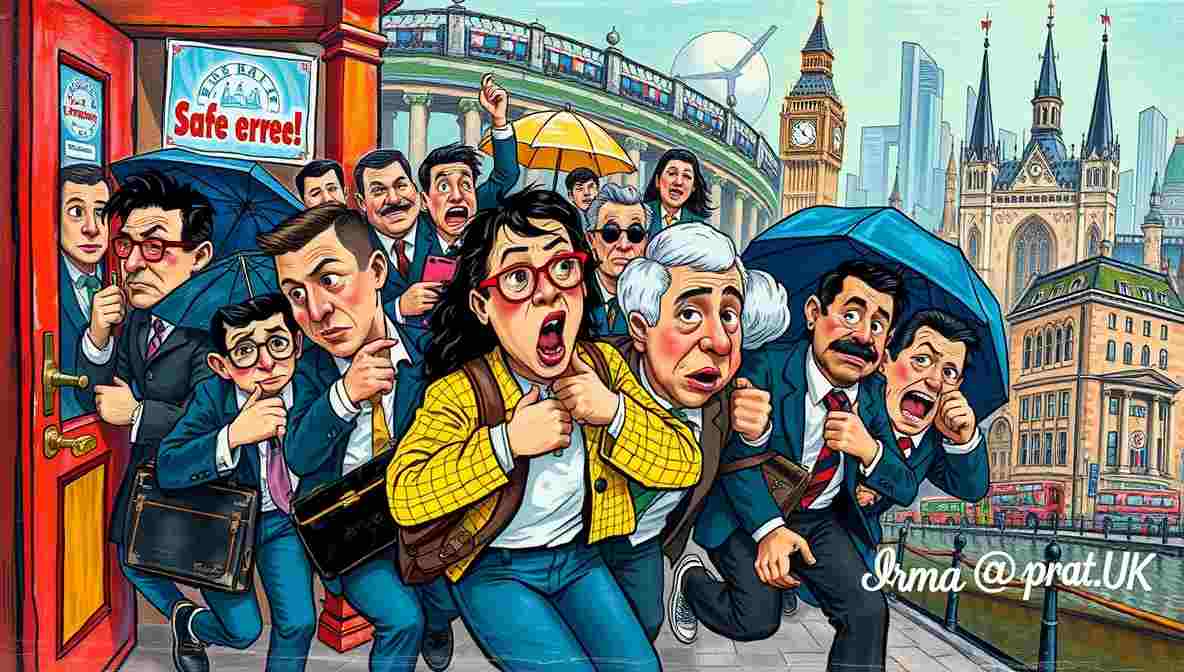
Buckingham Palace confirmed this week that a new, narrowly tailored protocol has been quietly circulated among staff, courtiers, and anyone holding a clipboard within 300 yards of royal property. The guidance is simple, humane, and quintessentially British: If you see Andrew, scurry indoors immediately.
Officials emphasized that this is not a ban, a purge, or an exile. It is a lifestyle adjustment. A gentle choreography of avoidance. A polite national understanding that some relatives are best experienced through archival footage and footnotes.
The word “scurry” was selected after extensive debate. “Run” sounded alarmist. “Evacuate” sounded American. “Withdraw with decorum” tested poorly with footmen. Scurry conveyed urgency without admitting panic, the emotional sweet spot of the modern monarchy.
Optics, Explained for Adults

Palace aides stressed that the protocol exists solely to protect optics, which in royal terminology means preventing the public from remembering things. This is not about guilt or innocence. It is about angles, lighting, and the ancient belief that if no one sees something, it did not happen in a way that requires comment.
One senior aide, speaking on condition of anonymity and excellent tailoring, explained it this way: “The monarchy does not solve problems. It reframes them until the public becomes distracted by weather.”
Andrew, aides noted, has proven resistant to reframing. Much like a stubborn stain that refuses to respond to centuries-old cleaning methods.
How the Protocol Works in Practice
Under the new guidance, staff are encouraged to respond to Andrew sightings the same way they respond to unexpected bagpipes indoors. Do not scream. Do not ask questions. Simply remove yourself from the situation and close a door that looks important.
Tour guides have already begun incorporating the protocol into their scripts. “And on your left, the State Rooms. On your right, a drawing room. And if you hear shuffling footsteps followed by the sound of history clearing its throat, please proceed calmly to the nearest interior space.”
Corgis, long considered emotional barometers of the palace, have reportedly been trained to freeze when Andrew is nearby. Handlers say it is less training and more instinct. Even the Queen’s beloved dogs had better survival mechanisms than some members of the Royal Family.
Staff Training Initiatives
Sources indicate that palace employees have undergone intensive preparation. The training includes peripheral vision exercises, escape route memorization, and the art of developing sudden, urgent tasks in historically significant corridors.
Voluntary Compliance, Obviously
The Palace insists the protocol is voluntary. Participation is encouraged, not enforced. Historians point out that this is how all royal rules begin, including bowing, inheritance, and marrying within your social class.
Staff who fail to scurry are not punished. They are simply reassigned to projects involving fewer windows and more silence. Some have been transferred to positions so obscure they’re not entirely convinced the jobs actually exist.
Strategic Invisibility as Statecraft

Royal historians were quick to note that strategic invisibility is not new. The monarchy has centuries of experience making people vanish into honorary titles, overseas postings, or “private life.”
What is new is the transparency of the avoidance. In previous eras, a problematic royal might simply fade away. Today, fading requires a PDF, a protocol, and a carefully worded phrase that does not trend on social media.
The monarchy, sources say, has accepted that it cannot control narratives, only foot traffic. A remarkably pragmatic approach for an institution founded on the premise that bloodlines determine leadership capabilities.
When Fire Drills Are Easier
Several palace employees compared the protocol to a fire drill, except instead of smoke, the threat is questions. Instead of alarms, there is a feeling in the room. Instead of exits, there are corridors that were definitely not there yesterday.
One junior aide described a recent drill: “We were told to imagine Andrew was near the gift shop. Half of us went left, half of us pretended to urgently need a restroom that does not exist.”
The drill was considered a success when no one made eye contact or asked follow-up questions.
Tourists Remain Confused
Despite signage being intentionally absent, tourists remain the protocol’s greatest vulnerability. Many assume Andrew is a historical figure, like a tapestry that occasionally moves.
One American visitor reportedly asked if Andrew was “part of the experience.” The guide responded by scurrying. Trip Advisor reviews have described this as “surprisingly authentic.”
International Coordination Efforts
Palace officials are reportedly working with tourism boards to develop unified messaging. Proposed taglines include “Experience Royal History from a Safe Distance” and “Not All Exhibits Are Meant to Be Viewed.”
Paperwork Catches Up to Reality
The royal protocol manual has been updated. A new section now sits between “Receiving Flowers” and “Avoiding Eye Contact at Charity Events.” It includes diagrams, suggested excuses, and a flowchart titled “Is That Him or a Coat Rack?”
The flowchart ends, inevitably, with “Go Inside.” Early drafts included more nuanced options, but focus groups found that complexity increased response time by dangerous margins.
Family Dynamics, Elevated
Some courtiers privately worry the protocol sets a precedent. If Andrew requires scurrying, what about other relatives? Where does it end? With polite ducking? Strategic coughing? Entire wings sealed off during holidays?
Others argue this is simply what families do when group chats fail. Except most families don’t have access to multiple estates and a communications department dedicated to managing reputational fallout.
The Optimism Problem
Critics note that the phrase “If you see Andrew” assumes advance warning. This, experts say, is optimistic. Andrew has a way of appearing in places where no one planned for him, like awkward anecdotes or outdated headlines.
The protocol does not address what to do if Andrew sees you first. Palace sources declined to comment. Some suggest maintaining direct eye contact to establish dominance, but this advice has not been officially endorsed.
A Modern Solution to an Ancient Institution

Ultimately, the protocol reveals the monarchy’s core philosophy. Do not confront. Do not explain. Just go inside and wait it out. Time, after all, has always been the crown’s most reliable publicist.
If history has taught the monarchy anything, it is that silence, paired with heavy curtains, solves most things eventually. And if that fails, there’s always strategic relocation to remote properties.
What the Funny People Are Saying
“This is not a cover-up. It’s a British cardio plan.” — Jimmy Carr
“The royal family invented social distancing from one specific guy.” — David Mitchell
“Scurry indoors sounds like something you tell a raccoon, not a duke.” — Frankie Boyle
“Finally, a protocol that makes sense. I’ve been scurrying away from awkward relatives for decades.” — Ricky Gervais
“The word ‘scurry’ is doing a lot of heavy lifting here. So is everyone at Buckingham Palace.” — John Oliver
A Helpful Note for the Public
Experts recommend applying the protocol to everyday life. If you encounter an awkward relative, a controversial coworker, or a man who insists on telling you his side of the story unprompted, simply scurry indoors. Close a door. Make tea. History may not forget, but it will lose interest.
The technique has been refined over centuries by British institutions and is now available for public use, free of charge.
Disclaimer
This article is satire. It represents a collaborative effort between two sentient beings: the world’s oldest tenured professor and a philosophy major turned dairy farmer. No actual protocols were harmed in the making of this piece, though several corridors remain emotionally unavailable.
Auf Wiedersehen, amigo!

Alan Nafzger was born in Lubbock, Texas, the son Swiss immigrants. He grew up on a dairy in Windthorst, north central Texas. He earned degrees from Midwestern State University (B.A. 1985) and Texas State University (M.A. 1987). University College Dublin (Ph.D. 1991). Dr. Nafzger has entertained and educated young people in Texas colleges for 37 years. Nafzger is best known for his dark novels and experimental screenwriting. His best know scripts to date are Lenin’s Body, produced in Russia by A-Media and Sea and Sky produced in The Philippines in the Tagalog language. In 1986, Nafzger wrote the iconic feminist western novel, Gina of Quitaque. Contact: editor@prat.uk