London Prepares for Annual Protest Where Everyone Marches and Nobody Agrees on Why
London, that magnificent city where you can get a £7 coffee next to someone sleeping in a doorway and everyone pretends this is fine, is once again preparing for its most diplomatically complicated annual tradition: the Al-Quds Day march.
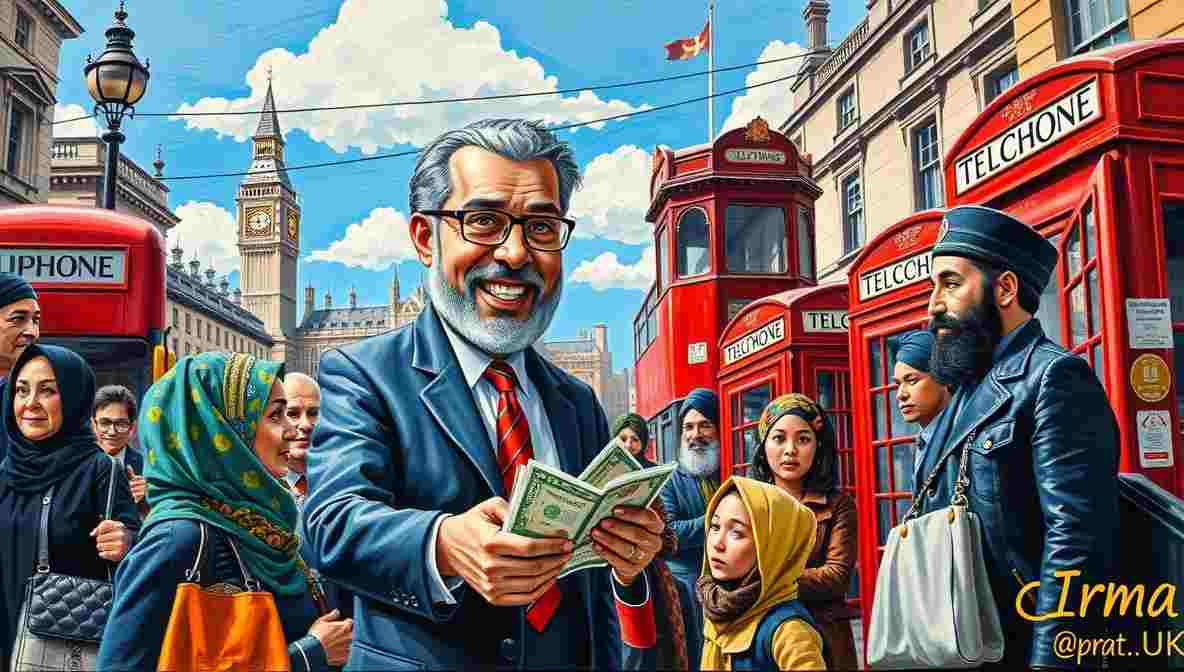
Thousands of protesters are expected to assemble outside the Home Office on Horseferry Road before marching through central London, past the Houses of Parliament, across Westminster Bridge, and depositing their grievances directly outside Downing Street like a very organised political pizza delivery.
“It’s essentially a guided tour of British democracy,” said Professor Reginald Pompington-Smythe of the fictional Institute for Understanding Why People Are Cross, who we made up entirely. “You visit all the buildings that caused the problem, shout at them, and then go home for tea. Quintessentially British, really.”
The World’s Most Geopolitically Charged Sightseeing Route

The march route — Home Office to Parliament to Westminster Bridge to Downing Street — has been described by tourism officials as “essentially the same walk we charge American tourists £89 for, but with more chanting and fewer selfie sticks.”
The event, established in 1979 following the Iranian Revolution by Ayatollah Khomeini, who declared the last Friday of Ramadan as an annual day of solidarity with Palestinians, has since expanded into a genuinely global affair. It now takes place in cities across Europe, North America, and the Middle East — making it arguably the world’s most geopolitically loaded franchise operation since McDonald’s opened in Moscow.
“They’ve basically franchised revolutionary passion,” said comedian Micky Flanagan. “Next thing you know there’ll be a Quds Day in a Westfield food court between Pret a Manger and a Wagamama. Two for one on outrage every Tuesday.”
Multicultural Efficiency: Two Marches for the Price of One
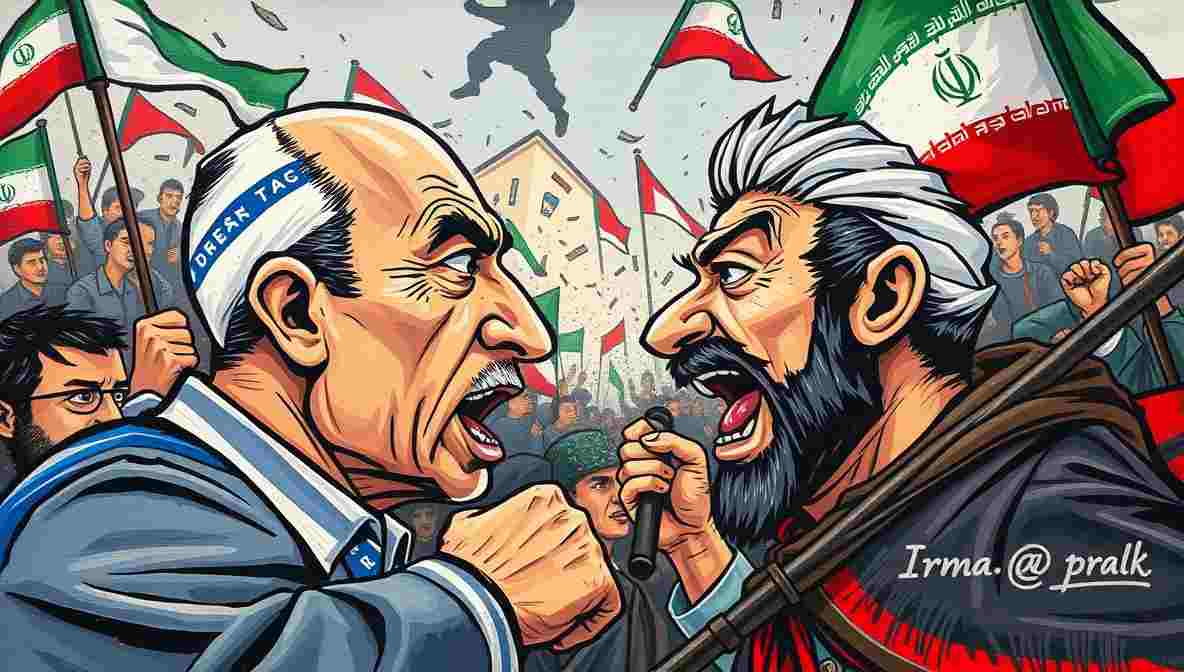
In a triumph of British organisational spirit, the Al-Quds march will again be accompanied by a counter-protest from Jewish and pro-Israel groups, meaning London will once again host two marches, each marching in the general direction of the other, with the Metropolitan Police sandwiched between them wondering why they didn’t become electricians.
The Campaign Against Antisemitism has confirmed its monitoring unit will be present, as will the Community Security Trust, pro-Palestinian solidarity groups, confused tourists, several documentary film crews, and one man who definitely just came out for a Greggs and got swept along.
“London has achieved peak multicultural efficiency,” said Lee Mack. “One group marches, another group counter-marches, and the police march between them. Everyone gets their steps in. This city has accidentally invented the world’s most politically charged fitness app.”
The Metropolitan Police Prepare for Their Annual Headache
The Metropolitan Police — who arrested ten people during the 2024 march, including individuals for inciting racial hatred and burning an Israeli flag — have confirmed they are once again preparing a “significant policing operation.” The Met noted that numbers are expected to increase given “the ongoing conflict in the Middle East,” which observers noted is a diplomatic way of saying “everything is still absolutely on fire and people are extremely unhappy about it.”
A Metropolitan Police spokesperson stated that officers would maintain a “zero-tolerance approach to hate crime, including antisemitism, and support for proscribed organisations” — a sentence that manages to sound very reassuring and very complicated at exactly the same time.
“The Met have to prepare for this march every year like it’s the London Marathon,” said Jimmy Carr. “Except instead of runners collapsing at Mile 18, it’s political arguments collapsing into shouting matches somewhere near Westminster Bridge. The hydration stations hand out legal advice leaflets.”
Britain’s Favourite Hobby: Debating Whether to Ban Things

Every year, without fail, a selection of politicians appear in various newspapers demanding the march be banned. Every year, the police explain — with the weary patience of a teacher on a Friday afternoon — that banning protests in a democracy is legally rather complicated.
Under the Public Order Act 2023, police can impose conditions on protests but cannot simply ban them outright. They can apply to the Home Secretary for a ban only if there is a risk of “serious disorder that cannot be managed” through other means — a threshold described by legal scholars as “high” and by the average politician as “surely there’s a workaround.”
The Human Rights Watch has separately noted that Britain’s protest laws have become significantly more restrictive in recent years, with the Crime and Policing Bill 2025 proposing to give police even broader powers to restrict demonstrations — including, remarkably, a blanket ban on face coverings at protests, which raises obvious questions about what happens when it rains, which in Britain is essentially always.
“Britain has a very specific relationship with free speech,” said Rory Bremner. “We invented the concept, exported it to the world, and are now quietly trying to return it like an unwanted Christmas gift. ‘Too noisy, really. Makes the neighbours uncomfortable.'”
The Dress Code, the Drizzle, and the Revolutionary Passion
Observers at previous Al-Quds marches have noted the extraordinary variety of attendees: committed political activists, faith groups, solidarity campaigners, counter-demonstrators from the Islamic Human Rights Commission’s critics, students who came for the atmosphere, and one very confused American who thought the whole thing was a parade and kept looking for floats.
The organisers, for their part, insist the event is a “non-confessional, family-oriented rally” led by Muslim, Christian, and Jewish organisations — a framing that has been disputed by groups including the Campaign Against Antisemitism, who note that previous marches have featured some rather less family-friendly placards.
“Nothing tests genuine ideological commitment,” said Al Murray, “like standing in cold British drizzle, yelling about Middle East geopolitics while your umbrella turns inside out. That’s when you separate the truly passionate from the people who just came because they saw it on Instagram.”
Explaining the Chants: A Field Guide for Bystanders
A recurring challenge at Al-Quds marches — as at most London political gatherings — is that roughly half the slogans require either Arabic or a doctorate in post-colonial geopolitics to fully appreciate. Ordinary Londoners attempting to cross Westminster Bridge during the march have been observed nodding thoughtfully at chants they cannot understand, which is arguably the most British possible response to a foreign-language revolution.
“Half the slogans need subtitles,” said Omid Djalili. “British bystanders are standing there wondering whether they’re witnessing a protest or an international karaoke competition. Either way, nobody’s winning on pitch.”
The Media Coverage: Everybody Sees Something Different

In a tradition as reliable as the march itself, every major newspaper will describe the exact same event in completely irreconcilable ways. One outlet will call it a “human rights rally.” Another will call it a “hate march.” The BBC will call it “a complex situation with perspectives on all sides,” which is the journalistic equivalent of answering “are you all right?” with “it depends how you define all right.”
The Guardian will have three separate opinion pieces contradicting each other before lunchtime. The Telegraph will have found somebody who was offended who they can put on the front page. And the Evening Standard will produce a genuinely useful map of tube disruptions caused by the whole affair, which is what most Londoners actually need.
The Ultimate Irony: Everybody Just Wants to Get Home
Thousands of people yelling about the geopolitical destiny of the Middle East, in central London, while the average commuter — head down, AirPods in, Pret coffee in hand — simply wants to get on the District line and be left alone.
“Imagine visiting London for Big Ben,” said Jack Dee, “and accidentally ending up in a geopolitical debate about Palestinian statehood. You paid £800 return from Minnesota. You wanted a photo outside Buckingham Palace. You’re now being handed a leaflet about the Balfour Declaration.”
The Al-Quds march will proceed on 15 March 2026, organised by the Islamic Human Rights Commission, which has held the event in London for nearly forty years. Counter-demonstrations are expected. The Metropolitan Police will be present in force. The weather forecast is, as always, uncertain. And somewhere on Westminster Bridge, a tourist from Ohio will take a very confused photograph and post it without context to Instagram, where it will receive 47,000 likes and inspire eight more opinion pieces.
Democracy, as they say, is messy. In London, it is also frequently damp.
The Al-Quds Day march — formally, the International Quds Day Rally — is an annual pro-Palestinian demonstration held on the last Friday of Ramadan, first declared by Ayatollah Khomeini in 1979 following the Iranian Revolution. In London, it has been organised for nearly forty years by the Islamic Human Rights Commission (IHRC) and typically draws thousands of marchers assembling at the Home Office before proceeding to Downing Street. The event has consistently generated controversy: critics, including the Campaign Against Antisemitism and the Community Security Trust, argue it provides a platform for extremist rhetoric and support for proscribed organisations, while organisers describe it as a peaceful, interfaith solidarity event for Palestinian rights. In 2026, the march is scheduled for 15 March and takes place amid heightened political tensions following the killing of Iranian Supreme Leader Ali Khamenei in a US-Israeli strike, the collapse of the Gaza ceasefire, and an increasingly restrictive legal environment for protest in the United Kingdom.
Auf Wiedersehen, amigo!

Alan Nafzger was born in Lubbock, Texas, the son Swiss immigrants. He grew up on a dairy in Windthorst, north central Texas. He earned degrees from Midwestern State University (B.A. 1985) and Texas State University (M.A. 1987). University College Dublin (Ph.D. 1991). Dr. Nafzger has entertained and educated young people in Texas colleges for 37 years. Nafzger is best known for his dark novels and experimental screenwriting. His best know scripts to date are Lenin’s Body, produced in Russia by A-Media and Sea and Sky produced in The Philippines in the Tagalog language. In 1986, Nafzger wrote the iconic feminist western novel, Gina of Quitaque. He currently lives in Holloway, North London. Contact: editor@prat.uk