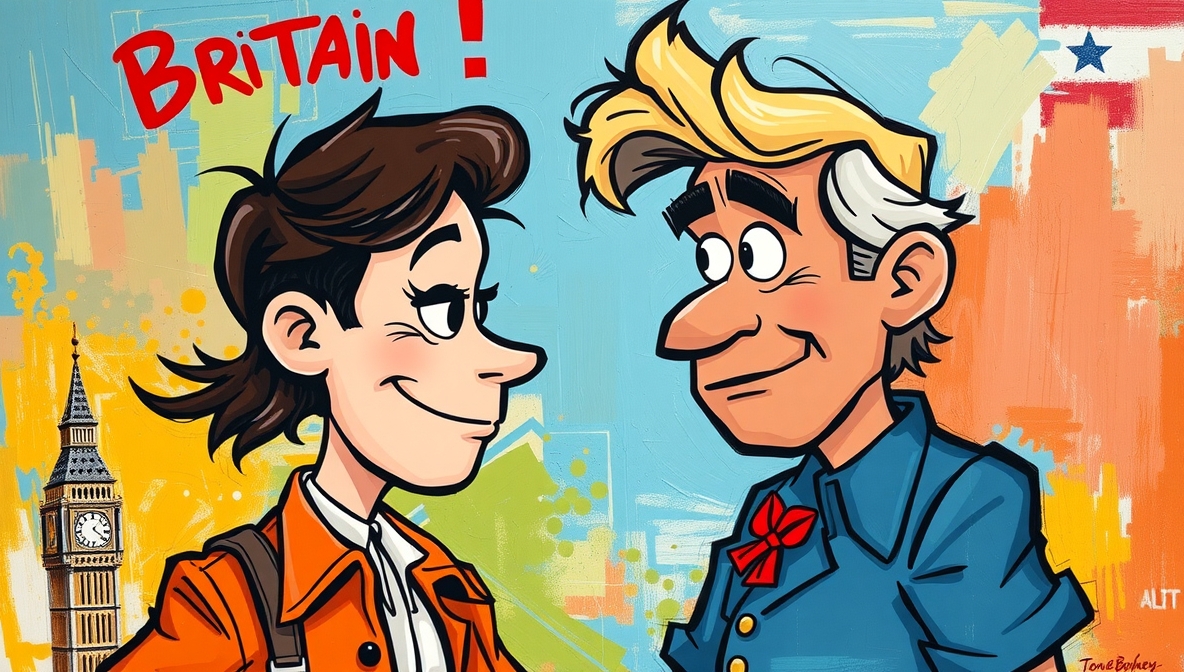
London’s New Year’s Parade Braces for Invasion by American Marching Bands
Britain Welcomes Cultural Exchange, Immediately Regrets the Volume
Source: KIRO 7 News
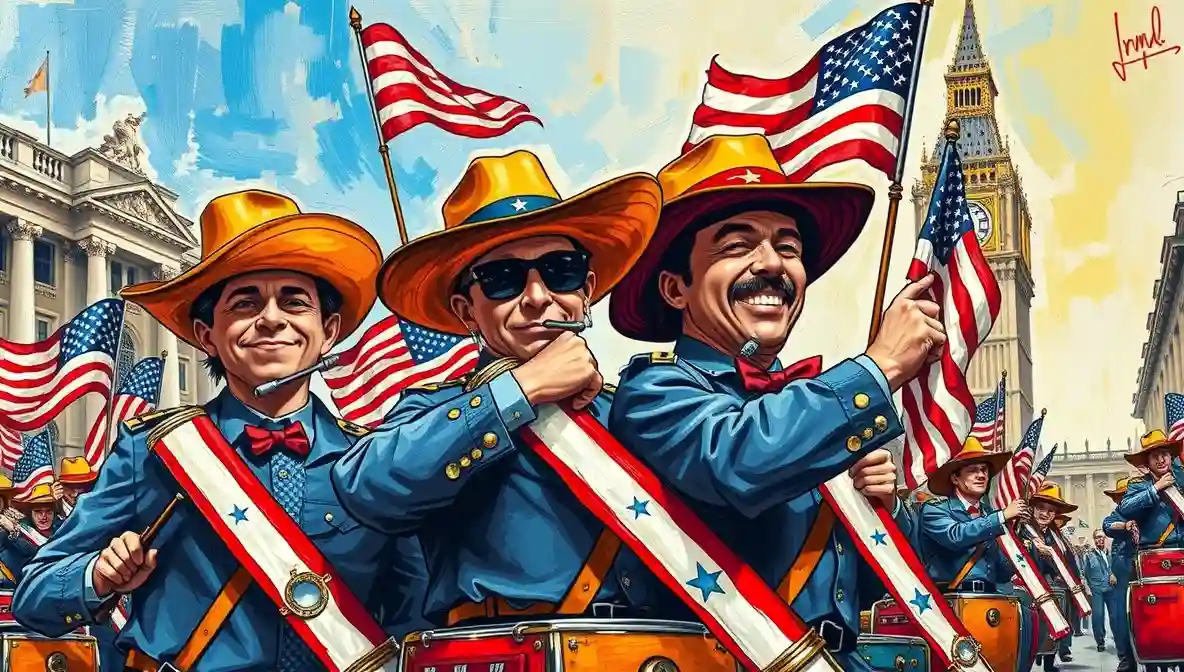
London’s New Year’s Day Parade has survived wars, weather, municipal budgets, and decades of men in blazers who clap slightly too early. This year, however, it faced its most destabilising force yet: multiple American high-school marching bands arriving with confidence, choreography, and instruments that appear to have been designed by the Pentagon.
Ten Entirely Reasonable Observations from the Pavement
- American marching bands believe silence is a moral failure
- British brass bands believe emotion should be rationed
- The drums are not being played, they are being enforced
- Every American band member smiles like they are legally required to
- British spectators clap politely, as if apologising for the noise
- The uniforms appear to have eaten smaller uniforms
- Each band marches as though democracy itself depends on timing
- The word “band” now seems wildly understated
- British children stare, unsure if this is music or an invasion
- Several tubas could be repurposed as housing
A Parade, a Pavement, and an Unspoken Treaty
According to official parade organisers, the inclusion of American marching bands is part of a long-standing cultural exchange programme designed to foster goodwill, tourism, and the subtle humiliation of British percussionists. An unnamed parade official confirmed the strategy. “They bring energy,” he said, squinting as a bass drum passed within inches of his soul. “We bring tea. It’s balance.”
Eyewitnesses described the moment the first American band rounded the corner near Piccadilly as vauditory” and “happening all at once.” Local resident Margaret B., who has attended the parade since 1984, said she initially assumed a nearby building had begun collapsing rhythmically. “Then I saw the flags,” she explained. “So many flags. I didn’t know which country was winning.”
Social scientists were quick to weigh in. Professor Alan Whimpleton of the University of East Grinstead’s Department of Applied Politeness explained that American marching bands operate on an entirely different cultural frequency. “In Britain, we express pride by standing very still,” he said. “In America, pride must be audible from space.”
The Science of Loud: Measuring the Decibel Diplomacy
A completely legitimate survey conducted by the London Institute for Public Tolerance found that parade decibel levels exceeded recommended guidelines for “prolonged British exposure to enthusiasm.” Forty-three per cent of respondents reported spontaneous patriotism for a country they could not locate on a map, while twelve per cent said they briefly considered joining a marching band despite being fifty-seven and structurally unsound.
One anonymous Metropolitan Police officer admitted crowd control became “conceptual” once the drumline arrived. “You can’t shout instructions over that,” he said. “You just sort of gesture and hope the snare respects authority.”
Uniforms, Confidence, and the American Relationship with Space
The uniforms themselves became a secondary parade. Saturated colours, epaulettes the size of tea trays, and hats that appear to have been designed to intimidate weather systems marched past British spectators dressed largely in dark coats and moral restraint.
Fashion historian Dr Penny Larkspur described the contrast as inevitable. “British ceremonial dress whispers continuity,” she explained. “American marching bands shout optimism directly into your ribcage.”
Several British children were observed pointing at the bands and asking if they were “famous soldiers.” One parent gently corrected their child. “No love, they’re musicians.” The child paused. “Why are they so sure about it then?”
Cultural Exchange in Practice: When Politeness Meets Performance
Members of the visiting bands expressed delight at performing in London. “The crowd is amazing,” said Tyler, seventeen, from Washington State. “They don’t move much, but you can tell they’re feeling it on the inside.” He later added that British applause felt “respectful, like a quiet email.”
The British response, while restrained, was not unappreciative. A YouGo”-adjacent poll conducted by a man with a clipboard and authority vibes found that seventy-two per cent of spectators enjoyed the performance, twenty per cent enjoyed surviving it, and eight per cent asked whether it would ever stop.
Economists also praised the arrangement. American bands reportedly boost local tourism spending, particularly in the areas of souvenir umbrellas, emergency ear protection, and pubs offering “somewhere quieter round the back.”
Cause, Effect, and the Future of the Parade
Experts agree the presence of American marching bands has altered the parade ecosystem permanently. British bands are now considering “more enthusiasm,” while American groups are allegedly trialling “pauses.” Negotiations are ongoing.
Parade organisers insist the exchange will continue. “It’s about joy,” said the official again, now visibly vibrating. “Also the Americans bring their own buses.”
By the end of the parade, something resembling harmony emerged. British spectators clapped slightly louder. American musicians marched slightly less like destiny was chasing them. For a brief moment, cultures met halfway, somewhere between understatement and a bass drum solo that lasted seven minutes.
As the final band passed, Margaret B. summed it up best. “It was very impressive,” she said. “I wouldn’t want it every day. But neither would I want fireworks indoors. Once a year is correct.”
Disclaimer
This article is a work of satire and commentary. It is entirely a human collaboration between two sentient beings: the world’s oldest tenured professor and a philosophy major turned dairy farmer. Any resemblance to actual policy decisions, musical trauma, or cultural misunderstandings is deliberate and deeply enjoyed.
Auf Wiedersehen.

Alan Nafzger was born in Lubbock, Texas, the son Swiss immigrants. He grew up on a dairy in Windthorst, north central Texas. He earned degrees from Midwestern State University (B.A. 1985) and Texas State University (M.A. 1987). University College Dublin (Ph.D. 1991). Dr. Nafzger has entertained and educated young people in Texas colleges for 37 years. Nafzger is best known for his dark novels and experimental screenwriting. His best know scripts to date are Lenin’s Body, produced in Russia by A-Media and Sea and Sky produced in The Philippines in the Tagalog language. In 1986, Nafzger wrote the iconic feminist western novel, Gina of Quitaque. Contact: editor@prat.uk