Commander, Formerly Known As Prince
A Royal Rebrand Attempts To Sail Past Reality
LONDON, or at least the emotional idea of London—the one that exists somewhere between a drizzle and a sigh—has woken to news that Andrew Mountbatten-Windsor, a man once addressed with trumpets, liveried staff, and furniture more valuable than a semi-detached house in Croydon, is preparing a bold new rebrand. He now wishes to re-enter society under the thrillingly modest title of “Commander.”
Not Mr.
Not Andrew.
Commander.
According to reports, the 65-year-old former royal is considering using his naval rank on official paperwork, apparently to avoid the awkwardness of being treated like a civilian. Which is fascinating, because nothing says humility quite like insisting people salute you while you’re trying to return a library book.
The palace, ever alert to optics, reportedly believes the title “travels well.”
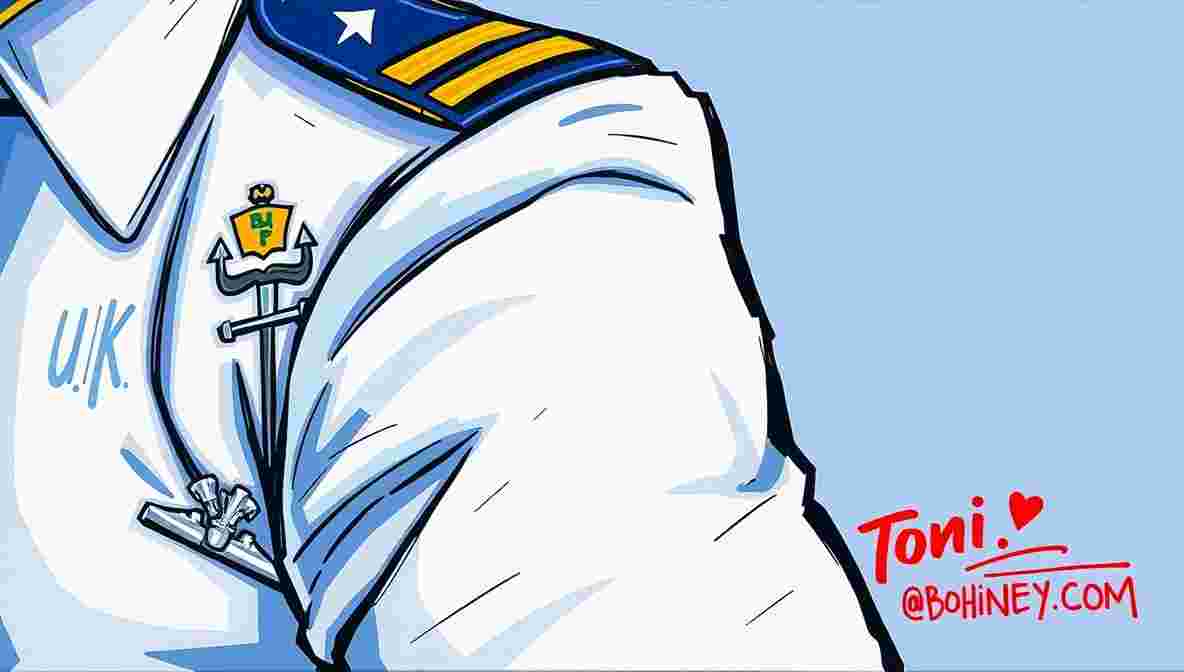
Of course it does. Rank always travels well. Rank doesn’t queue. Rank doesn’t explain itself. Rank floats through airports like a diplomatic immunity coupon—presumably first class, presumably billed to nobody in particular. Luggage may be heavy, shame heavier still, but rank glides.
The logic seems to be that while Prince became problematic, Commander is refreshingly neutral. After all, everyone loves a commander. A commander sounds useful. A commander gives orders, not explanations. A commander suggests competence, discipline, and possibly a hat.
It’s a clever pivot. When in doubt, pivot sideways into authority.
Critics, however, have noted that the title does raise questions. Commander of what, exactly? Commander of past decisions? Commander of awkward silences at family gatherings? Commander of a shrinking circle of people willing to make eye contact?
Still, the rebrand effort is admirable in its commitment. It takes real confidence to believe that the issue was branding rather than behaviour. That the problem wasn’t what happened, but the font it happened in.
Royal aides insist this is not an attempt to reclaim status, merely a practical choice. “Mr” feels too ordinary, apparently, and ordinary is a dangerous thing to become once you’ve spent a lifetime being introduced with a fanfare and a small procession.
London, meanwhile, has responded in its usual way: with quiet sarcasm and an unspoken agreement not to call him anything at all.
In a city where baristas refuse to learn your name after six years of daily visits, the idea that a title might still command respect feels almost quaint. London has seen emperors reduced to punchlines and mayors reduced to punchlines mid-sentence. A new badge on an old blazer isn’t going to do much.
Still, one must admire the optimism. In an age where reputations are fragile, memories are inconvenient, and accountability is terribly unfashionable, becoming “Commander” feels like a very modern solution.
Change the name. Keep the past in storage. Sail on.
Whether reality salutes back remains, as ever, highly doubtful.
A Man Versus The Concept Of “Just Some Guy”
The modern world contains three types of adults:
- People with jobs
- People pretending LinkedIn is a job
- People renaming themselves Commander

Psychologists from the Institute of Advanced British Awkwardness published a study concluding that if a man cannot be a prince, he will attempt to become punctuation. “Commander” is punctuation. It places a colon after your name so conversations cannot end. Much like a certain 65-year-old currently between addresses.
Eyewitness testimony supports this.
A barista in Surrey claims he once wrote “Andy” on a coffee cup and felt history physically recoil.
“The milk steamed itself into a crown shape,” the witness reported. The barista has since transferred to a Pret in Basingstoke and refuses to discuss the incident.
The Naval Rank As Personal Self-Esteem App
Sources say the title makes him feel “legitimate again.”
Legitimacy, in 2026, is a subscription service.
- Blue checkmarks.
- Podcast microphones.
- Diet water.
- And now: honorary maritime nostalgia.
Royal historians confirm that Britain has always solved social crises by inventing titles. Earl. Baron. Viscount. Influencer. Thought Leader. Podcast Strategist.
“Commander” is just Prince Lite. Same flavor, fewer calories. Available now at all good title retailers while stocks last.
The James Bond Phase
Observers note he enjoys comparisons to fictional spy James Bond, who also held the rank of Commander in the Royal Naval Reserve. This is the sort of comparison that sounds wonderful until someone checks the receipts.
Britain, a nation that invented both MI6 and awkward eye contact, now faces a philosophical question:
Can you cosplay dignity?
Bond drives an Aston Martin.
A normal man drives a rental.
A former prince drives narrative management.
Bond also never had to explain himself to Emily Maitlis. Points for Andrew there, perhaps.
An anonymous palace staffer told reporters:
“If he orders a martini and the bartender salutes, we’re in trouble.”
The Middle East Reset Button
Advisers have discussed overseas options including Bahrain or Saudi Arabia — territories where, coincidentally, nobody watches BBC Newsnight.
Britain exports many things: tea, sarcasm, and occasionally aristocrats attempting witness protection via sunshine.
The strategy appears simple:
- Step one: Leave
- Step two: Rebrand
- Step three: Hope the new weather has no memory
Marketing experts call this “geographic reputation laundering.” It is similar to deleting your tweets, except you delete a hemisphere. Requires slightly more luggage.
Borrowed Grandeur: Britain’s National Hobby
Officials warn the plan could “backfire spectacularly” and appear like borrowed grandeur.
Britain is uniquely qualified to detect borrowed grandeur. The country runs entirely on it.
- Ceremonial guards protecting empty hats
- Palaces protecting empty meetings
- Parliament protecting empty promises
So when someone shows up with extra grandeur, the ecosystem destabilizes. It’s like turning up to a potluck with a silver tureen and everyone else has brought Pringles.
The Paperwork Problem: Identity At The Border
The most dangerous place in the monarchy has always been the form.
Occupation:
Prince? No. Stripped November 2025.
Civilian? Emotionally no.
Commander? Spiritually yes.
The clerk at customs now faces an ethical dilemma. If a man insists on being a naval rank at baggage claim, is the suitcase technically a vessel? Does a trolley count as a fleet? These are the questions Britain’s civil service was not trained for.
Public Reaction: Polling The Pub
A survey of 1,042 Britons conducted outside a Wetherspoons produced these results:
- 72% believe titles should be earned
- 18% believe titles should be inherited
- 9% believe the bartender is also a duke
- 1% attempted to knight a dog
Margin of error: three pints
The Royal Family’s New Strategy: Time

The palace is reportedly watching carefully. From a distance. Through binoculars. Over biscuits.
The monarchy’s greatest weapon has never been power. It has been waiting. If they stand still long enough, history becomes furniture.
Social Media Reactions: The Internet Responds
The internet responded within seconds:
- Americans asked if Commander outranks CEO
- Australians asked if he comes with warranty
- British citizens asked if they too can select DLC identities
One user wrote:
“Upgrading from Prince to Commander feels like uninstalling a game and keeping the achievements.”
Another replied: “He’s basically running on legacy software at this point.” The tweet received 47,000 likes and a baffled response from a retired admiral in Portsmouth.
Philosophical Implications of the Title Economy
What is a title? A sound others agree to hear seriously. Doctor. Captain. Sir. Influencer.
Society runs on collective imagination with stationery. When someone chooses a title instead of receiving one, the spell flickers. Suddenly the entire hierarchy looks like theater props stored in a velvet attic.
The British class system, having survived wars, revolutions, and Love Island, now faces its most intimate challenge: a man with a rank, a grudge, and a forwarding address in the Gulf.
A Helpful Guide To Rebranding Yourself Like Royalty
If you wish to reinvent your reputation:
- Choose a profession nobody can verify quickly
- Attach it to paperwork
- Move somewhere warm
- Reference a fictional character occasionally
Congratulations. You are now Admiral of Personal Growth.
Terms and conditions apply. Rank not valid at Nando’s.
What the Funny People Are Saying
“Britain invented class systems and now we’re beta-testing character selection screens.” — Jerry Seinfeld
“A prince becoming a commander is just a man installing updates after uninstalling consequences.” — Jon Stewart
“If I call myself Sheriff at Walmart, security disagrees. Royalty is just better customer service.” — Sarah Silverman
“He went from ‘Your Royal Highness’ to ‘Commander’ to ‘Hello, is anyone there?’ in under three years. That’s not a fall from grace. That’s a controlled demolition.” — Frankie Boyle
The Larger Lesson: Identity in the Post-Crown Era
Modern society struggles with identity because we removed destiny but kept ceremony. People still want roles. Without crowns we invent bios. Without thrones we curate profiles. Without kingdoms we moderate comment sections.
The title “Commander” is less a rank and more a coping mechanism. A life raft made of vocabulary. Launched quietly into the Royal Navy‘s memory, crewed entirely by hope.
Closing Reflection: Grammar As Destiny
History will remember this not as a scandal, not as a tragedy, but as the most British solution imaginable: when reality becomes uncomfortable, rename yourself until grammar improves.
And somewhere in a quiet government office, a clerk stamps a form and whispers:
“Close enough.”
The form is filed. The title is chosen. The man formerly known as Prince sails on — not on water, but on paperwork — which, in Britain, is essentially the same thing.
This article is a collaborative work between the world’s oldest tenured professor and a philosophy major turned dairy farmer, who together agree that identity is 90% paperwork and 10% tea temperature. Any resemblance to actual maritime authority is purely coincidental and emotionally ceremonial. Auf Wiedersehen, amigo!
SOURCE

Alan Nafzger was born in Lubbock, Texas, the son Swiss immigrants. He grew up on a dairy in Windthorst, north central Texas. He earned degrees from Midwestern State University (B.A. 1985) and Texas State University (M.A. 1987). University College Dublin (Ph.D. 1991). Dr. Nafzger has entertained and educated young people in Texas colleges for 37 years. Nafzger is best known for his dark novels and experimental screenwriting. His best know scripts to date are Lenin’s Body, produced in Russia by A-Media and Sea and Sky produced in The Philippines in the Tagalog language. In 1986, Nafzger wrote the iconic feminist western novel, Gina of Quitaque. Contact: editor@prat.uk